Lead Hook
A consumer-facing EV advocacy piece from CleanTechnica argues that electric vehicles are more convenient than gasoline cars for many drivers, then pivots into Tesla pricing, Full Self-Driving, market rankings, and referral bonuses. The deeper issue is not whether the piece is persuasive; it is that nearly every substantive claim is single-source, and the same article contains a referral incentive that rewards Tesla sales. Readers should treat the argument as a starting point for verification, not as an independently corroborated market assessment.
Deep Dive
According to CleanTechnica, if a driver has access to 220-volt or Level 2 charging at home or work, an EV is more convenient than a gasoline car for up to 300 miles per day of local driving. The article contrasts plugging in for 10 seconds with gas-station trips, oil changes every 3,000 miles, and annual emissions checks. It says Level 2 charging adds about 28 miles of range per hour, while Level 1 charging adds about 4 miles per hour. It also says most EVs now have more than 300 miles of range, so a full Level 2 charge from empty would take roughly 11 hours, though the author says they are rarely at empty and normally charge to 80%, implying one to five hours in typical use. The piece adds battery-care advice—do not charge over 80% or let charge fall below 20%—and says this is easier with a larger battery. These are author-level claims, not independently verified technical standards in the provided material.
On home charging, CleanTechnica describes an EVSE cable that often comes with the car or can be purchased for about $200, a standard 110-volt plug, and a 220-volt NEMA 14-50 plug available for $40. It says 220-volt service installation can cost about $200, citing personal examples of $130 in Three Lakes, Wisconsin; $250 in Saint George, Utah; $500 to run 220-volt service in Lindon, Utah; and $700 for a Level 2 charger there. It says a Level 2 charger is not necessary if an EVSE and NEMA 14-50 outlet are available. For drivers without home charging, the article says a brother obtained 220-volt service in a condo garage “with considerable effort,” that workplace Level 2 charging can solve the problem, and that city Superchargers can function like gas stations. These anecdotes are useful illustrations but are not corroborated by other outlets in the provided material.
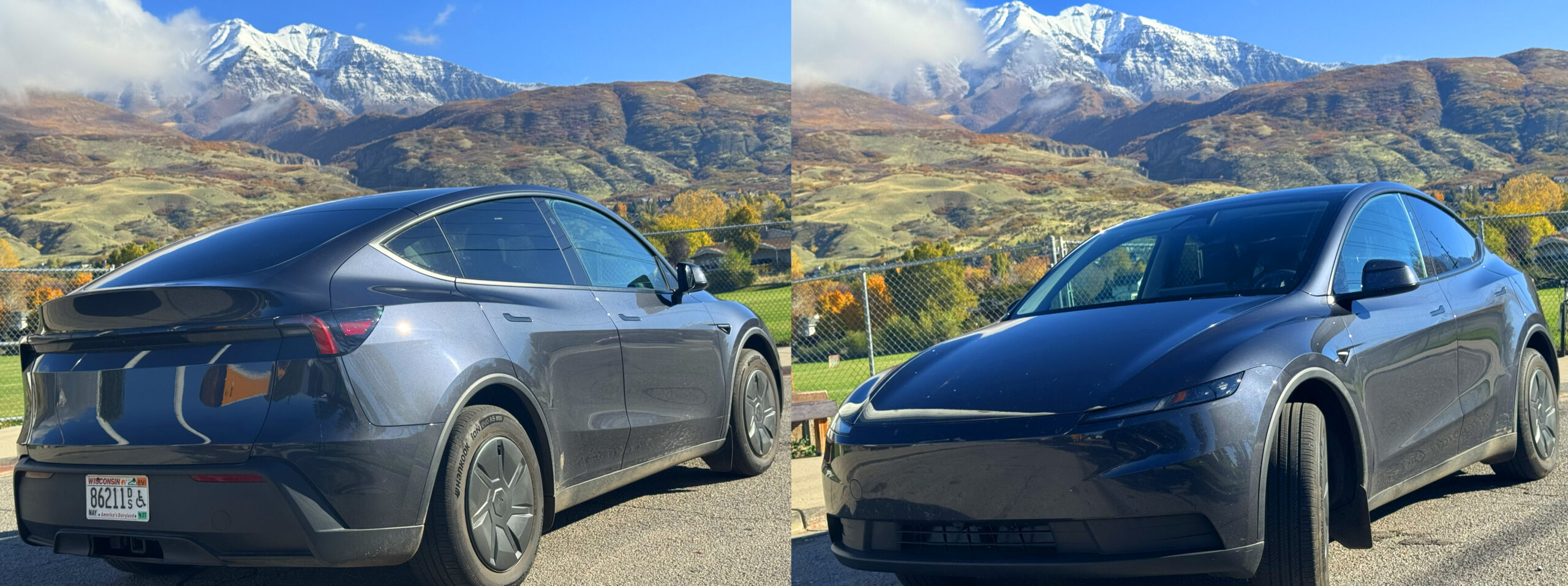
The article then moves to Tesla-specific buying advice. CleanTechnica says the lowest-price Tesla is the Model 3 RWD, with seating for five and 321 miles of range, at $37,000. It says the Model 3 Premium has 363 miles and costs $47,500. It says the base Model Y costs $40,000 and offers more cargo space, a higher seating position, a larger power liftgate, and an optional factory-installed receiver/tow hitch. It says the premium Model Y adds styling, 363 miles of range for the RWD model, faster charging, better audio, and a small rear-seat video screen for another $5,000, while four-wheel drive is a $2,000 option on all models and reduces range slightly. The optional Model YL, per the source, seats six in three rows of captain's chairs. The author says they upgraded from a 2019 Model 3 to a base 2026 Model Y. All of these prices, ranges, and configuration details are single-source in the provided material.
On driver assistance, CleanTechnica says every Tesla comes with smart cruise control, that autosteer was recently eliminated unless the buyer pays for Full Self-Driving, and that FSD now costs $99 per month. It describes traffic-jam automation and voice-command navigation from a garage, parking lot, or Supercharger: saying “Hey Grok,” then dictating a destination, with FSD driving to the location and parking. It also says:
"Tesla has introduced a new feature called Automatic Collision Evasion , which can autonomously activate Full Self-Driving (FSD) to avoid imminent collisions, even if the driver has not engaged the FSD system. This feature aims to enhance safety by allowing the vehicle to take evasive actions during critical situations."The quote frames FSD as a safety layer even when not engaged, but the provided material does not include independent technical documentation, regulator statements, or test results supporting that description.
Beyond Tesla, CleanTechnica says there are 161 different new EV models available in the U.S. today and that top-selling EVs in the U.S. in 2026 to date are led by Teslas, with the Hyundai IONIQ 5 and Toyota bZ as alternatives. It says the Toyota bZ has excellent reviews and workmanship and spectacular acceleration, but that its lane-keeping assist only works on gentle turns, based on the author's test drive. These are market and product impressions from one author; no independent outlet in the provided material corroborates them.
Audit & Contradictions
The fact-check audit of the provided material found no independent outlet confirming the article's specific automotive claims. The only related item in the supplied corroboration is a same-series CleanTechnica Part 1 item; the other listed headlines are unrelated. Therefore, every price, range, charging rate, model count, sales ranking, FSD description, and incentive claim should be treated as single-source or unverified. That includes the 300-mile daily convenience threshold, the 28-mile-per-hour and 4-mile-per-hour charging rates, the $37,000 Model 3 RWD and $47,500 Model 3 Premium figures, the $40,000 base Model Y, the $99 monthly FSD price, the 161-model count, and the Toyota bZ impressions.
The article also contains a referral section that creates a financial interest in Tesla purchases. CleanTechnica lists incentives including two months of free Full Self-Driving, $1,000 off a Cybertruck, and one year of free Supercharging with a new Model 3 Premium or Performance. It also says Model 3 or Model Y buyers get two free FSD months on top of one free month for new Model Ys, then states a total of three free months. That total does not clearly follow for Model 3 buyers, because the extra month is described for new Model Ys. This is a medium-level internal contradiction, not a minor wording issue, because it affects how a buyer should value the offer.
Other unverified elements include the author's home-charging cost examples, the claim that autosteer was recently eliminated unless FSD is purchased, and the battery-care guidance. The article does not provide independent testing, warranty documentation, or regulatory sources for those statements. The fact-check audit did not find a low or no contradiction level; it found a medium-level inconsistency in the referral wording.
Future Outlook
If CleanTechnica's framing is accurate, the competitive pressure point is not only price but charging access: buyers with reliable 220-volt or Level 2 charging may experience EV ownership differently from buyers dependent on public infrastructure. That distinction could matter for how automakers and charging providers market convenience, especially as the source claims 161 new EV models are available in the U.S. If the market is that crowded, Tesla's referral bundling—free FSD months, Supercharging, and Cybertruck discounts—may be less a neutral consumer tip than a customer-acquisition tactic. Competitors such as Hyundai and Toyota, named by the source as alternatives, could be judged by buyers on the same practical variables: charging speed, driver-assistance limits, and total cost of ownership. The source does not provide enough verified data to settle those comparisons, so any market conclusion should remain provisional.