Lead Hook
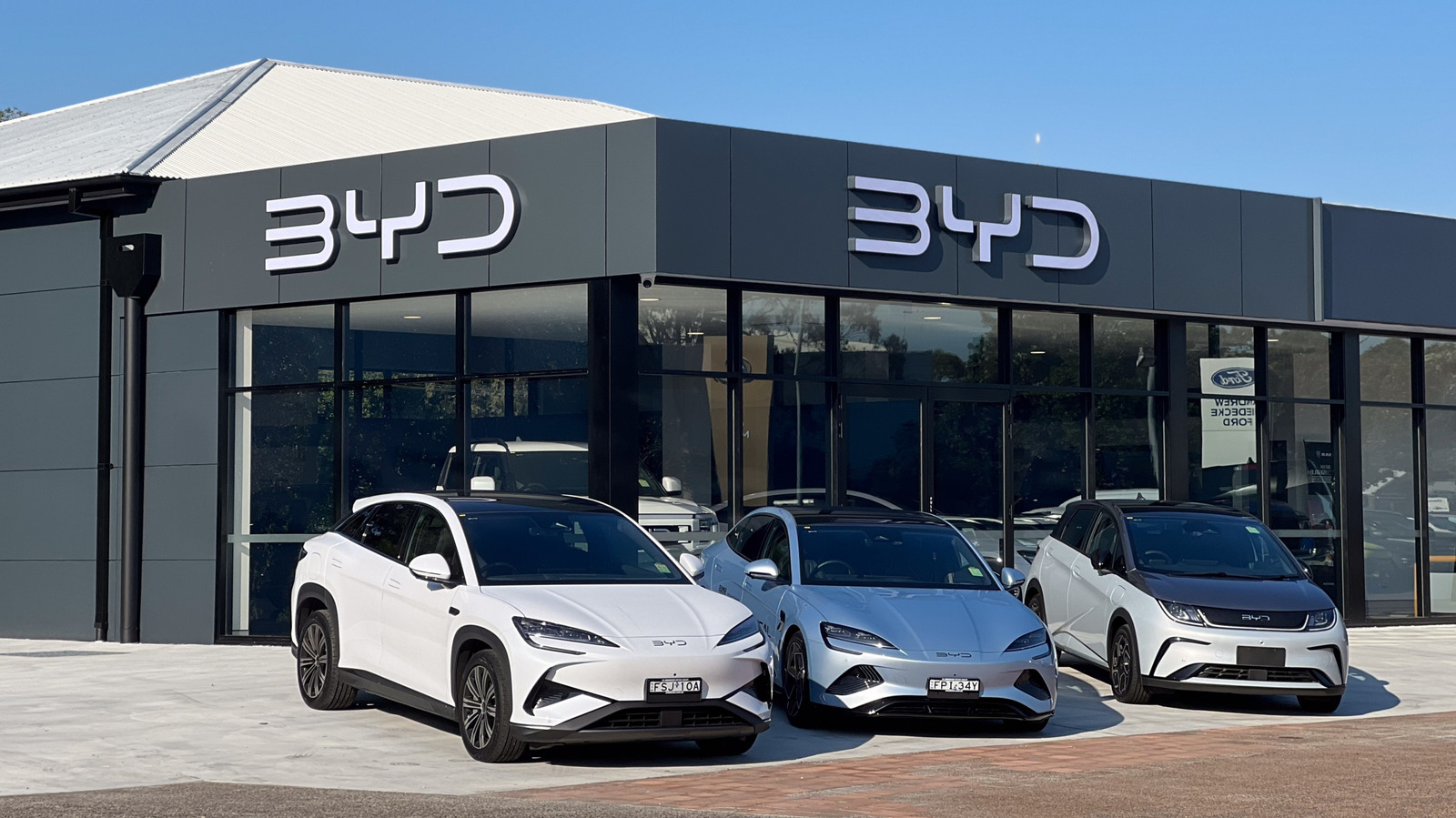
The fight over Chinese vehicles in the U.S. is moving from tariffs and agency rules toward a possible statutory wall. CarScoops reports that the Alliance for Automotive Innovation renewed its call on Monday for Congress to block Chinese automakers from the American market, framing the issue around both security and competition. The stakes are not abstract: according to the same report, the group’s president, John Bozzella, warned lawmakers against letting Chinese brands replicate their European gains in the United States. Other outlets, including Semafor, Global Times and BigGo Finance, have separately reported the broader push by U.S. automakers for restrictions, though the available corroboration is headline-level.
Deep Dive
According to the report, the Alliance’s membership includes Ford and GM alongside Toyota, Volkswagen, Hyundai and other foreign brands with a stake in the U.S. market. Bozzella urged Congress to
“stop Chinese automakers from doing here what they’ve gotten away with in Europe.”He pointed to EU imports of more than 1.1 million Chinese-built vehicles during the first eight months of 2026, a figure the report says exceeded the total for all of 2025. The argument, as described, falls into two categories: concerns over privacy and vehicle surveillance, and a desire to insulate domestic automakers from a product that is described as vastly cheaper and, in many ways, more sophisticated.
The report also stresses that restrictions already exist. Chinese automakers do not sell cars in America, it says, because tariffs and other barriers keep them out. In January 2025, the Biden administration finalized connected-vehicle restrictions targeting certain Chinese and Russian technology, as well as manufacturers with sufficient ties to either country. Software restrictions and a prohibition on covered manufacturers selling new connected vehicles take effect for the 2027 model year. Restrictions covering vehicle-connectivity hardware follow for the 2030 model year, with a separate January 2029 deadline for hardware without an associated model year. Importantly, these restrictions apply even when a vehicle is built in the USA, a point the report says has effectively pushed Polestar out of the country.
Congress could make such barriers more durable. The Connected Vehicle Security Act of 2026, sponsored by Republican Bernie Moreno and Democrat Elissa Slotkin, would put restrictions into federal law. According to the report, it advanced unanimously from the Senate Commerce Committee in July and covers connected vehicles, specified software and connectivity hardware associated with countries of concern. It also targets attempts to bypass restrictions by renaming, rebranding or restructuring covered products. That last provision signals an attempt to close loopholes before they are tested.
Audit & Contradictions
The central claim—that U.S. automakers are pushing Congress to ban Chinese vehicle imports—is corroborated at headline level by independent outlets. But the fact-check audit says most operational details remain single-source or unverified. That includes the Alliance’s Monday renewal, Bozzella’s statement, membership details, the EU import figure, the January 2025 rules and model-year deadlines, the bill’s sponsorship and committee action, President Trump’s September comments, and the report’s statement that consumers are paying over $50,000 on average for a new car. None of those specifics is independently verified in the provided corroboration, which consists only of headlines. No contradictions were identified in the provided material, and the contradiction level is Low. The report also notes that President Trump could veto the legislation if he chooses, and that he said in September he would be open to Chinese cars in America so long as they are built stateside—a possibility automakers and lawmakers might resist, while buyers facing high average new-car prices, according to the report, might be less dismayed.
Future Outlook
If the bill becomes law, the U.S. would move from administrative and tariff barriers to a more permanent legislative framework, potentially reducing the chance that a future administration could reopen the market through executive action. If it fails or is vetoed, the existing connected-vehicle rules and tariffs would still shape the landscape, but the door could remain open to stateside-built Chinese vehicles under the conditions described by Trump. Either way, the report frames the lobbying as an effort to avoid competing with cheaper and more sophisticated products, while the consumer-cost figure it cites—over $50,000 on average for a new car—suggests why the market-access question may not disappear. The deeper question for regulators is whether national-security and privacy concerns can be addressed without locking out competition that might pressure prices.