Lead Hook
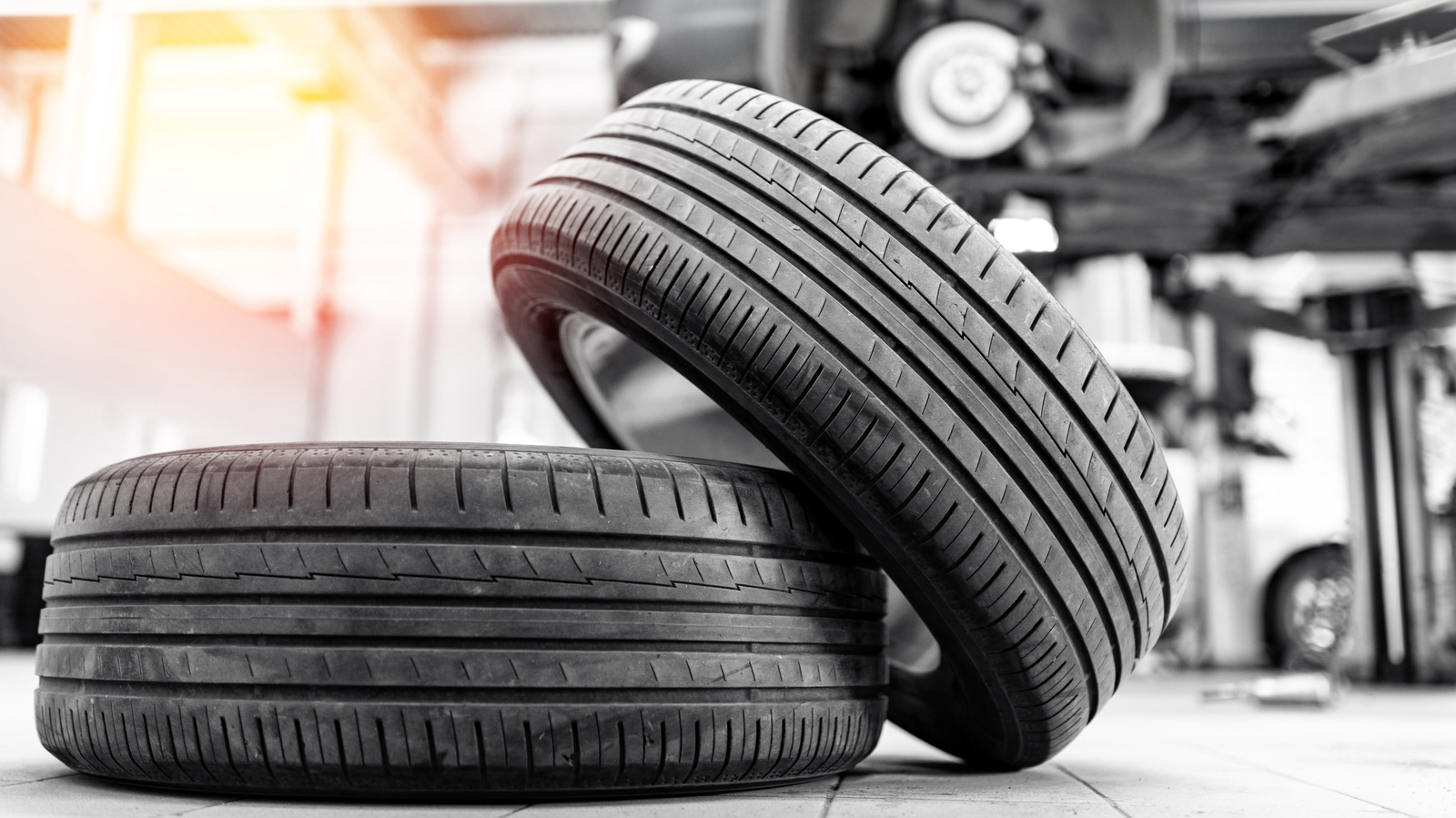
Walk into a tire shop with five-year-old rubber and you will be told, politely but firmly, that it has to come off — even if the tread is deep and the car has barely moved. The rule is repeated so often it has acquired the weight of physics. It is not physics. CarScoops reports that the five-year rule is a decades-old heuristic, one that even manufacturers are hesitant to cite as a definitive cut-off, and that there are situations where a tire can reasonably run six, seven or more years. The gap between a slogan and a specification is where liability, inventory economics and genuinely useful maintenance advice collide — and where this story's numbers turn out to be remarkably thin.
Deep Dive
The mechanical case for the rule is real, and CarScoops sets it out clearly. Tires are cured rubber compounds that break down through thermo-oxidative degradation — oxygen slowly attacking the compound. Cracks begin microscopically and eventually become visible on the sidewall. That sidewall is the part that literally bears the weight of the vehicle, which is why visible cracking means replacement immediately, per the outlet. Heat accelerates the process, as do ultraviolet light, ozone, salt — including on de-iced roads far inland — and under-inflation, since a soft tire runs hotter as it rolls. And the clock does not stop when the car does: tires age in a dark warehouse, just more slowly, and they age in the trunk. Underslung spares exposed to sun, rain and road grime degrade faster still.
What manufacturers actually say, as CarScoops relays it, is a ladder rather than a cliff. Michelin recommends a professional inspection at least once a year once a tire reaches five years of age. Most manufacturers reportedly treat six to eight years as an elevated-risk window requiring inspection twice a year, strongly recommend replacement between eight and ten years, and make it mandatory past ten.
Then comes the arithmetic that reframes the debate. CarScoops notes that a driver covering 15,000 miles a year will reach the legally mandated tread-wear limit well within five years — the calendar never gets the chance to matter. The age rule, in practice, is aimed at the opposite motorist: the one doing roughly 5,000 miles a year or less, whose tires expire long before they wear out.
The buying side matters just as much, and here the outlet's guidance is openly time-stamped. New on the car does not mean newly made; the four-digit date code on the sidewall gives the week and year of manufacture, which any buyer can now read. Writing with 2026 as its example, CarScoops advises targeting tires built in the previous three months — naming July through September — with March or April also acceptable, and warns that late-2025 stock has already lost a year of service life before it reaches your hands. That aged stock, it adds, is precisely what sales staff push hardest to clear, so buyers should expect a discount rather than pay full freight.
Audit & Contradictions
Here the reporting gets uncomfortable, and the fact-check record is unambiguous: none of this is independently corroborated. Every figure above — Michelin's annual inspection, the six-to-eight-year twice-yearly window, the eight-to-ten-year replacement band, the ten-year mandatory line, the three-month freshness target, the 15,000-mile arithmetic — rests on CarScoops alone. Readers should treat each as the outlet's characterization of manufacturer guidance, not as a verified industry standard.
Worse, the four items supplied as independent corroboration do not corroborate this story at all. Reporting carried by CBS8, Grist and Edhat covers California's first-of-its-kind replacement-tire efficiency rule, which takes effect in 2029; Grist reports it could save drivers $1 billion a year. That is a rolling-resistance and fuel-economy mandate — a different subject that shares only the word tires. The fourth item is a CarScoops Google News listing of the primary article itself, a self-referential duplicate rather than a second outlet. The fact-checker rates contradiction risk as medium on exactly this basis.
There is also an internal date problem. The freshness advice is written as though right now is early autumn, calling July through September the last three months. Checked on 7 November 2026, that window is four to five months old — a meaningful flaw in a recommendation whose entire value is recency.
The article also leaves real questions open. It cites no regulator, no independent materials study and no testing body; it does not quantify blowout risk by age, distinguish tire classes, or address how storage conditions should modify the calendar. Those absences are not evidence the advice is wrong — only that its authority is asserted rather than demonstrated. The verified elements are narrower than they look: the date-code method, the fact that the five-year figure is a heuristic, the degradation mechanism, and the list of accelerants are all stated plainly by the primary source, but they are still single-source statements rather than independently confirmed findings.
Future Outlook
The regulatory centre of gravity is moving somewhere else entirely. California's 2029 efficiency requirement, as reported by CBS8, Grist and Edhat, will make replacement timing partly a compliance and fuel-cost decision rather than a purely age-based one. If rolling resistance becomes a regulated attribute, expect dealers, fleet operators and insurers to start asking for measured performance rather than a manufacture week — and expect the discount on aged inventory to become a documented line item rather than a negotiating courtesy.
For now, the practical read is the one the source actually supports: read the date code, buy the freshest stock you can and demand money off if you don't, inspect annually after five years, and stop treating a round number as an engineering limit. The rule survives because it is cheap to apply and hard to disprove — which, for a claim this consequential, is exactly the problem.