Lead Hook
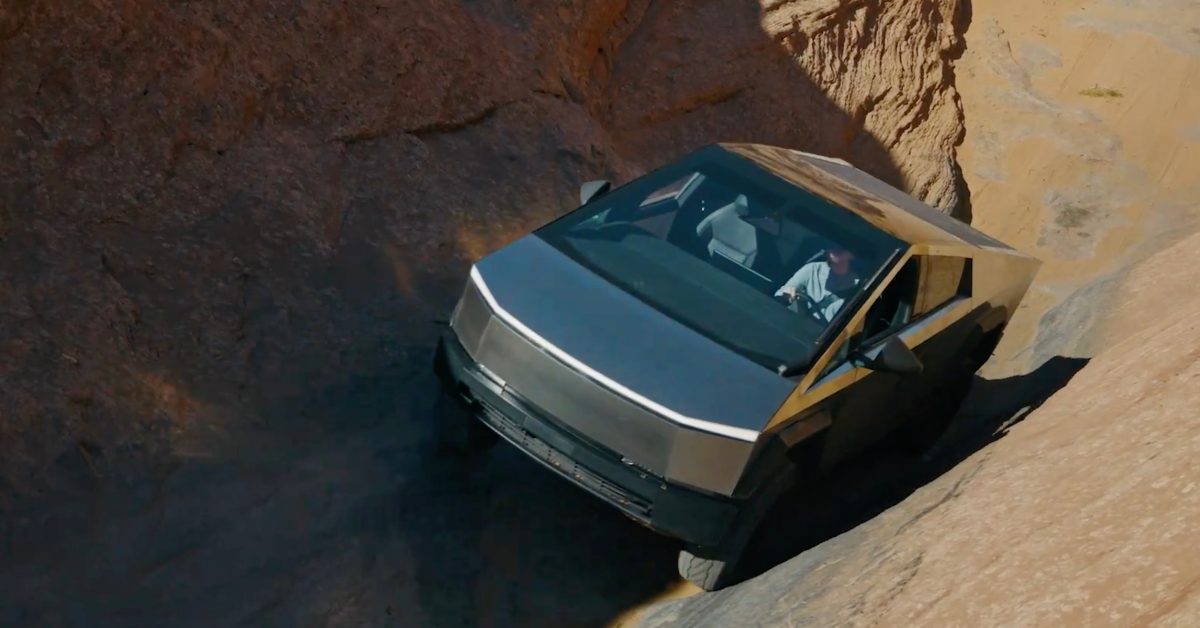
Tesla has raised Cybertruck prices in the U.S. by up to 10% and stopped taking orders for the base Dual Motor AWD trim, leaving the cheapest truck a buyer can actually order at $92,490, according to Electrek. The increase follows Tesla's confirmation that it will end Cybertruck production at Gigafactory Texas around mid-2027. On its face, the move looks like standard pricing. In context, it reads more like an end-of-life margin strategy: once a program is scheduled to close, volume matters less than extracting value from remaining build slots.
Deep Dive
Electrek's configurator comparison shows three current prices against August levels: the Dual Motor AWD at $82,490, up $7,500 (10%) from $74,990 but no longer orderable; the Premium AWD at $92,490, up $7,500 (8.8%) from $84,990; and the Cyberbeast at $102,490, up $2,500 (2.5%) from $99,990. The Dual Motor trim still displays the higher price even though the option is greyed out, meaning, as Electrek notes, Tesla raised the price of a version it is not selling.
This is the second increase in less than three months. Electrek reports that Tesla added $5,000 to two trims in August, taking the Dual Motor from $69,990 to $74,990 and the Premium AWD from $79,990 to $84,990. The cumulative effect is stark: the Premium AWD is now $12,500, or 15.6%, above its early-August price, while the entry price for any Cybertruck that can be ordered moved from $69,990 to $92,490, a 32% jump in about 10 weeks. Electrek also notes that Tesla unveiled the Cybertruck in 2019 with a promised starting price of $39,900.
The demand backdrop makes the hikes unusual. Tesla does not break out Cybertruck deliveries, but Electrek reports that the broader "Other Models" category, which also includes the Model S, Model X and Semi, fell 48% year-over-year to 8,295 units in the third quarter. Electrek estimates that 7,000 to 8,000 of those were Cybertrucks, or about 12% of the line's 250,000-unit annual capacity. A separate corroborating report from the Economic Times said the Cybertruck sold only 20,237 units last year, far below expectations of 250,000 units annually, and that multiple delays and recalls significantly affected the program since its November 2019 unveiling.
Tesla has already tried the opposite tactic. Electrek reports that the company offered a dual-motor Cybertruck at $59,990 in February for "only the next 10 days," then withdrew it, and discontinued a single-motor rear-wheel-drive version after just 173 sales. Neither effort, by Electrek's account, moved the needle. Market availability has also narrowed: Electrek reports the truck is not sold in Europe or most right-hand-drive markets, and that Tesla canceled it for Australia and New Zealand last month.
Electrek's interpretation is that this is what a wind-down looks like. Once production is ending, the outlet argues, volume stops mattering; Tesla has a fixed number of build slots left, parts to burn down, and a small group of fans who may want one before it is gone. Pausing the cheapest trim and charging $7,500 more for the rest, in that reading, pushes buyers into higher-margin configurations and stops treating the base truck as a real product. The Economic Times, meanwhile, reported that Tesla plans to increase production of the Cybercab as part of its future strategy, underscoring a shift in attention even if the two programs are not directly linked in the reporting.
Audit & Contradictions
The broad developments are corroborated: independent outlets support the price hikes, the pause in base Dual Motor AWD orders, and the end of Cybertruck production around mid-2027. The 250,000-unit annual target or capacity figure is also corroborated in the surrounding reporting. But most of the detailed claims remain single-source. Electrek alone supports the exact trim prices and changes, the Q3 category figure of 8,295 units and the 7,000-to-8,000 Cybertruck estimate, the August price changes, the February $59,990 offer, the 173 RWD sales, the market-availability claims, and the $39,900 promised 2019 price. The Economic Times' 20,237-unit figure is also a single report.
There is one clear internal inconsistency. Electrek describes 7,000 to 8,000 Cybertrucks as "about 12%" of a 250,000-unit annual capacity, but that share is roughly 2.8% to 3.2%. The contradiction does not invalidate the underlying delivery estimate, but it does mean the percentage should not be repeated as stated. Another nuance: only the Dual Motor AWD carries the full 10% increase, and it is the trim Tesla has stopped selling, while the Cyberbeast rose just 2.5%. The reporting also does not include a Tesla statement explaining the pricing rationale, so the wind-down reading should be treated as Electrek's analysis rather than company confirmation.
Future Outlook
If Electrek's reading is right, the remaining Cybertruck build slots will be sold as a scarcity product rather than a volume product. That could lift per-unit revenue on the last trucks while reducing the program's exposure to weak demand, but it also confirms that Tesla has not found a mass-market price point for the vehicle. Buyers now face a much higher entry price, and any late demand created by the end-of-production announcement would have to absorb $92,490 or more. For Tesla, the strategic question is less about rescuing Cybertruck volume and more about whether resources, including Gigafactory Texas capacity, shift toward newer programs such as the Cybercab, as the Economic Times reported. The broader lesson, in Electrek's view, is that Tesla moved from a $59,990 limited-time offer in February to a $92,490 entry price in November without resolving who the truck was for.