Lead Hook
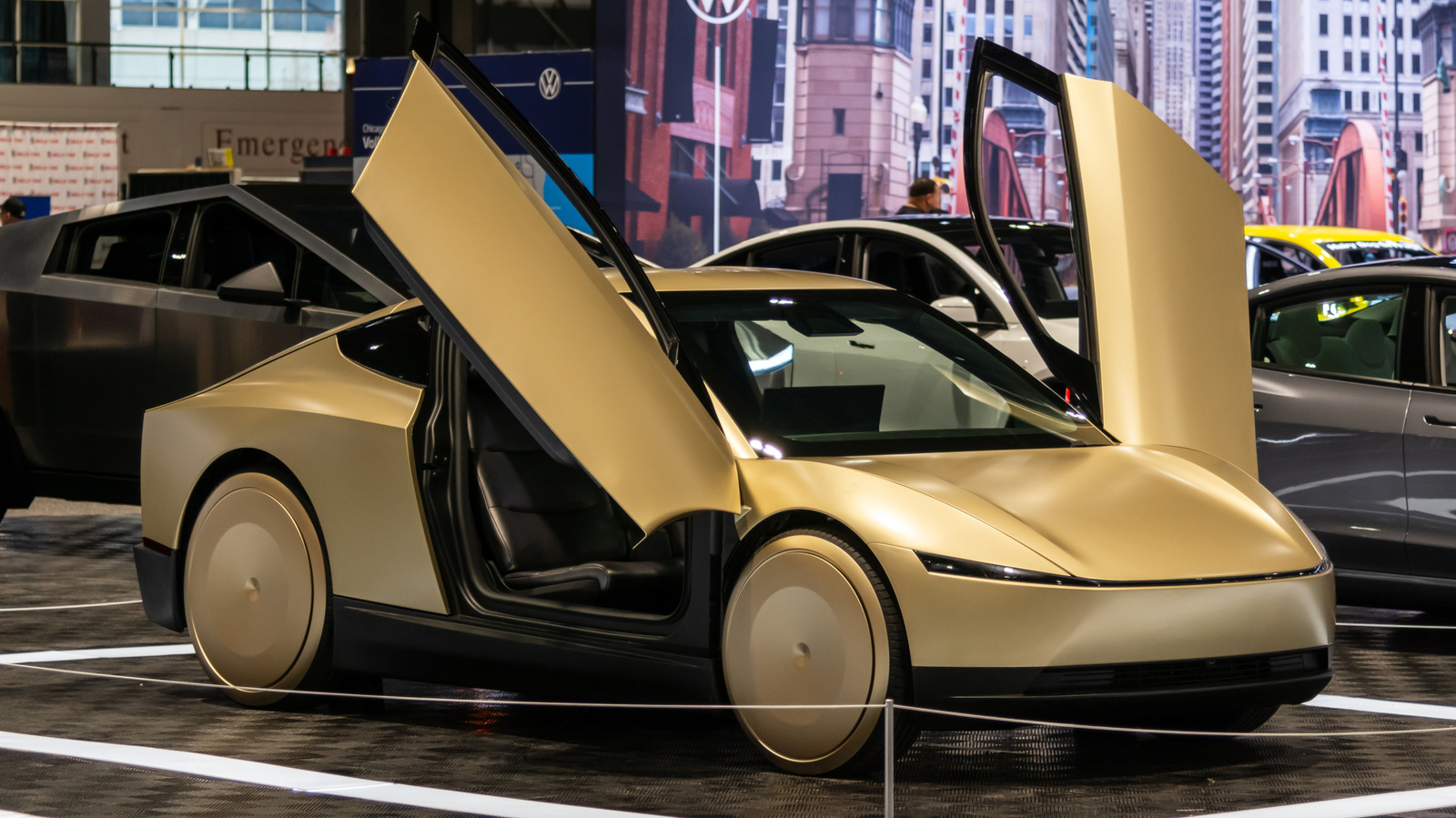
The Cybercab’s most eye-catching design choice—no steering wheel and no pedals—has also become its most consequential regulatory problem. According to Carscoops, the vehicle launched into an immediate NHTSA investigation over how Tesla could certify a car for road use without those controls. The company has now answered the agency, but its public response, as reported by the same source, is a single sentence: “The entirety of this file is confidential business information.” That means the central compliance argument is, for now, invisible to the public, competitors, and safety advocates alike. Independent coverage from WIRED and Yahoo, cited in the provided material, corroborates the launch-and-investigation storyline and the absence of a steering wheel; the filing details below come from the primary report and should be read as single-source unless noted.
Deep Dive
The mechanics matter because automakers such as Tesla, per the primary report, self-certify that their vehicles meet or exceed Federal Motor Vehicle Safety Standards. That system can move quickly, but it also means the public often sees the outcome—a certified vehicle—without seeing the engineering and legal reasoning behind it. In this case, the report says a September 10 Special Order from NHTSA included 21 requests about how Tesla certified the Cybercab, each to be answered under oath. The questions reportedly cover how the company met FMVSS 135, which the order quotes as requiring that “The service brakes shall be activated by means of a foot control.” That standard reads like a direct collision with a pedal-less cabin. The agency also reportedly asked about mirrors, turn signals that cancel through steering wheel rotation, and whether Tesla used temporary controls to certify the car. If temporary controls were used, the report notes, that could conflict with regulations prohibiting the disabling of required safety equipment. In other words, the issue is not merely whether the car can drive itself; it is whether a rulebook written around human-operated controls can be satisfied by a vehicle designed to remove the human interface entirely.
Some details did surface outside the confidential filing. Tesla reportedly released a 30-page Cybercab first-responder document describing the vehicle as “Not typically equipped with a steering wheel or acceleration and brake pedals.” The phrasing raises, but does not answer, whether temporary controls can be installed when needed. The document also reportedly describes a responder workflow: show a badge to the camera in the B-pillar, have credentials verified by a Tesla representative, and receive controls on the infotainment screen. Those on-screen controls may help emergency access, but they do not by themselves resolve the NHTSA questions about physical controls embedded in federal standards. The report frames the first-responder document as partial disclosure, not a compliance proof.
Audit & Contradictions
The announcement leaves major gaps. It does not publicly explain Tesla’s answer to any of the 21 requests, does not confirm or deny the use of temporary controls, and does not provide a technical rationale for satisfying standards such as FMVSS 135. It also does not state a resolution timeline. According to the primary report, Tesla had until September 30 to respond, requested an eight-week extension, and was given an October 30 deadline; that date has passed, and the automaker did respond, but only with the confidentiality assertion. The report adds that if the administration accepts Tesla’s arguments, the document may never become public, while if NHTSA disagrees that the material is confidential business information, it has the right to release it. Those procedural details, along with the 21-request count, the FMVSS 135 quotation, the first-responder document, and the on-screen control workflow, are single-source in the provided material and should be treated as reported rather than independently verified. The fact-check data identify no direct contradictions; the contradiction level is low to none. What is corroborated at headline level is narrower: the Cybercab launched and is under NHTSA investigation, and it was designed without a steering wheel.
Future Outlook
For regulators, the case highlights a structural lag: safety standards often assume a human operator, while autonomous vehicles are built to remove that operator. For competitors, the outcome could shape how much compliance reasoning must be public when a novel vehicle architecture is certified. For Tesla, the immediate question is whether NHTSA accepts the confidentiality claim or forces disclosure. If the document remains sealed, the public will be left with a certified-seeming product and an unanswered question about how it clears rules written for foot controls and steering inputs. If it is released, the industry may get a rare look at how one automaker maps an unconventional control-less design onto conventional federal standards. Either way, the tension between rapid autonomous deployment and transparent safety proof is now on the record.