Lead Hook
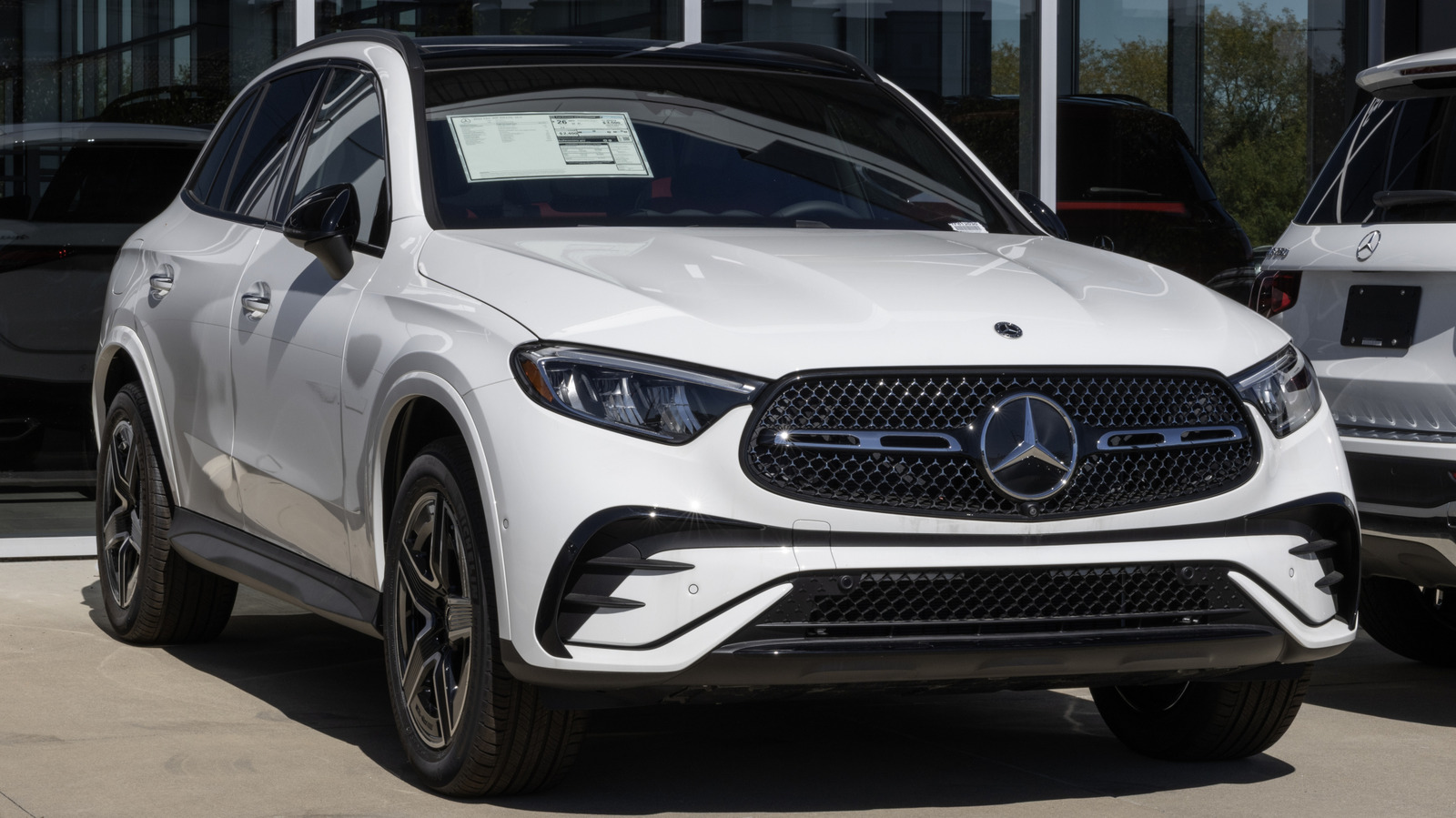
The headline is not just a scheduling slip. If Mercedes truly pushes U.S. production of the GLC from forecasts of late 2027 to May 2030, a popular SUV that Mercedes reportedly sold in almost 54,000 examples in the U.S. through the first nine months of 2026—and more than 71,000 in all of 2025—would remain an imported, tariff-exposed product for years. According to Carscoops, the GLC is currently built in Europe and subject to a 15% tariff, though that figure is single-source in the provided material. The same reporting says Mercedes confirmed earlier this year that it would build the GLC in the United States to avoid tariffs on the current model; the new timeline, attributed to unnamed sources who spoke to Auto News, would extend that exposure well beyond prior expectations. Independent outlet headlines, including those from CarBuzz, Car and Driver, and Motor1.com, also point to a possible delay to 2030, corroborating the core claim while leaving most supporting details unverified.
Deep Dive
The reported delay is large in calendar terms: more than two years beyond forecasts that assembly could start in late 2027, with May 2030 now cited as the possible start. Carscoops says Mercedes never gave a firm date for American GLC production, so the comparison is between reported expectations and newly reported plans, not a broken public deadline. No explanation has been given for the update, per the same source.
One possible explanation in the reporting is trade policy. Carscoops notes that a report says the tariff rate could be cut from 15% to 10% by the U.S. Commerce Department, a change that would save Mercedes millions of dollars. If that happened, Mercedes "may lose the impetus to fast-track North American GLC production," in the source's phrasing. That is a conditional chain, not a confirmed cause: the tariff cut is not presented as decided, and the link between a lower tariff and slower factory planning is an inference in the reporting rather than a Mercedes statement. The distinction matters because the entire economic rationale for localizing a vehicle can change when the penalty for importing it falls.
The second, more structural explanation is product-cycle timing. Mercedes launched the second-generation GLC in 2022, and Carscoops says analysts do not think it would make sense to build that model in the U.S. because it would be about eight years old by 2030. If the reported timeline holds, the more likely candidate for North American production is the next-generation GLC. That shifts the decision from "avoid tariffs now" to "align U.S. capacity with a future platform," a different capital-allocation problem. The source says very little is known about the next model, but it believes the vehicle will retain a large selection of combustion and hybrid powertrains while continuing to offer an all-electric GLC variant. That expectation is single-source and forward-looking, not a confirmed specification.
The Alabama context shows why a delay does not necessarily mean a retreat from U.S. manufacturing. Carscoops reports that Mercedes operates an important manufacturing facility in Alabama, where it builds the GLE, GLE Coupe, and GLS. The plant built its 5 millionth vehicle earlier this year, and Mercedes has committed to investing more than $7 billion in U.S. operations by 2030, with $4 billion directed specifically to the Alabama site. Those figures are single-source in the provided material, but they frame the GLC decision as one product-timing question inside a larger, still-active U.S. investment plan rather than as evidence that Mercedes is abandoning American production.
Audit & Contradictions
The fact-check audit found no contradictions in the provided material, and its contradiction level is low. What it did find is an asymmetry between corroboration and verification. The central delay claim—that U.S. GLC production may be pushed to May 2030—is corroborated by multiple independent outlet headlines. By contrast, the sales volumes, the 15% tariff rate, the possible Commerce Department reduction to 10%, the Alabama plant's output and investment figures, the 2022 launch date and eight-year age estimate, and the next-generation powertrain expectations are single-source or unverified in the provided material. Several of these claims also depend on unnamed sources, including the Auto News sourcing for the May 2030 date. The source gives no explanation for the delay, and it does not confirm that the tariff cut will occur. A careful reading therefore treats the delay as plausible and widely echoed, while treating the surrounding economics as reported possibility rather than established fact.
Future Outlook
For competitors and suppliers, the immediate implication is that Mercedes' GLC would likely remain an imported product in the U.S. for several more model years if the reported schedule holds, with the size of that exposure depending on whether the reported 15% tariff persists or falls to the reported possible 10%. For Mercedes, the more important question may be whether the next-generation GLC becomes the vehicle that finally justifies U.S. assembly, especially if Alabama capacity and the broader $7 billion U.S. investment plan are already committed. The source's expectation that the next model will keep combustion and hybrid options alongside an all-electric variant suggests the platform decision is not simply an EV transition question; it is a question of which powertrain mix can support a U.S. build. Regulators and trade officials could also alter the math without any change in Mercedes' product plan, because a tariff reduction would reduce the urgency of localization even as the company continues to invest in American manufacturing. In that sense, the reported delay looks less like a retreat and more like a recalculation—provided the underlying reports prove accurate.