Lead Hook
Kia's next product wave did not arrive via a press conference. It surfaced through a leaked internal document that, according to CarScoops, was reported by The Korean Car Blog and is said to be sourced from Kia's Employment Stability Committee. That origin is the story: this is workforce-planning data, not marketing copy, and it maps production strategy for 2028 and 2029 across four South Korean factories. The breadth is the signal. In one coordinated wave, the document reportedly points to a "completely redesigned" Carnival minivan with a new hybrid system and a possible hydrogen variant, a fifth-generation Sorento, a "product improvement" for the underperforming Tasman pickup, an all-new EV7 electric SUV positioned between the EV5 and EV9, an updated Bongo light commercial vehicle, and a reallocation at the Gwangju Hanam plant from large buses toward military vehicles. Read together, it describes a capital-intensive, multi-front renewal rather than a single model launch.
Deep Dive
The document's plant-by-plant logic is where the economics show. At Gwangmyeong, Kia will reportedly start production of "completely redesigned" models including a new Carnival. Per the report, the minivan has been in its fourth generation since 2020 and received a facelift in late 2023; its successor is said to debut a new hybrid system first appearing on the Hyundai Tucson, with an electrified setup rumored to improve efficiency while adding camping-friendly features. The Carnival will reportedly gain a hydrogen variant by 2029, likely borrowing the fuel-cell system and hydrogen technology from the Hyundai Nexo, which if it arrives would make it Kia's first-ever production fuel-cell electric vehicle. The same plant strategy thus spans combustion-hybrid and hydrogen pathways for one nameplate.
"completely redesigned"
— as the leaked document, reported by CarScoops, describes the Carnival's successor.
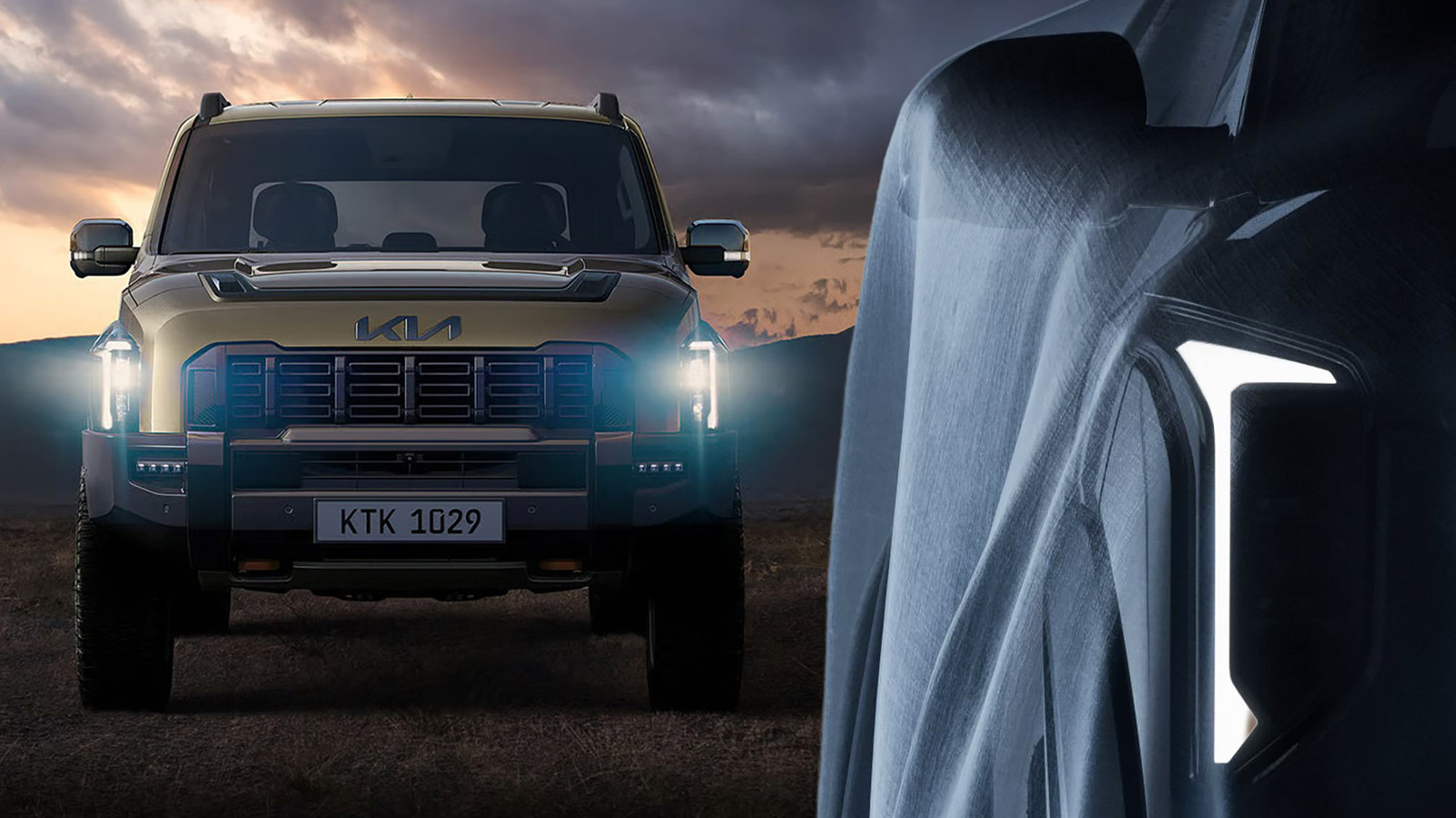
At the Gyeonggi Hwaseong plant, the mechanically related Sorento is also getting a new generation. The report describes the Sorento as fourth-generation, introduced in 2020, with a comprehensive 2023 facelift, and says the fifth-generation model is scheduled to enter production in 2028 fitted with a self-charging hybrid powertrain. That plant also builds the Tasman midsize truck, which is about to receive a "product improvement" while expanding its lineup with new derivatives — possibly a rugged ladder-frame three-row SUV. The updates are aimed at making the Tasman more attractive to buyers, as sales in Australia remain significantly lower compared with initial targets. Earlier this year, according to the report, Kia admitted the truck's design needs fixing but confirmed it will not undergo an early facelift — a notable constraint that limits how quickly the brand can respond to the shortfall.
The Gwangju factory is slated to build an all-new Kia EV7, set to compete in the segment of electric midsize SUVs and, as the name implies, larger than the Sportage-sized EV5 and smaller than the flagship EV9. The same location will reportedly manufacture an improved version of the long-serving Kia Bongo cabover light commercial vehicle by 2028. Finally, the Gwangju Hanam plant will reportedly focus on expanding production of specialized military vehicles and derivatives while ending large bus production to make room for the newcomers. That last move is the clearest signal of portfolio triage: capacity is being reallocated from a legacy segment toward defense and the incoming passenger and commercial models.
Audit & Contradictions
The fact-check record is unambiguous on one point: no independent outlet in the provided material corroborates the Kia claims. The only matching item is the same CarScoops headline, meaning every future-product detail remains single-source and unverified. What is directly supported is the leak's attribution and framing — that it comes from Kia's Employment Stability Committee and covers 2028 and 2029 strategy across four South Korean factories — along with the historical statements: the Carnival's fourth generation since 2020 and late-2023 facelift, the Sorento's fourth generation introduced in 2020 with a comprehensive 2023 facelift, the Tasman's Australian sales significantly below initial targets, and Kia's admission that the Tasman's design needs fixing without an early facelift. Those are reported as the source's account of history, not independently verified facts.
Everything forward-looking must be hedged. Single-source and unverified claims include: the completely redesigned Carnival's production at Gwangmyeong with a new hybrid system debuting on the Hyundai Tucson; the Carnival's hydrogen variant by 2029 using Hyundai Nexo fuel-cell and hydrogen technology; the fifth-generation Sorento entering production in 2028 at Gyeonggi Hwaseong with a self-charging hybrid; the Tasman's product improvement and possible derivatives including a rugged ladder-frame three-row SUV; the EV7's positioning between the EV5 and EV9; the improved Bongo by 2028; and the Gwangju Hanam shift to military vehicles and end of large bus production. No contradictions were identified in the provided material, and the contradiction level is low. The appropriate reading is therefore "the document reportedly says," not "Kia has confirmed."
Future Outlook
If the document is accurate, Kia's 2028-2029 window is less about one hero model than about synchronized renewal across minivan, midsize SUV, pickup, electric SUV, and light commercial segments — while simultaneously adding a hydrogen pathway and a defense pivot. That is a heavy capital and engineering load, and it lands against a Tasman that is already missing sales targets in Australia without the relief of an early facelift. Competitors in the midsize electric SUV space will be watching the EV7's arrival between the EV5 and EV9, and the hydrogen Carnival — if it materializes — would mark Kia's first production FCEV, a notable bet on fuel-cell minivans at a time when most rivals are concentrating on battery-electric lineups. The workforce-document origin also suggests internal planning is running ahead of public messaging, which typically means timelines and specifications can still shift before any official announcement.