Lead Hook
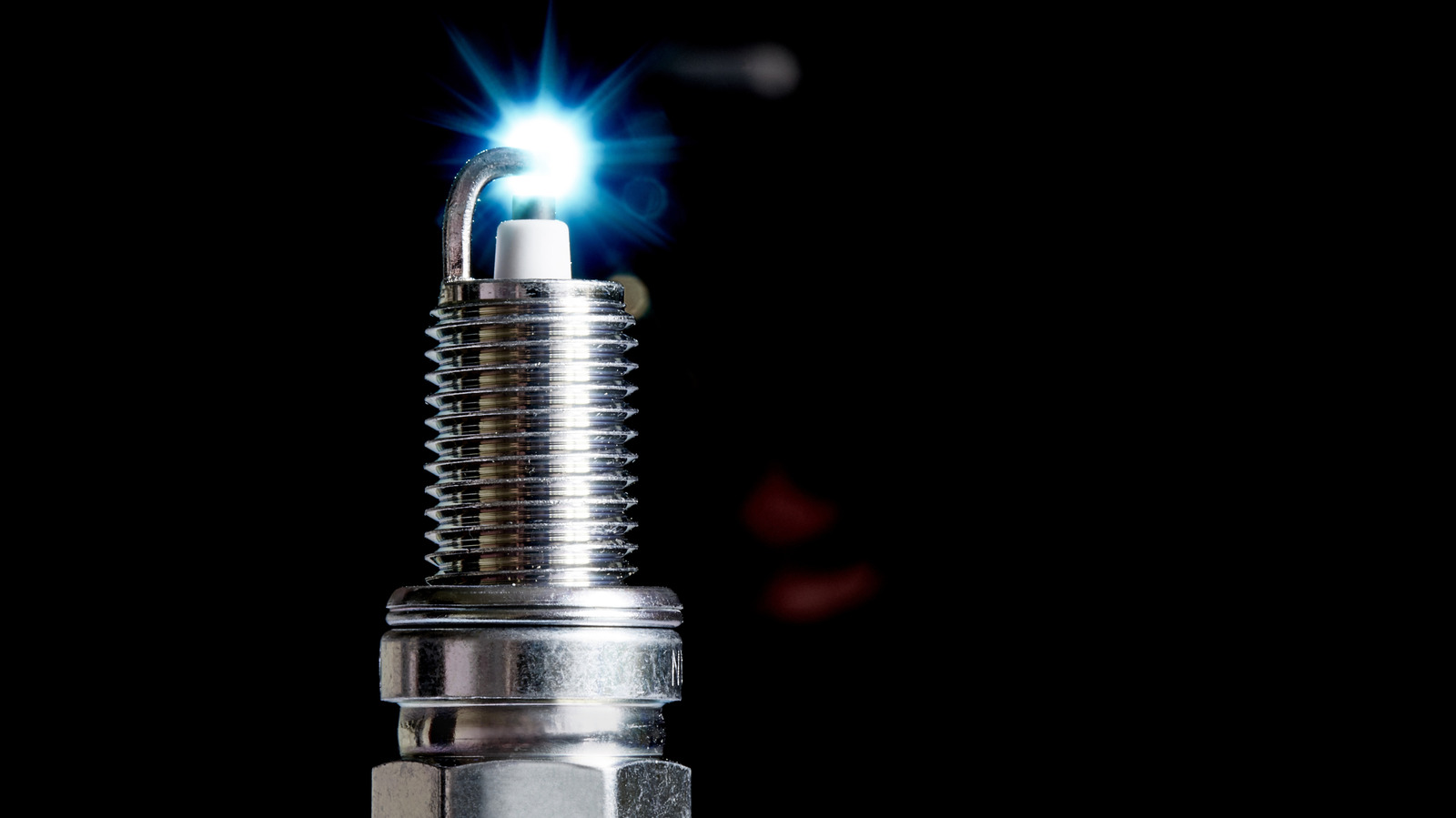
The most consequential spark-plug decision a driver makes is not which metal to buy. It is whether to trust the number in the owner's manual over the pitch on the parts-store shelf. Carscoops frames the iridium-versus-platinum question as a matter of application, writing that "it's more nuanced than simply choosing one over the other" and that the answer "greatly depends on the application." That framing is the real story. The plugs themselves are inexpensive consumables; the mismatch between a plug and the engine it is threaded into is what costs money — and that cost shows up in drivability and fuel, not only at the till.
The distinction matters because the aftermarket sells upgrades while engines are engineered as complete systems. Carscoops' closing advice is to consult the manufacturer's specification and stick to it, whether that specification calls for platinum or iridium.
Deep Dive
The mechanical premise is not in dispute. According to Carscoops, spark plugs are essential in a gasoline engine because without them the air-fuel mixture would not combust — a point the fact-check register lists as directly supported by the primary source.
The historical and thermal figures are more fragile. Carscoops reports that early plugs were copper and that copper is no longer used on modern cars because it wears out quickly inside a cylinder where temperatures can routinely exceed 2,000 degrees Fahrenheit. Those numbers are the outlet's alone; no corroborating document in the supplied material repeats them.
Platinum, per the same article, melts above 3,200 degrees Fahrenheit and can last beyond 60,000 miles in a well-maintained engine — the attributes Carscoops uses to argue that platinum suits most daily driving. Both figures are single-source and should be read as the outlet's characterisation rather than as benchmarked data.
Iridium is cast as the high-performance option: a melting point of roughly 4,400 degrees Fahrenheit, ultra-fine electrodes that Carscoops says generate a more precise and cleaner spark, and, in its telling, gains in both power and fuel efficiency. The article adds that many modern engines leave the factory with iridium plugs and that turbocharged or high-revving engines almost definitely require them. None of those claims is independently confirmed in the supplied material.
The one point with outside support is cost. Carscoops says iridium can run more than twice the price of an equivalent platinum plug. The exact multiple is uncorroborated, but the general premium is reinforced by Jalopnik, whose headline describes iridium as "too expensive" enough to sustain a spark-plug recycling trade. That is headline-level corroboration, not a price survey — treat the multiplier accordingly.
The hardest line in the piece concerns mixing. Carscoops calls combining iridium and platinum "a pretty hard no," warning that combustion would not be well matched across cylinders, and adds that fitting iridium into a platinum-spec engine delivers no gain while the reverse harms performance and economy. These are single-source engineering assertions; the article publishes no test data behind them.
Audit & Contradictions
The audit trail is thin in a predictable way: this is consumer advice, not a laboratory study. The piece publishes no dynamometer results, no part numbers, no gap or heat-range specifications, no labour costs and no warranty language — precisely the inputs an owner would need to price the decision. The melting points, the 60,000-mile service life, the 2,000-degree cylinder figure and the efficiency claim arrive without attribution to a metallurgical source, a technical paper or an automaker.
Only two claims clear the corroboration bar in the supplied material: that iridium carries a meaningful cost premium, supported at headline level by Jalopnik, and the basic function of a spark plug in combustion. Everything else — the temperature thresholds, the service intervals, the factory-fit assertion, the mixing prohibition and the claim that upgrading yields nothing — is single-source and should be attributed to Carscoops rather than stated as settled engineering.
Contradiction level is Low. No supplied document disputes the article, and the piece is internally consistent. What it omits is sourcing, not accuracy: readers are given conclusions without the evidence chain. It also never mentions the secondary market that Jalopnik's headline implies, leaving the cost story half-told.
Future Outlook
Three implications follow. For suppliers, platinum is not a legacy line: School Transportation News headlined Bosch's launch of a fine-wire double platinum plug, while Popular Science and Tire Review have both run spark-plug buying and technology coverage — evidence the category is actively merchandised in both metals, not being retired in favour of one.
For owners, the cost exposure is recurring rather than one-off. Carscoops says turbocharged and high-revving engines almost definitely need iridium, which, if accurate, converts a cheap maintenance item into a permanently premium one for a growing slice of the fleet — a claim worth watching as manufacturers publish their own specifications.
For the recycling trade Jalopnik's headline points to, the economics depend entirely on iridium staying expensive. The practical takeaway is duller than the marketing: in this category, the specification is the upgrade.