Lead Hook
The most interesting thing about Hurtan Automobiles’ latest commission is not that it makes a Volkswagen Beetle look older; it is that, according to CarScoops, the Spanish coachbuilder appears to have changed nearly everything the eye sees while leaving the donor’s modern platform, safety systems and running gear in place. If the report is accurate, the project is less a nostalgia exercise than a case study in how far a modern car can be visually reinterpreted without abandoning its underlying engineering.
Deep Dive
CarScoops reports that an unnamed Beetle owner in Germany commissioned the one-off from Hurtan, a Granada-based Spanish coachbuilder. The donor is described as an A5-generation Volkswagen Beetle Cabriolet, a model the same report says remained in production from 2011 to 2019. That alone frames the project as a re-skin rather than a new vehicle: the commission starts with a relatively recent convertible and asks a coachbuilder to make it read as something from an earlier era.
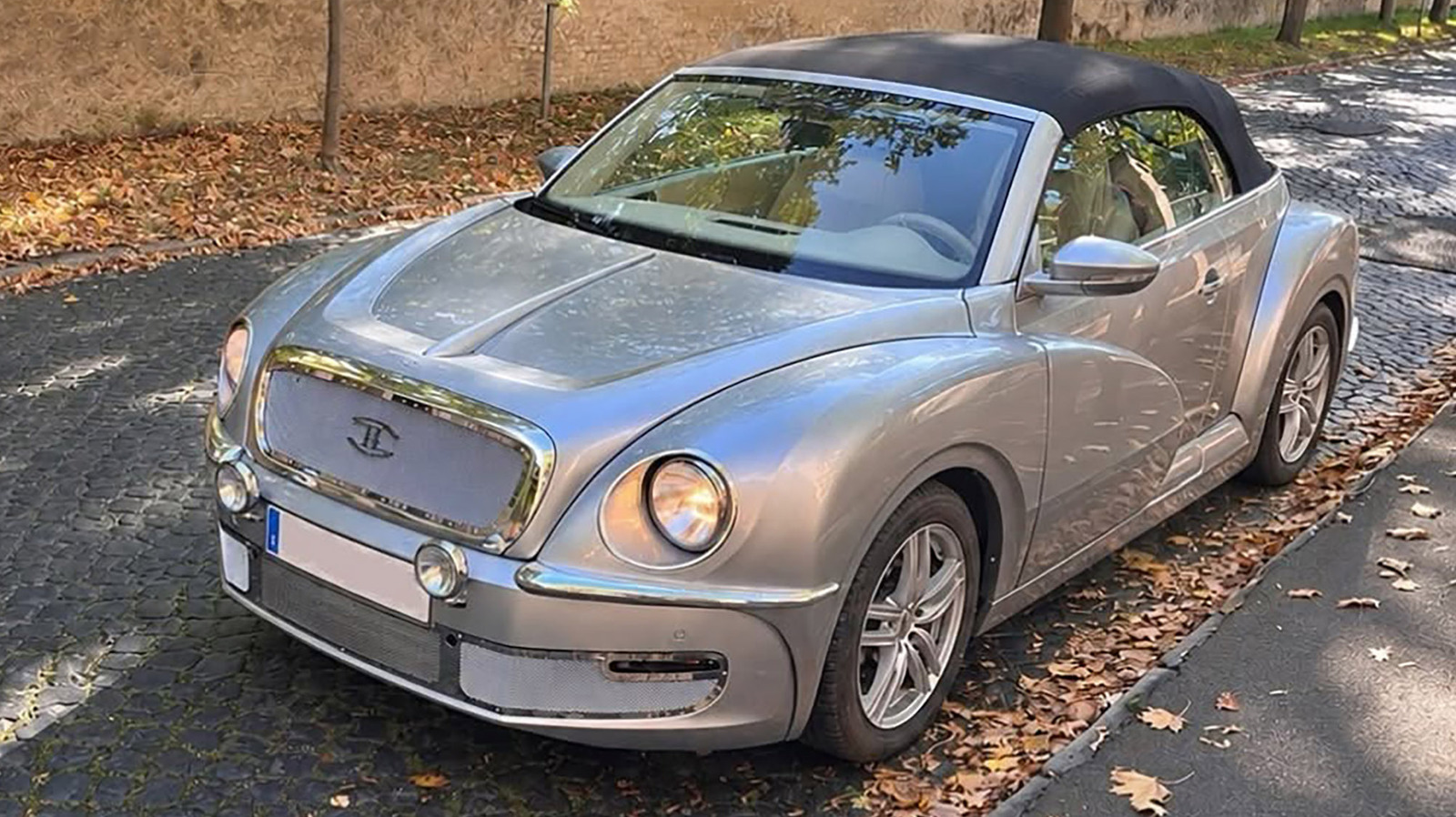
The same report says the car is “virtually unrecognizable” because custom body panels cover most of its surfaces. The only carry-over bits it identifies are the greenhouse, mirrors, door cards, rear quarter panels and fabric retractable roof. CarScoops also says the Beetle already had bulbous fenders from the factory, but that Hurtan extended them into the front doors. Those fenders carry round halogen headlights, while the front end combines a bespoke bumper with a Bentley-style grille featuring gold accents and the Hurtan emblem. Additional lights are mounted next to the license plate, and the hood recess is described as purely cosmetic.
At the rear, CarScoops says the overhang has been extended, creating space for swooping rear fenders and a pronounced bumper inspired by classic cars of the 1940s. The car also has, according to the report, a larger tailgate with an integrated third brake light, two-story taillights and aftermarket alloy wheels with five double spokes. Because Hurtan did not share interior photos, the report can only say the cabin appears to have light-colored upholstery and what looks like the stock infotainment display. That distinction matters: the upholstery and screen are observations from photos, not confirmed specifications.
Mechanically, CarScoops says the Granada-based company confirmed that the build retains the modern VW Group platform, safety systems and running gear of the donor vehicle beneath the vintage shell. That is the strongest engineering claim in the report, but it still leaves a key gap: CarScoops says this only suggests, rather than confirms, that the one-off is powered by one of the stock TSI or TDI units available for the last Beetle. In other words, the platform and safety architecture are presented as retained, while the exact engine remains an inference.
Cost is another blank. CarScoops says Hurtan shared the photos on its official Facebook page without revealing the cost of the conversion, while adding the general observation that one-off commissions usually require a hefty investment. The report also places the Beetle in a lineage of retro-flavored Hurtan builds, saying the company has created projects based on the Chrysler PT Cruiser Convertible and Jeep Wrangler, and that its most famous project remains the Miata-based Grand Albaycín.
Audit & Contradictions
The fact-check audit found no contradictions, but it also found that the other outlets surfaced alongside this story—headlines associated with The Autopian, Smithsonian Magazine and SlashGear—cover general Volkswagen Beetle history rather than this specific commission. They do not independently corroborate the build details. As a result, the strongest verified points are narrower: Hurtan Automobiles is described as a Granada-based Spanish coachbuilder; the donor is an A5 Beetle Cabriolet that the source says was produced from 2011 to 2019; Hurtan shared photos on its official Facebook page without revealing cost; and the company has previously built projects based on the Chrysler PT Cruiser Convertible and Jeep Wrangler, with the Miata-based Grand Albaycín described as its most famous project.
Most of the visually striking claims remain single-source. Those include the German owner’s commission, the list of carry-over parts, the extension of fenders into the front doors, the lighting and grille treatment, the cosmetic hood recess, the extended rear overhang and 1940s-inspired bumper, the larger tailgate, two-story taillights, five-double-spoke alloy wheels, the apparent light-colored upholstery, the apparent stock infotainment display and the inferred TSI or TDI powertrain. The audit specifically flags the powertrain and interior details as inferred rather than confirmed. There are no identified contradictions; the limitation is evidentiary breadth, not internal conflict.
Future Outlook
For competitors, the lesson is not that retro styling is returning to production lines. It is that a coachbuilder can use a modern donor as the legal and engineering base while selling a radically different visual identity. If more commissions follow this model, the market question will be whether customers pay for bodywork and brand theater rather than for new platforms. For regulators and buyers, the reported retention of the donor’s platform, safety systems and running gear is the relevant assurance; the missing price and unconfirmed powertrain show how much of the story still sits behind a private commission. Until Hurtan or the owner releases more, the project remains a documented one-off with an unusually large gap between what can be seen and what has been verified.