Lead Hook
The premise is simple enough: fill a three-car garage with a luxury SUV, a cheap-to-run family hatchback, and a forward-thinking electric car—all for roughly £30,000. According to Auto Express, it is entirely possible in today's used market. The outlet hand-picked a BMW i3 at £10,295, a Citroën C4 Cactus at £8,499, and a first-generation Range Rover Evoque at £9,000, totalling approximately £27,794 before any ancillary costs.
The headline figure of a £30,000 three-car garage is the only claim in the piece that receives independent corroboration; a separate Auto Express listing aggregated via Google News carries the same title and total-cost framing. Every other specification, price, mileage figure, and feature list is presented solely in the primary article, with no independent confirmation from other outlets.
What makes the piece worth scrutinising is not the cars themselves—though each carries its own engineering backstory—but the broader question it raises about depreciation, obsolescence, and which design philosophies age well enough to justify a secondhand purchase. The article is, at its core, an argument that stylistic envelope-pushing creates lasting value. Whether the numbers support that argument is a separate matter.
Deep Dive
The three selections each represent a different bet on what "ahead of its time" means in the used market.
BMW i3 (£10,295) — Auto Express selected what it describes as a last-of-the-line, all-electric i3 with a 42.2 kWh battery delivering 190 miles of range and a 50 kW maximum charge rate, replenishing 10–80 per cent in 36 minutes. The example cited has fewer than 40,000 miles on the clock. The article highlights the car's advanced carbon fibre construction as a weight-saving measure and suggests many believe it "may soon become a sought-after classic." Inside, the piece praises the presence of physical buttons and switches—"from a time when BMW was great at interior ergonomics"—and notes the split-opening doors and a cabin that feels more spacious than the car's four-metre length would suggest. All of these specifications are single-source claims.
Citroën C4 Cactus (£8,499) — Auto Express deliberately chose a pre-facelift model, noting that the 2018 update "sadly toned down the C4 Cactus' wild looks." The example located is the range-topping Flair trim, with fewer than 40,000 miles, a 1.2-litre petrol engine promising 65.7 mpg, a reversing camera, 17-inch diamond-cut wheels, and cruise control. The design features singled out include the door "Airbumps" that prevent small scratches and dings, a top-opening glovebox "reminiscent of a suitcase," and pop-open rear windows. Again, every figure and feature attribution here originates solely with the primary source.
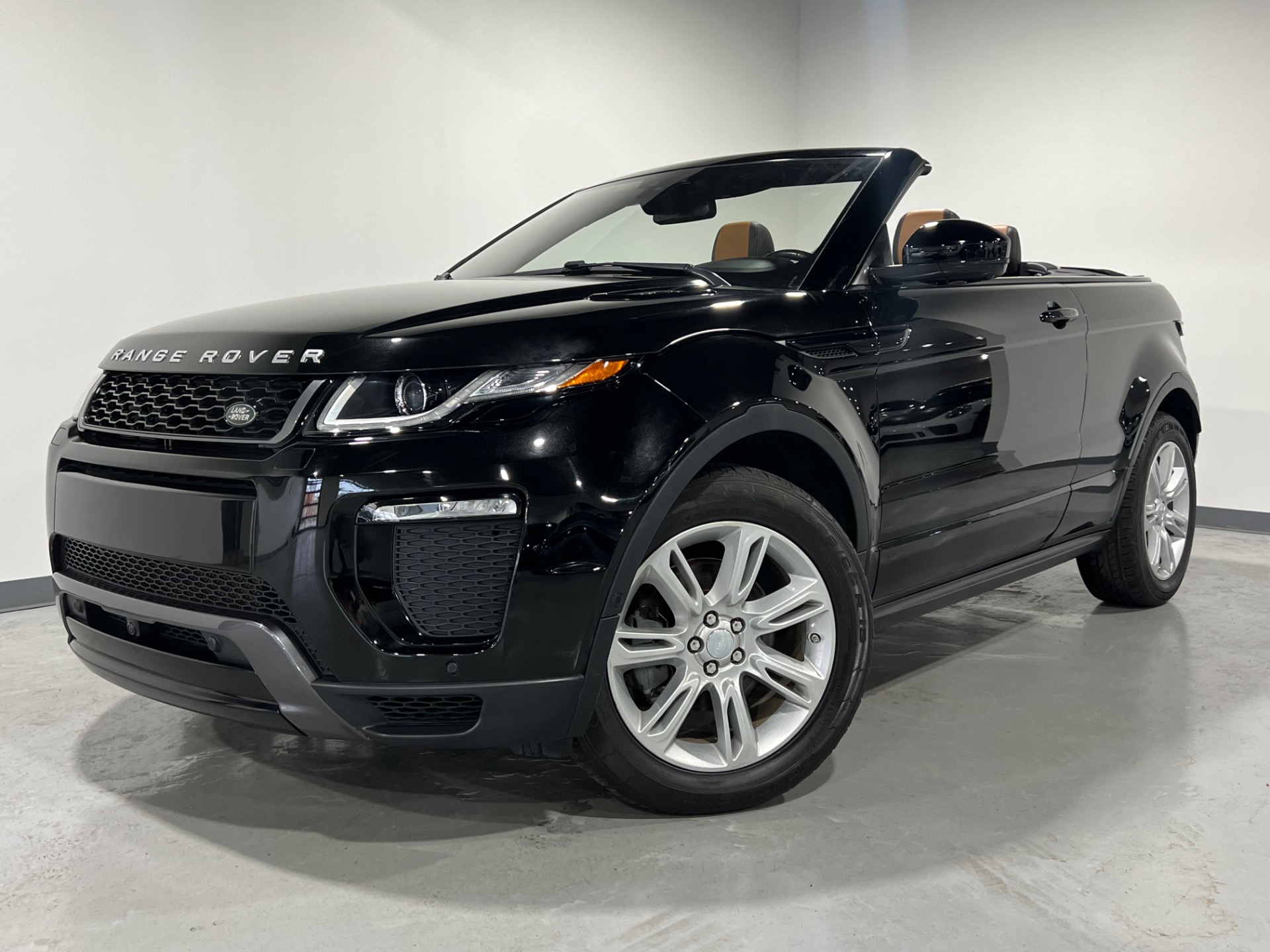
Range Rover Evoque (£9,000) — The most expensive of the three is also the highest-mileage. Auto Express selected a facelifted post-2015 model with 70,000 miles on the clock, specifying the TD4 all-wheel-drive variant with a 2.0-litre diesel Ingenium-badged engine producing 180 bhp and a combined economy figure of 45.6 mpg. The facelift brought new bumpers and lights front and rear. The article notes the cabin's layout "still holds up today" as a mix of Land Rover's typical ergonomics and premium materials. All technical specifications, the mileage figure, and the price are single-source.
The combined asking price of the three examples sits below the £30,000 headline, leaving roughly £2,200 of headroom—a margin that in practice would be consumed rapidly by insurance, MoT preparation, tyre replacement (especially on 17-inch diamond-cut wheels and low-rolling-resistance EV rubber), and the differential maintenance costs between a carbon-fibre BMW, a plastic-cladded Citroën, and a 70,000-mile Land Rover diesel.
Audit & Contradictions
The fact-check audit identified no contradictions across sources—contradiction level is rated Low. The £30,000 total-cost claim is corroborated by a second Auto Express listing surfaced through Google News. However, that corroboration is effectively the same publication restating its own headline; no independent third-party outlet has verified the individual vehicle prices, specifications, or mileages.
Every technical detail must be treated as a single-source claim: the i3's 42.2 kWh battery, 190-mile range, 50 kW charge rate, and 36-minute 10–80 per cent replenishment time; the C4 Cactus's 65.7 mpg figure, Flair trim specification, and pre-facelift designation; the Evoque's 180 bhp output, 45.6 mpg combined economy, 70,000-mile odometer reading, and Ingenium engine badge. None of these figures have been independently confirmed by What Car?, Carsales, autoevolution, or any other outlet identified in the corroborating sources.
The Evoque's inclusion carries an implicit tension the article does not address. While Auto Express celebrates the first-generation Evoque as "a huge sales success," a separate report from autoevolution notes that the Range Rover Evoque Coupe has been discontinued—suggesting that at least one variant of the model line has reached the end of its road. What Car?, meanwhile, has published reliability data on Land Rovers, yet the Auto Express piece makes no reference to reliability concerns, warranty history, or known issues with the Ingenium engine family. The article's framing of the Evoque as a purist-pleasing premium choice omits the ownership-risk dimension entirely.
The piece also functions as a commerce funnel. The Auto Express "Find A Car" service, which the article repeatedly directs readers toward, is managed by Carwow Ltd—a credit broker, not a lender—authorised and regulated by the Financial Conduct Authority (firm reference number 767155). The article's marketing disclosures note that average savings are calculated daily based on dealer prices versus manufacturer RRP, and that finance illustrations are based on personal contract hire with a 9-month upfront fee, 48-month term, and 8,000 annual miles. The commercial incentive structure is disclosed, but only in the fine print.
<Future Outlook
The broader signal here is that design-led vehicles—those that made deliberate, sometimes polarising stylistic choices—are beginning to trade on their distinctiveness as much as on their utility. The i3's carbon-fibre construction, the C4 Cactus's Airbumps, and the Evoque's coupé-like SUV silhouette were all gambles that alienated some buyers at launch. In the used market, those same gambles become selling points precisely because nothing on sale today replicates them.
For competitors, the implication is uncomfortable: conservative design cycles that prioritise platform-sharing and badge-engineering may produce vehicles that depreciate faster than their idiosyncratic predecessors. A used buyer at the £10,000 price point is not cross-shopping a 2025 compact EV on range or tech specs alone—they are buying a design statement that is no longer in production.
Whether that logic holds for a 70,000-mile diesel SUV with documented reliability question marks is a different question—and one the source material does not attempt to answer.