Lead Hook
When a crash leaves an electric‑vehicle battery smoking, most owners face the prospect of a full‑pack replacement—a costly, wasteful outcome that also strains emergency crews. A research team at Graz University of Technology (TU Graz) says that a modest 8 % reuse rate of individual cells could flip the economics, turning a wreck into a repairable asset. The finding matters not just for owners, but for regulators hunting circular‑economy solutions and for OEMs wrestling with mounting battery‑pack costs.
Deep Dive
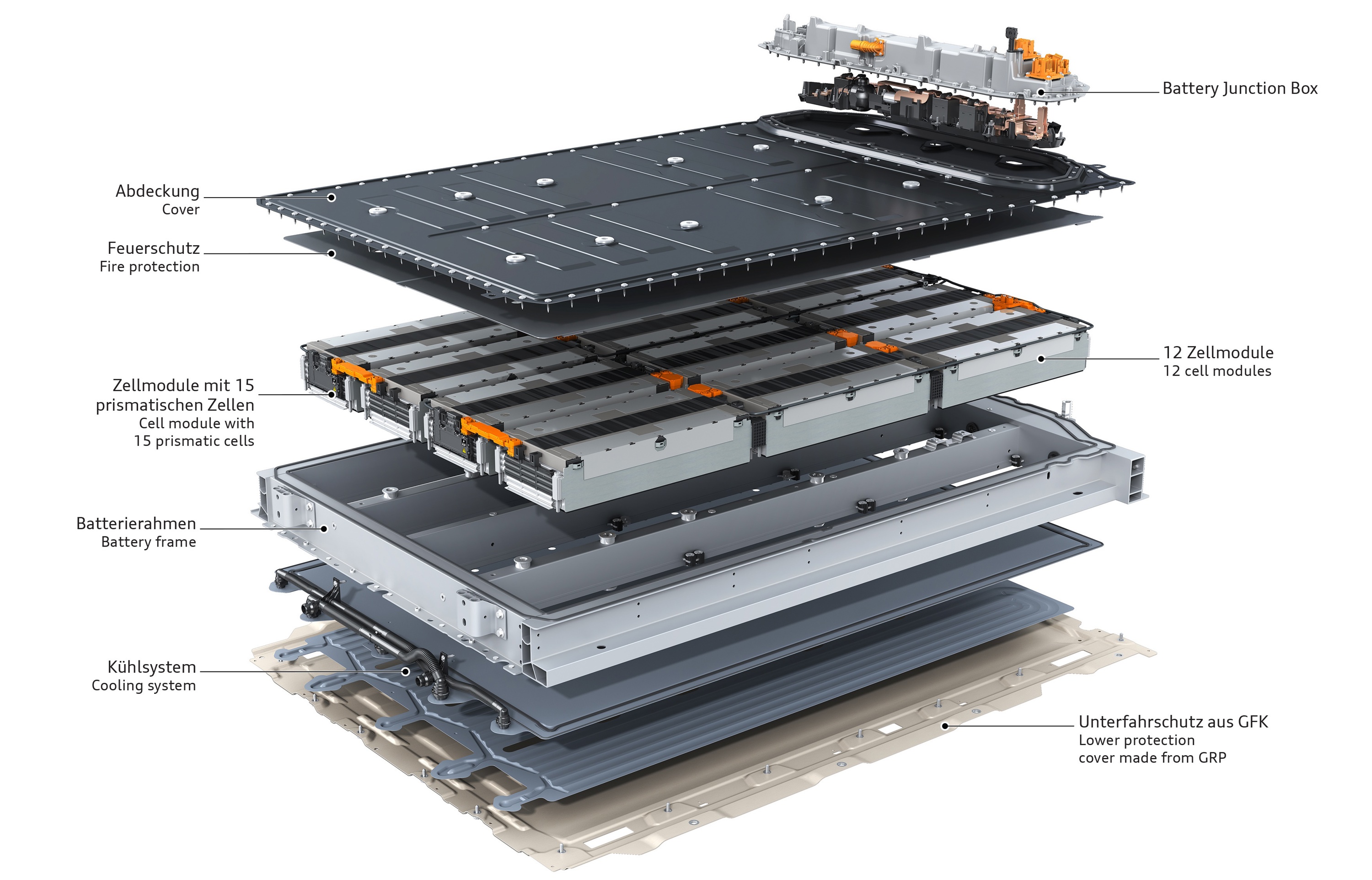
The E‑Track project, led by TU Graz’s Vehicle Safety Institute, dissected three contrasting battery‑pack architectures. The baseline reflects the industry norm: a glued‑together housing sealed with large‑area thermally conductive paste. While this approach streamlines mass production, any structural damage forces the entire pack to be scrapped, because individual cells or modules cannot be accessed without destroying the enclosure.
Two repair‑friendly alternatives were built and evaluated. The first swaps the glued covers for screwed‑on housings and replaces the monolithic paste with mechanically detachable heat‑dissipation pads. The second goes further, sealing the pack with a screw‑fastened housing that is flooded with an electrically insulating oil for liquid cooling. This oil‑cooled design allows the battery to be dismantled and individual cells to be replaced.
Both alternatives share a common goal: enable non‑destructive opening of the pack after an accident so that individual cells can be removed, inspected, and replaced. The researchers measured the impact of these design changes with a life‑cycle analysis. Cells account for roughly 75 % of a pack’s total mass and are also its biggest cost factor. The analysis shows that when at least 8 % of the cells can be salvaged and re‑installed, the repair‑friendly designs start to outweigh the added engineering and manufacturing effort—both economically and environmentally (TU Graz study).
Beyond cost, the modular concepts promise safety gains. Both designs allow emergency responders to open the pack non‑destructively, which could improve safety. They also create defined release points for responders, who otherwise struggle to assess a sealed, glued‑up battery system.
Our work shows that safety, efficiency and recyclability can be improved together through well thought‑out design.
Markus Fasching, project manager at TU Graz’s Vehicle Safety Institute, emphasized the broader impact: “Without uniform design standards, emergency services often face major challenges in an emergency because the structure and behaviour of battery systems are difficult to assess. At the same time, we lose valuable resources if batteries cannot be repaired or fully recycled.”
The project also introduced a diagnostic method that pairs electrochemical impedance spectroscopy with virtual multiphysics modelling to spot internal damage such as micro‑shorts before they ignite a fire.
Although the research focused primarily on batteries for electric two‑wheelers, its methods and simulation approaches are also applicable to larger vehicles, including cars and lorries. The researchers say the results could provide a basis for future industry standards and potentially regulatory frameworks.
Audit & Contradictions
The announcement is clear on the technical promise of modular packs, but it omits several practical hurdles. First, the 8 % reuse figure is derived from a life‑cycle model; real‑world salvage rates could be lower if damage patterns differ from the simulated scenarios. Second, the oil‑cooled design introduces a new material—electrically insulating oil—whose long‑term reliability, fire‑rating, and recyclability have not yet been disclosed. Third, the diagnostic method for micro‑short detection is presented without third‑party verification, making its readiness for field deployment uncertain.
Fact‑check data confirms that the core findings—the three pack designs, the 75 % cell mass share, the 8 % reuse threshold, and the safety benefits for emergency services—are corroborated by multiple outlets (Heise, Tech Xplore, electrive.com). The statements about the novel EIS‑based diagnostic tool and the broader applicability beyond two‑wheelers appear only in the primary report and are therefore flagged as single‑source claims that should be treated with caution.
The audit also notes a low contradiction level: no other source directly disputes the presented numbers or conclusions.
Future Outlook
If OEMs adopt the TU Graz guidelines, the ripple effects could be significant. Standardised, screw‑fastened pack enclosures would simplify warranty repairs, lower total‑ownership costs, and reduce the volume of battery waste destined for landfill. For regulators, especially in the EU where new battery‑labelling and durability rules are on the horizon, the research offers a concrete technical baseline that could be baked into future legislation.
Supply‑chain players stand to benefit as well. A modular architecture could enable cell manufacturers to sell “repair kits”—pre‑qualified replacement cells and tools—creating a new aftermarket segment. Conversely, manufacturers that cling to glued‑pack designs may face pressure from both regulators and consumers demanding reparability, potentially eroding market share.
Finally, the diagnostic method, if validated, could become a prerequisite for insurance and fleet operators who need assurance that a damaged pack can be safely inspected before reuse. Until independent testing confirms its efficacy, however, the claim remains speculative.
In short, TU Graz’s study shines a light on a design lever that could reshape the economics of EV battery repair and recycling. Whether the industry moves quickly enough to embed these guidelines before regulatory mandates arrive will determine if the 8 % reuse threshold becomes a realistic target or remains a theoretical benchmark.