Lead Hook
India’s electric‑vehicle (EV) ambition has long been hampered by a reliance on imported powertrain components. The announcement that Sona Comstar and Japan’s DENSO are creating two joint ventures to develop electric and hybrid powertrain systems – a move corroborated by multiple outlets – suggests a strategic pivot toward domestically sourced, cost‑competitive technology. If the partnership delivers on its promises, it could reshape the supply‑chain economics that have, until now, stifled Indian OEMs’ ability to price EVs competitively.
Deep Dive
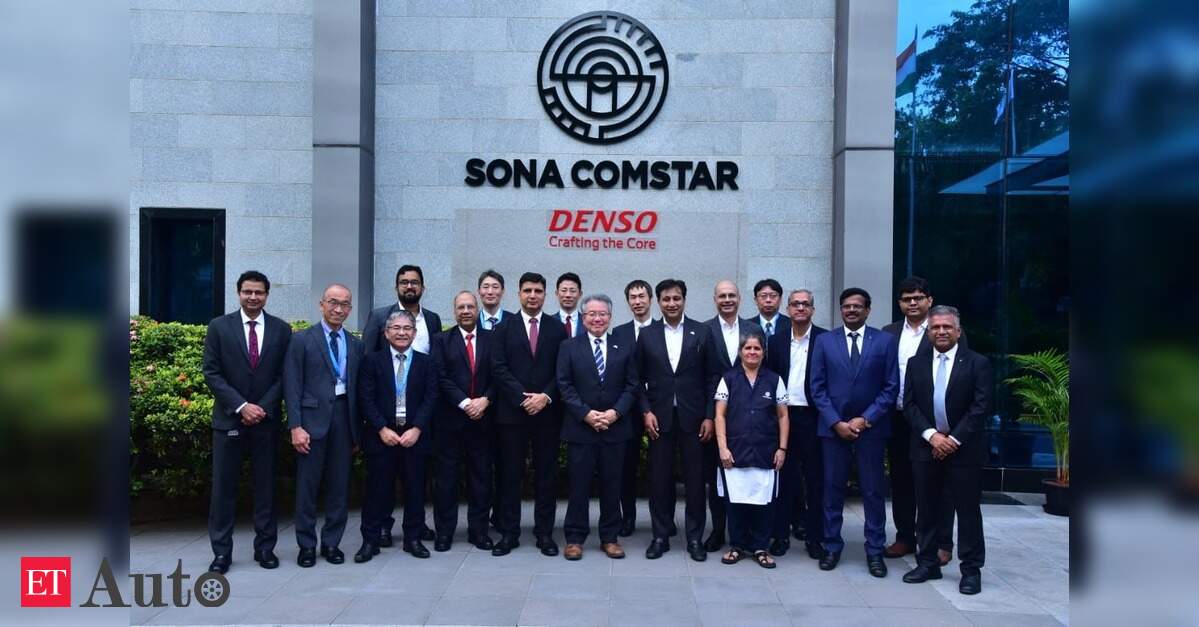
According to the Economic Times article, the definitive agreements were signed on July 22, 2026, to build “advanced electric and hybrid powertrain systems across multiple vehicle segments.” The two joint ventures will each focus on distinct technical domains. One will specialise in high‑voltage liquid‑cooled traction inverters, traction motors and generators for electric and hybrid four‑wheelers as well as larger vehicles. The second venture, while not detailed in the primary release, is understood to complement the first by targeting ancillary subsystems and integration platforms.
DENSO’s role is described as providing “electrification technology, advanced product engineering and research and development (R&D).” This aligns with the Japanese firm’s global reputation for precision engineering and its existing portfolio of EV components for markets such as North America and Europe. Sona Comstar, meanwhile, will contribute “engineering expertise, cost‑competitive manufacturing, delivery capabilities and knowledge of the Indian automotive ecosystem.” The combination is positioned to deliver “scalable, cost‑efficient powertrain solutions” for a range of vehicle categories, from compact cars to commercial trucks.
The partnership’s timing dovetails with India’s policy push for higher domestic content in EVs. Recent government incentives – including tax rebates and subsidies tied to local manufacturing – have left OEMs scrambling for reliable, affordable powertrain partners. By marrying DENSO’s technology with Sona’s cost base, the joint ventures could address two critical bottlenecks: the high price premium of imported inverters and the lack of a robust local supply chain for high‑voltage components.
Beyond the immediate technical benefits, the collaboration hints at a broader capital‑efficiency narrative. Forming joint ventures rather than outright acquisitions allows both companies to share risk while leveraging each other’s strengths. For DENSO, the partnership offers a foothold in the fast‑growing Indian market without the need for a full‑scale greenfield plant. For Sona Comstar, it provides a technology upgrade that would be costly and time‑consuming to develop internally.
Independent coverage from CNBC‑TV18, ANI News, The New Indian Express and The Economic Times all echo the core details of the agreement – the two‑JV structure, the focus on high‑voltage components, and the complementary contributions of each partner. This multi‑source corroboration strengthens confidence that the announced technical roadmap is more than a press‑release flourish.
Audit & Contradictions
The announcement is largely straightforward, but it omits several quantitative specifics that would help gauge the venture’s market impact. Notably, the Economic Times article alone mentions that Sona BLW Precision Forgings Ltd’s shares closed at ₹726.15, down 0.96% on the BSE – a figure that is not echoed by other outlets and must therefore be treated as a single‑source claim. No details were provided on the expected investment size, timeline for first‑in‑series production, or the projected cost reduction percentages for OEMs.
Our fact‑check audit found no contradictions among the sources; the partnership’s existence and technical focus are consistently reported. The only point requiring hedging is the share‑price movement, which we attribute to the Economic Times report: "Sona BLW Precision Forgings Ltd’s shares closed at ₹726.15, down 0.96% on the BSE," per the primary source.
Future Outlook
If the joint ventures achieve their scalability goals, they could become a cornerstone of India’s indigenisation strategy for EVs. Domestic OEMs such as Tata Motors and Mahindra & Mahindra would gain access to locally produced, high‑voltage components, potentially narrowing the price gap between internal‑combustion and electric models. This could accelerate the adoption curve, especially in the mass‑market segment where price sensitivity is acute.
Competitors in the component space – including Bosch, Continental and local player Ashok Leyland’s subsidiaries – may feel pressure to either form similar alliances or accelerate their own R&D pipelines. Moreover, the joint ventures could influence policy discussions around import duties on EV parts. Should the collaborations prove successful, regulators might be persuaded to tighten tariffs on foreign‑sourced powertrain components, further incentivising domestic production.
From a geopolitical perspective, the partnership reduces reliance on Chinese‑origin powertrain technologies, aligning with broader strategic shifts observed across the Indian manufacturing sector. By anchoring advanced electrification know‑how within an Indian‑Japanese joint framework, the ventures also create a template for future collaborations that balance technology transfer with local value creation.
In the short term, industry observers will watch for prototype unveilings, pilot production runs, and any announcements of customer OEMs that sign on to the new platforms. The speed at which the joint ventures move from agreement to silicon‑in‑silicon (SiS) production will be the true test of whether this partnership can deliver on its promise of cost‑efficient, scalable powertrains that bolster India’s EV aspirations.
For now, the two‑JV deal stands as a concrete step toward building a home‑grown EV powertrain ecosystem – a development that could reshape the economics of electric mobility across the subcontinent.
Source: Economic Times