Lead Hook
When Sila announced a $300 million funding round to expand its Moses Lake, Washington, silicon‑anode factory, the headline was clear: 20% more electric‑vehicle range without larger packs. For automakers racing to squeeze every mile out of a lithium‑ion cell, that promise sounds like a shortcut past the long‑haul research required for solid‑state batteries. Yet the announcement leaves a critical question unanswered – can the United States produce enough silicon‑rich anodes at a price that keeps EVs affordable, or will raw‑material scarcity and capital intensity throttle the very gains Sila touts?
Deep Dive
According to the InsideEVs report, Sila’s Titan Silicon silicon‑carbon anode material, fifteen years in the making, is claimed to boost a battery’s energy density by “between 20% and 40%” and to translate into roughly a 20% increase in vehicle range without enlarging the pack (InsideEVs). The company also says the material enables faster charging, though it does not quantify the speed gain.
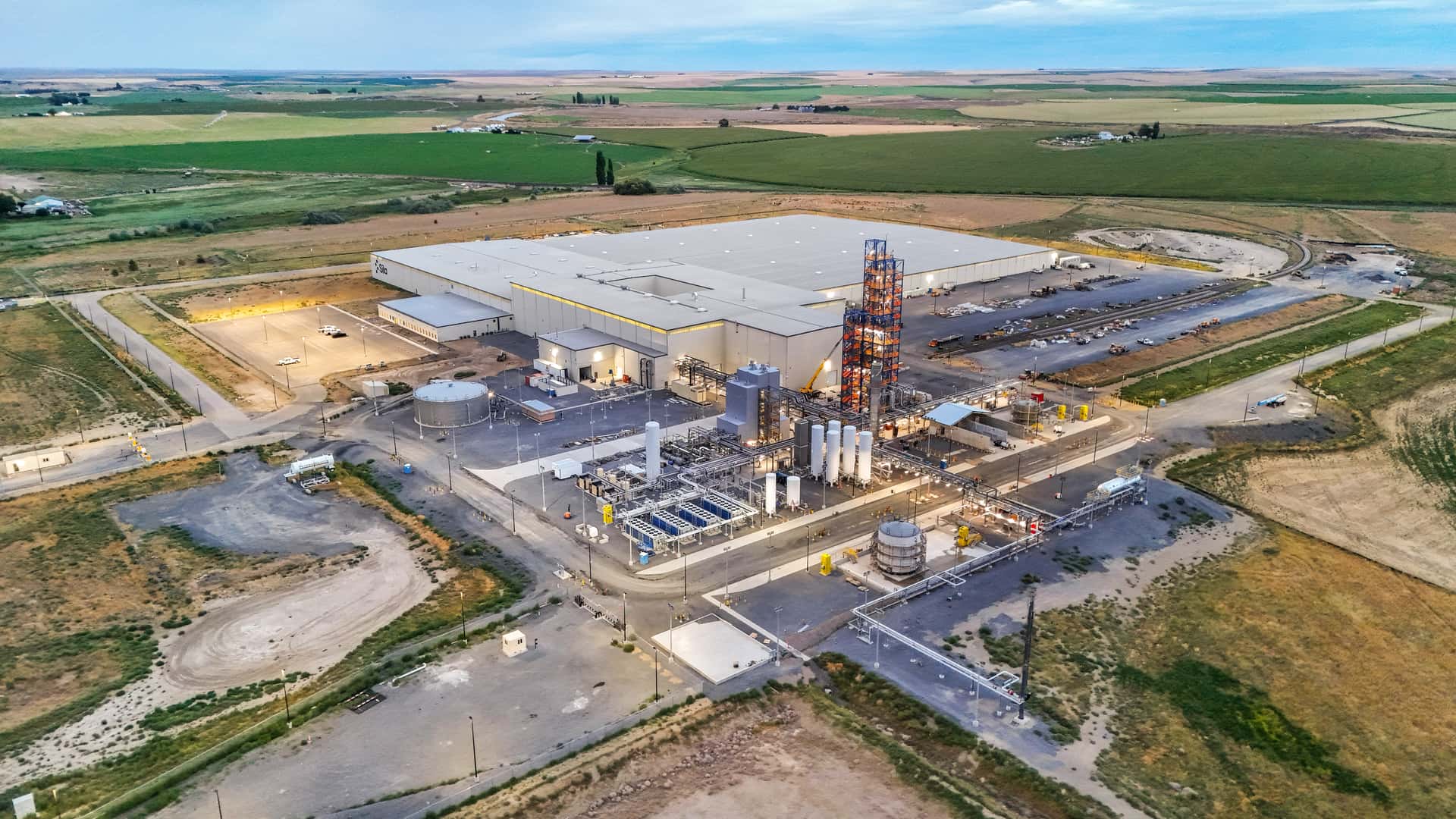
The financing will fund a two‑phase expansion of the 160‑acre Moses Lake plant. The facility began operations in fall 2025 with an initial capacity of 2 GWh and is designed to reach an annual output of 250 GWh within five years, a scale that would make it the world’s largest anode production site (InsideEVs). The same capacity figures appear in a Yahoo Finance copy of the story, confirming the numbers across multiple outlets.
Silicon’s appeal lies in its theoretical lithium‑storage capacity—about ten times that of graphite. However, the material expands up to 300% when charged, a phenomenon that can fracture the anode and accelerate degradation. The industry currently mitigates this by blending only modest silicon percentages with graphite. Sila’s claim is that its proprietary silicon‑carbon composite can accommodate the swelling while delivering higher energy density, but the engineering details—such as particle size control, binder chemistry, and electrode thickness—are not disclosed.
Beyond the chemistry, scaling silicon anodes raises supply‑chain concerns. Silicon is abundant, yet high‑purity, battery‑grade silicon requires energy‑intensive purification and precise nanostructuring. The report does not address where Sila will source the raw silicon or how it will manage the cost differential versus conventional graphite. Analysts observing the market note that any abrupt surge in demand for battery‑grade silicon could strain existing facilities, potentially driving up prices and eroding the claimed range‑per‑dollar advantage.
From a capital perspective, the $300 million raise is a sizeable private infusion, but building a 250 GWh anode line demands massive equipment—high‑temperature furnaces, clean‑room coating lines, and advanced quality‑control systems. The InsideEVs article notes that the plant’s design targets the “world’s largest anode production facility,” implying a capital‑intensive venture that will need sustained demand to justify the outlay. If OEMs adopt silicon‑rich anodes more slowly than Sila anticipates, the plant could face under‑utilization, a risk that investors typically hedge with long‑term supply contracts.
Speaking of contracts, Sila already has agreements to supply its material to Mercedes‑Benz and Panasonic Energy (InsideEVs). Mercedes previously announced plans to use Titan Silicon in a future electric G‑Class, while Panasonic intends to incorporate the material into next‑generation EV cells. The announcement does not reveal the volume of these deals, nor whether they are firm orders or letters of intent. Without disclosed quantities, it is hard to gauge whether the 250 GWh target aligns with actual customer demand.
Other automakers are also testing silicon‑rich chemistries. The Mercedes‑AMG GT 4‑Door EV, which features silicon in its anodes, advertises a “10% to 80% charging time of 11 minutes” and a 600 kW peak charging rate. While the article clarifies that it is unclear whether Sila supplies those cells, the example illustrates the broader industry interest in silicon’s fast‑charging potential.
Finally, the regulatory environment could influence scaling. U.S. policies encouraging domestic battery manufacturing—such as tax credits for clean‑energy projects and the Inflation Reduction Act’s battery incentives—may smooth the path for Sila’s expansion. Yet the same policies also emphasize supply‑chain transparency and critical mineral sourcing, areas where silicon’s lifecycle impacts have not yet been fully mapped.
Audit & Contradictions
The InsideEVs story is corroborated by a Yahoo Finance version that repeats the key figures: a $300 million raise, a 2 GWh start‑up capacity, a 250 GWh five‑year target, and the 20%‑40% energy‑density claim. No contradictory information was identified in the fact‑check audit, which labeled the contradiction level as “None.”
Nonetheless, several statements remain single‑source, meaning they originate solely from Sila’s own messaging. The promised “faster charging” benefit lacks quantitative backing, and the 20%‑40% energy‑density boost is presented without independent testing data. These claims are therefore hedged as “Sila says” or “the company claims.” The announcement also omits any discussion of raw‑silicon sourcing, cost implications, or the specific timelines for OEM deliveries, leaving readers without a full picture of the commercial feasibility.
Future Outlook
If Sila can meet its capacity goal without triggering silicon price spikes, the company could become a pivotal supplier for the next wave of high‑energy EVs, especially as OEMs look to shrink pack sizes and cut vehicle weight. Competitors such as Amprius, Enovix, and various Chinese firms are also pursuing silicon‑based anodes, meaning Sila will need to protect its intellectual property and secure long‑term contracts to stay ahead.
For the broader market, a successful scale‑up could accelerate the adoption of higher‑range EVs without proportionally larger batteries, potentially lowering the total cost of ownership. Conversely, if raw‑material constraints or cost overruns emerge, automakers may revert to incremental graphite‑silicon blends or shift focus to alternative chemistries like solid‑state or lithium‑sulfur, slowing the anticipated range gains.
Regulators will likely watch the rollout closely. The U.S. government’s push for domestic battery supply chains could translate into additional incentives for silicon‑anode producers, but it may also impose reporting requirements on critical mineral usage. How Sila navigates these policy expectations while delivering on its performance promises will be a key determinant of whether the $300 million bet pays off for the EV ecosystem.