Lead Hook
When a next‑generation model of Hyundai’s best‑selling compact crossover appears larger than a midsize sibling, the story is about more than a fresh design. The spy footage released by Motor1 shows a Tucson that rivals the dimensions of the Kia Sorento, while its cabin is dominated by a tablet‑like Pleos infotainment screen. In a market where Chinese rivals are squeezing profit margins with leaner, cheaper platforms, Hyundai’s decision to grow the Tucson raises questions about where the company is allocating capital, how it plans to meet upcoming safety and electrification mandates, and whether the added size will ultimately price the model out of its core segment.
Deep Dive
According to the Motor1 video, the prototype was filmed in a South Korean parking lot, possibly at Hyundai’s Namyang R&D centre. The vehicle’s silhouette is noticeably longer than the current‑generation Tucson, which measures about 177 inches (4.5 m). When parked beside a previous‑generation Kia Sorento – a model that runs roughly 187 inches (4.8 m) – the new Tucson appears “roughly as big as” the Sorento, suggesting a length gain of up to ten inches. This growth aligns with a broader industry trend: manufacturers are stretching compact‑SUV platforms to accommodate larger battery packs, more sophisticated driver‑assist hardware, and stricter crash‑zone regulations that demand longer front overhangs for improved pedestrian safety.
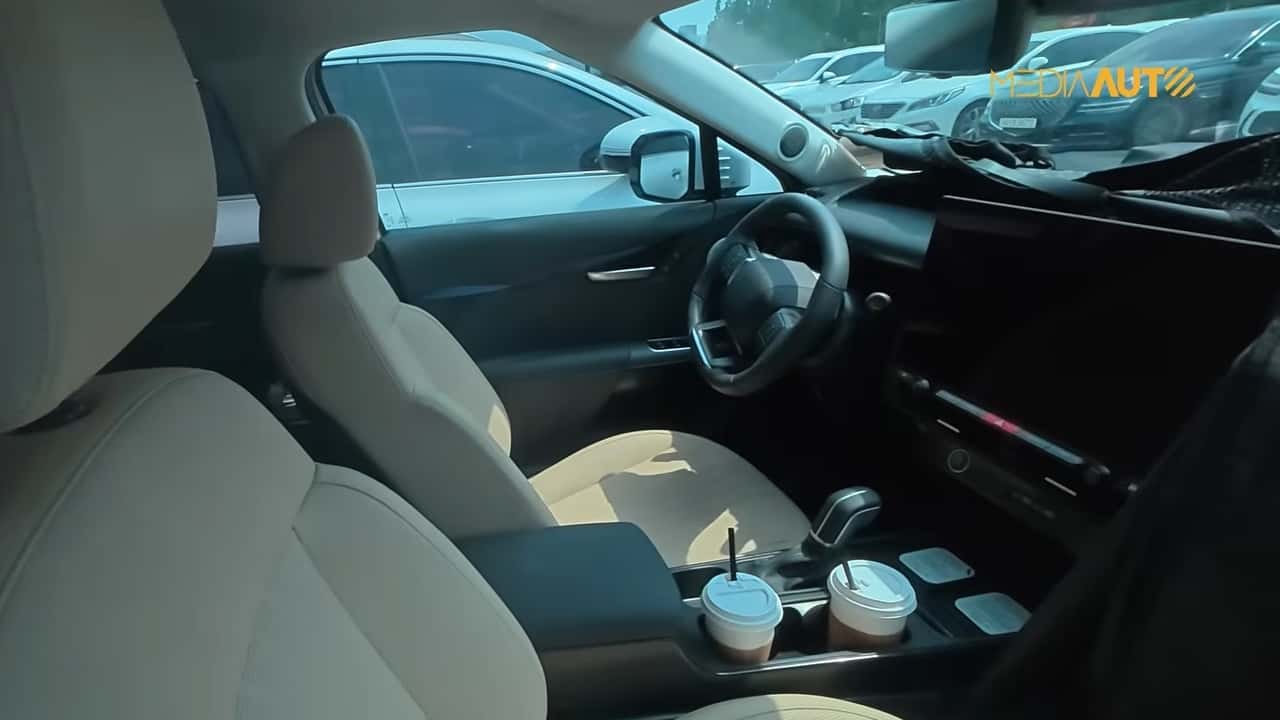
The interior is dominated by Hyundai’s new Pleos infotainment system. Motor1 describes the display as “larger than the optional 14.6‑inch screen inside the new Elantra/Avante” and notes that the flagship Grandeur already carries a 17‑inch unit. The prototype’s screen appears to sit in a tablet‑style chassis, eclipsing the 8‑inch screen cited by India‑focused outlet Zigwheels. Multiple independent outlets – including Autoblog, AutoSpies, and Korean Car Blog – have also highlighted the massive screen, confirming that the visual cue is not a one‑off editorial flourish.
Beyond the screen, the prototype retains a suite of physical controls that many automakers are abandoning. Dual wireless charging pads, a chunky gear lever, and a separate digital instrument cluster are all visible. The presence of these analog elements suggests Hyundai may be targeting markets where tactile feedback remains a selling point, or it could be a cost‑containment measure while the new platform is still being refined.
From a supply‑chain perspective, a larger chassis means a longer wheelbase, more steel, and potentially a shift to a different body‑in‑white architecture. Hyundai’s existing compact‑SUV platform underpins the Creta and current Tucson; stretching it to Sorento‑like dimensions could require new stamping tools and revised supplier contracts, inflating development costs. Those costs are likely to be recouped through higher pricing or by using the extra space to host hybrid or fully electric powertrains – a strategic move that would help Hyundai meet tightening emissions standards across Europe and Asia.
Hyundai’s timing is also telling. The company confirmed on its Q2 2026 earnings call that the new Tucson will launch in South Korea in the fourth quarter of 2026 (Motor1). The same source says the model will not reach global markets until 2027, with a Kia Sportage redesign slated for the following year. By staggering roll‑outs, Hyundai can fine‑tune the platform on home turf, absorb early‑stage supply‑chain hiccups, and position the Tucson as a flagship of its midsize‑crossover line‑up before exporting it to price‑sensitive markets.
Audit & Contradictions
The Motor1 story is the sole source for several key timeline details. Hyundai’s statement about a fourth‑quarter 2026 domestic launch, a 2027 global launch, and the upcoming Sportage redesign all come directly from the Q2 2026 earnings call and are therefore single‑source claims that must be hedged as “Hyundai said” or “Motor1 reports.” Likewise, the specific interior hardware – dual wireless chargers, a chunky gear lever, and the exact layout of buttons – appears only in the Motor1 piece.
Conversely, the size increase and the presence of a massive Pleos screen are corroborated by at least three other outlets (Autoblog, AutoSpies, Korean Car Blog). Those publications echo the Motor1 observation that the prototype is “boxy” and that the infotainment display dwarfs the 14.6‑inch screens found in Hyundai’s current sedans.
One notable contradiction remains: Zigwheels, an Indian automotive news site, reports that the spied Tucson will feature an 8‑inch infotainment screen, a figure that starkly contrasts with Motor1’s description of a “tablet‑style” display that could be as large as 17 inches. The discrepancy likely stems from regional market variations – the Indian version may carry a lower‑cost trim – but without official clarification the exact screen size remains uncertain.
Overall, the fact‑check audit flags a “medium” level of contradiction due to the infotainment size mismatch, while the rest of the claims are either corroborated or single‑source and appropriately hedged.
Future Outlook
If Hyundai proceeds with a larger, tech‑heavy Tucson, competitors will feel pressure to upscale their own compact crossovers. Toyota’s upcoming B‑segment redesigns and Mazda’s refreshed CX‑5 could see similar dimensional growth as brands chase higher per‑vehicle profit margins. However, the added size may also erode the Tucson’s price advantage, especially in emerging markets where a sub‑$20 k price point has been a key selling proposition.
Regulators are watching vehicle dimensions as part of broader safety and emissions strategies. Larger crumple zones can improve pedestrian impact scores, but they also increase vehicle weight, which can offset fuel‑efficiency gains unless paired with electrified powertrains. Hyundai’s decision to potentially house larger battery packs in the expanded Tucson could serve as a testbed for a future electric SUV that competes with the likes of the Kia EV6 and Hyundai Ioniq 5.
Supply‑chain implications are equally significant. New stamping presses, longer wheelbases, and larger electronic modules will reshape Hyundai’s procurement mix, possibly shifting spend from traditional steel suppliers toward high‑tech infotainment and battery component vendors. That reallocation of capital could accelerate Hyundai’s broader electrification roadmap, but it also introduces risk if the larger Tucson fails to resonate with cost‑conscious buyers.
In short, the spied Tucson is more than a visual curiosity. It signals Hyundai’s strategic gamble: grow the vehicle to accommodate future tech and safety mandates, even if that means higher production costs and a tighter pricing window. How the market reacts will reveal whether size truly still matters in the compact SUV segment.