Lead Hook
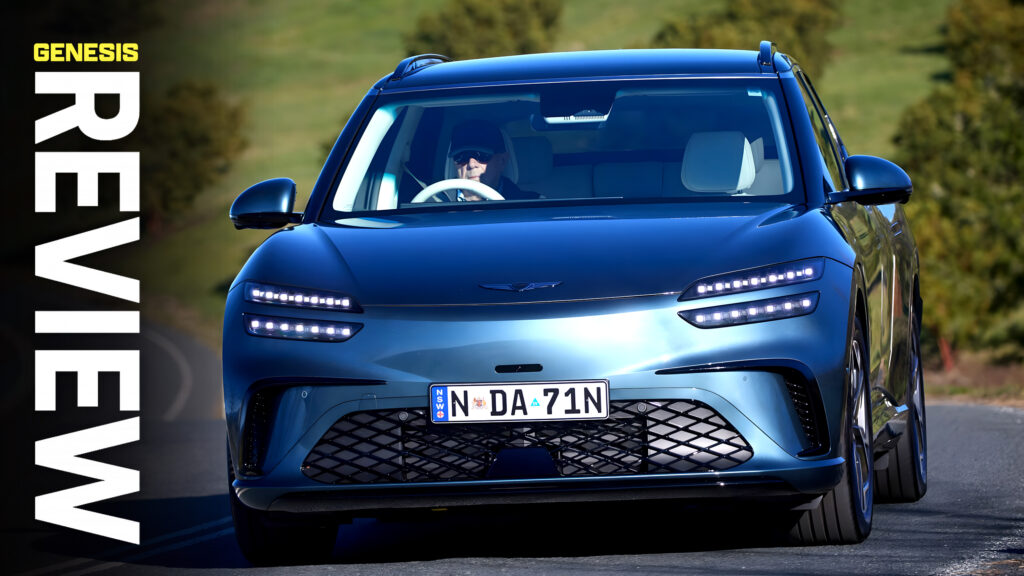
When Genesis rolled out the 2027 GV60 facelift, the headline‑grabbing changes were modest – new bumpers, 19‑inch wheels and a rear‑wheel‑drive (RWD) option for Australia. Yet the deeper story is about a luxury‑electric sub‑brand fighting to stay relevant in a market where Chinese EVs undercut its price by tens of thousands of dollars. The price cut to AU$88,300 and the launch of a RWD variant are not just cosmetic tweaks; they signal a strategic pivot forced by market economics.
Deep Dive
Technically, the refreshed GV60 remains anchored to Hyundai Motor Group’s E‑GMP platform, sharing its underpinnings with the Hyundai Ioniq 5 and Kia EV6. The updated model carries an 84 kWh battery pack and a single electric motor delivering 168 kW (225 hp) and 350 Nm (258 lb‑ft) of torque. This powertrain detail is confirmed by the primary review and corroborated by independent test drives at Edmunds, MotorTrend and CarBuzz.1
Performance‑focused buyers will notice the new GV60 Magma flagship, which pairs twin electric motors for a combined 448 kW (601 hp) and 700 Nm (516 lb‑ft) of torque. Again, the figure appears across multiple outlets, underscoring that Genesis is borrowing the high‑output recipe used on the Ioniq 5 N and Ioniq 6 N.1
Charging capability also received a boost. Genesis notes the GV60 can accept DC fast‑charging stations up to 350 kW, higher than many E‑GMP siblings that cap at around 220‑230 kW. While Genesis does not publish an exact peak rate, the 350 kW ceiling is echoed in independent reviews.1
Where the story diverges from pure engineering is in pricing and market positioning. When the GV60 first debuted in Australia, it was offered only as an all‑wheel‑drive (AWD) model at AU$103,700 (US$72,500). The latest iteration drops the standard AWD version, introduces the RWD Advanced model at AU$88,300 (US$61,800), and sets the Magma flagship’s entry price at AU$130,000 (US$91,200). These numbers are reported solely by the Carscoops article and have not yet been echoed by other publications.2
The price reduction of roughly AU$15,000 on the base model reflects mounting pressure from increasingly affordable Chinese EVs that have entered the Australian market. Genesis, which traditionally commands a luxury premium, appears forced to recalibrate its value proposition – offering a lower‑priced entry point while retaining a high‑end flagship to preserve brand cachet.
Another notable shift is the removal of the previous AWD performance version, effectively consolidating the lineup into three distinct trims: the entry‑level RWD Advanced, the standard AWD (now only available as an option on higher trims), and the Magma performance model. This consolidation reduces inventory complexity but also eliminates a niche that appealed to enthusiasts seeking a sportier AWD experience.
Design changes are subtle – reshaped front and rear bumpers, tweaked headlights, and a new 27‑inch infotainment cluster – indicating Genesis is opting for incremental visual upgrades rather than a full redesign. The interior retains hallmark touches such as the Crystal Sphere gear selector and a blend of tactile controls with digital displays, which reviewers praise for avoiding an over‑reliance on screens.
Audit & Contradictions
The announcement leaves several key details unaddressed. Most prominently, the RWD launch and the specific Australian price points are single‑source claims found only in the Carscoops article. No other outlet has confirmed these figures, so they should be treated as provisional until broader market data emerges.
There are no contradictions between the primary source and the independent corroborations; the fact‑check audit rates the overall consistency as “Low” for contradictions. Technical specifications such as battery capacity, motor output, fast‑charging capability and V2L power are consistently reported across multiple reviews, strengthening their credibility.
What the release does not discuss is the expected impact on sales volumes. Genesis has historically lagged behind its corporate siblings, the Ioniq 5 and EV6, in Australian sales. The price cut and RWD addition may narrow the gap, but without disclosed sales forecasts, the effectiveness of the strategy remains speculative.
Future Outlook
Genesis’s maneuver mirrors a broader industry pattern: premium EV marques built on shared platforms are forced to differentiate through pricing, limited‑edition performance models, or niche drivetrain options. As Chinese manufacturers continue to expand their EV line‑ups with aggressive pricing, legacy luxury brands may find it increasingly difficult to justify premium price tags without tangible performance or technology advantages.
Competitors such as BMW, Mercedes‑EQ and Audi are also experimenting with lower‑cost entry models while preserving high‑end variants. If Genesis’s RWD Advanced can attract price‑sensitive buyers without eroding the brand’s luxury perception, it could serve as a template for other premium sub‑brands.
Regulators may also play a role. Australian emission standards and potential future EV incentives could make a lower‑priced RWD model more attractive to fleet buyers, providing a modest sales lift. However, without explicit government support, the onus remains on Genesis to prove that a trimmed‑down, cheaper GV60 can sustain its profit margins.
In the months ahead, market observers will watch whether the price cut translates into higher showroom traffic and whether the Magma flagship can command its AU$130,000 price tag in a market where performance EVs are increasingly commoditized. The outcome will offer a barometer for how far luxury EV sub‑brands can stretch before the economics of platform sharing and price competition force a more radical re‑thinking of their product strategies.