Lead Hook
When a storm knocks out the grid, a 2024 Ford F‑150 Lightning or PowerBoost hybrid can become a 9.6‑kW or 7.2‑kW generator – but only if homeowners can get past a maze of utility rules and pay up to $1,500 for a professional install. The new GenerLink transfer switch, announced by Ford and detailed on InsideEVs, promises a plug‑and‑play bridge between a truck’s Pro Power Onboard outlet and a home’s main electrical panel. The headline‑grabbing convenience masks a deeper question: how many owners will actually be able to use the system when utility interconnection policies and installation costs bite?
Deep Dive
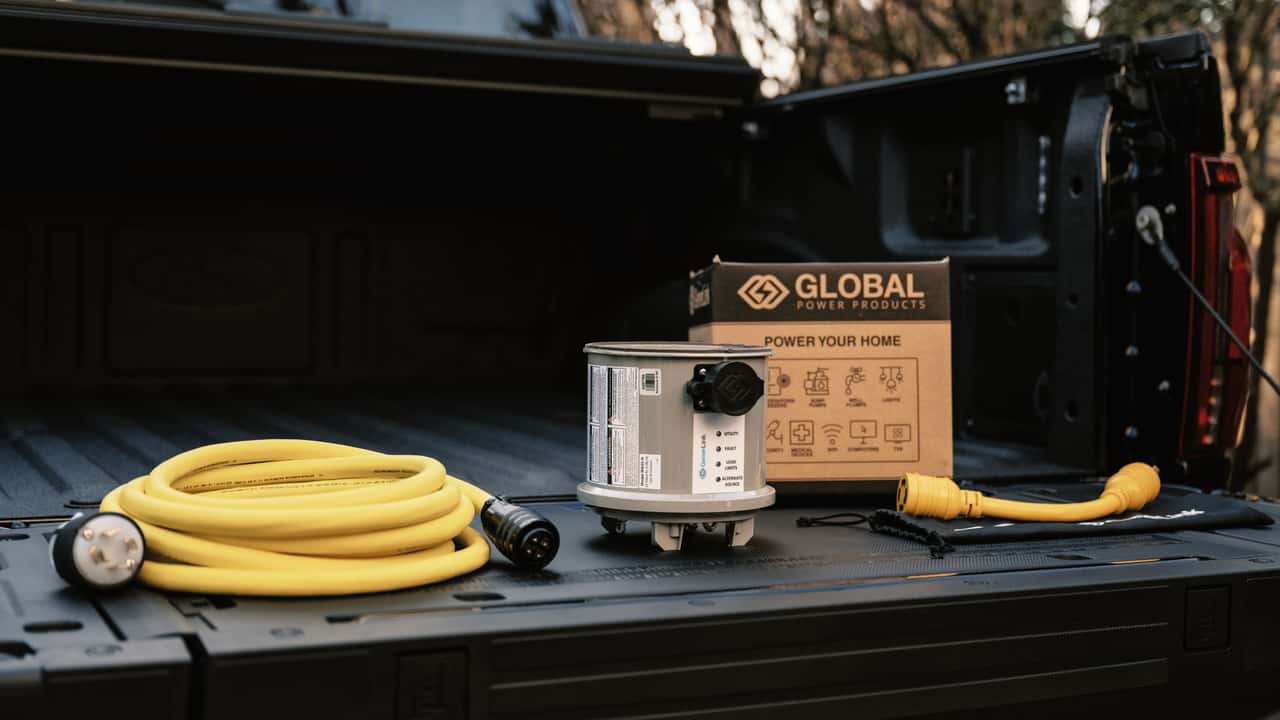
Ford’s solution hinges on a partnership with Global Power Products, which supplies the GenerLink transfer switch. According to InsideEVs, the switch lets owners channel the 240‑volt outlet in the truck’s bed directly into a home’s main panel, mimicking the behavior of a traditional standby generator. The system is compatible with two power levels: the Lightning’s 9.6 kW Pro Power Onboard rating and the PowerBoost hybrid’s 7.2 kW rating.
The hardware itself is priced at $1,100. Installation costs vary dramatically based on where the unit is mounted. A meter‑side install – which some utilities prohibit – is quoted at $250‑$450, while a next‑to‑meter setup – the more universally allowed option – ranges from $1,000 to $1,500. The kit’s centerpiece is a 12‑inch Ford Vehicle Connector; Ford states it does not endorse aftermarket connectors but has “tested this one thoroughly,” according to the same source.
From a technical standpoint, the system is straightforward: the truck’s Pro Power Onboard inverter supplies AC power, the GenerLink switch isolates the home circuit, and the connector transfers the electricity safely. However, the real‑world rollout depends on two interlinked factors.
- Utility Interconnection Rules. Many electric utilities require a formal application, inspection, and sometimes a hard‑wired disconnect before any device can feed power back into the grid or a home’s main panel. The InsideEVs article notes that “installing the setup at the meter — which not every utility allows — should cost $250‑$450,” hinting at a regulatory barrier that could force owners into the pricier next‑to‑meter option.
- Installation Labor and Permitting. The $1,000‑$1,500 price tag for next‑to‑meter installs reflects not just the hardware but also the need for a licensed electrician, local permits, and possibly a utility‑approved transfer switch. For a typical homeowner, this pushes the total cost well above $2,000, a figure that rivals or exceeds a dedicated home battery system.
Economically, the GenerLink kit may make sense for owners in regions with frequent outages – the Midwest, the South, or parts of the Pacific Northwest – where a $1,100 hardware cost is small compared with the potential loss of refrigerated food or business downtime. Yet the upfront installation expense, coupled with the uncertainty of utility approval, creates a high barrier to entry that could limit adoption to early adopters and commercial users rather than the average suburban homeowner.
Audit & Contradictions
The InsideEVs story is the sole source for every concrete detail about the GenerLink system. The fact‑check audit flags the following single‑source claims, which we therefore hedge with “according to InsideEVs”:
- Ford’s partnership with Global Power Products to make the GenerLink transfer switch compatible with F‑150 Lightning and PowerBoost trucks.
- The system’s compatibility with 9.6 kW (Lightning) and 7.2 kW (PowerBoost) Pro Power Onboard ratings.
- Hardware price of $1,100 and installation cost ranges of $250‑$450 (meter‑side) and $1,000‑$1,500 (next‑to‑meter).
- The 12‑inch Ford Vehicle Connector and Ford’s stance on aftermarket connectors.
- The ability to install the unit at a meter or next to it, with utility permission noted as a variable.
Future Outlook
Ford’s move signals a broader industry interest in vehicle‑to‑home (V2H) power solutions. If utilities streamline interconnection approvals for V2H devices, the GenerLink kit could become a low‑cost alternative to stationary batteries, especially for owners who already have a Lightning or PowerBoost truck.
Regulators may respond by updating interconnection standards to address safety concerns around feeding a home’s main panel from a vehicle source. Some states have already begun drafting “vehicle‑to‑home” guidelines, which could either ease the permitting process or impose stricter inspection regimes that raise costs further.
Ultimately, the GenerLink kit’s success will hinge on whether the convenience of a mobile power source outweighs the practical hurdles of utility approval and installation cost. For now, the announcement offers a glimpse of a future where a pickup truck can double as a home backup generator – but only if the grid’s gatekeepers let it.