Lead Hook
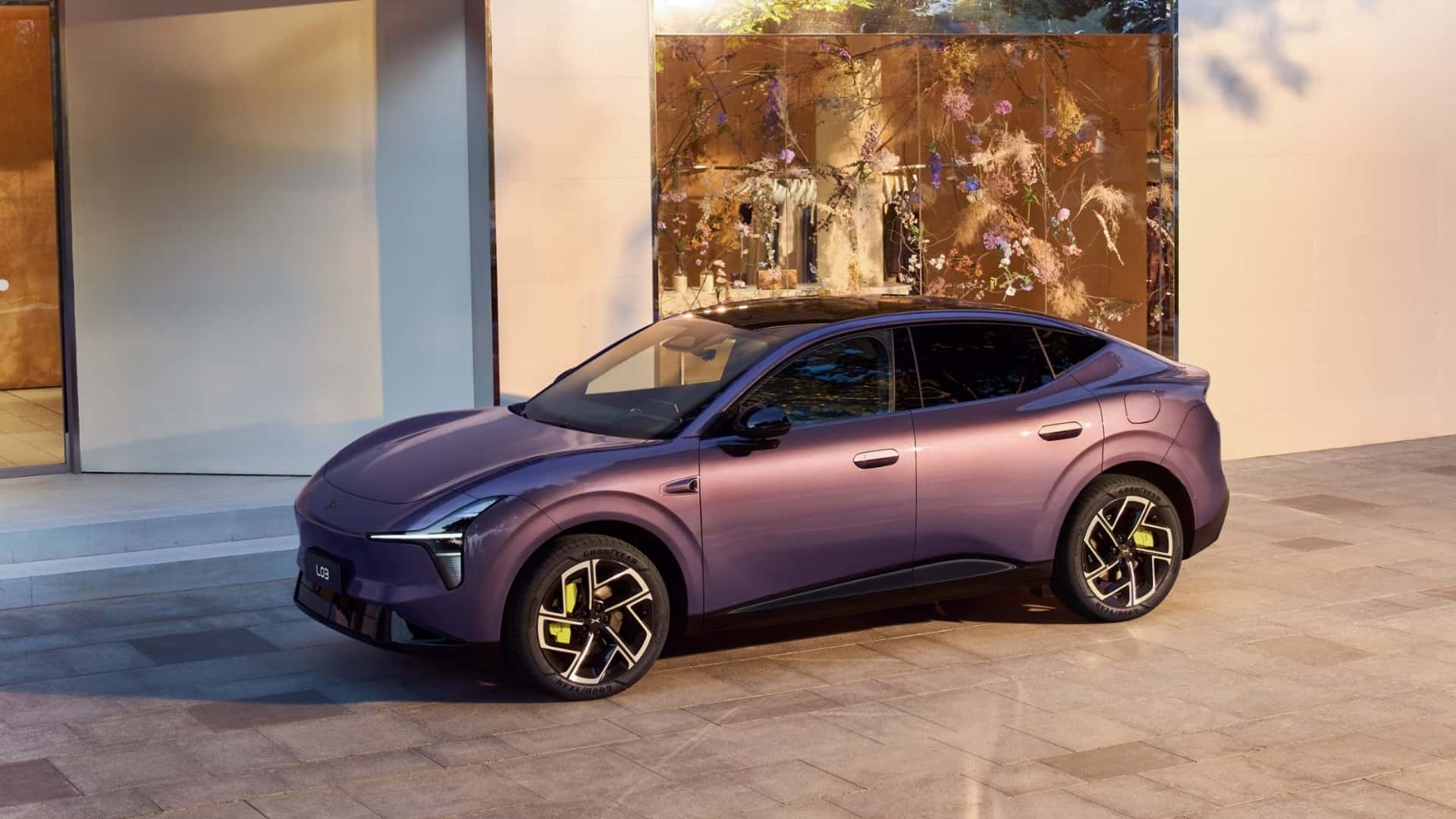
When Xpeng unveiled the L03 in Munich, the headline was unmistakable: a compact crossover priced at €35,600 that undercuts Tesla’s Model Y by roughly €3,300. The price gap is eye‑catching, but the real story lies in how Xpeng’s Chinese supply chain and a bold software partnership with Google could run into Europe’s strict data‑privacy regime, potentially turning a pricing advantage into a regulatory headache.
Deep Dive
According to InsideEVs, the German‑market L03 is offered at €35,600 (about $40,700). By comparison, the base Model Y in the same market costs €38,970 (about $44,480). The price differential, roughly $3,500, is achieved without sacrificing a suite of features that Xpeng is positioning as a direct rival to Tesla’s Full Self‑Driving (FSD) stack.
The L03’s powertrain lineup is unusually diverse for a newcomer. The base “standard‑range” version carries a 58.3 kWh battery paired with a 241 hp rear‑motor, delivering a WLTP‑rated 276 miles of range. A “long‑range” model bumps the battery to 71.2 kWh while retaining the same motor, extending WLTP range to 323 miles. At the top end, an all‑wheel‑drive (AWD) performance variant adds a front motor, pushing output to 382 hp but reducing WLTP range to 273 miles. These specifications were also reported by Autoweek and Automotive News, confirming the figures across multiple outlets.
Beyond pure electric versions, Xpeng hinted at an extended‑range electric‑re‑fuel (EREV) variant that could offer up to 621 miles of combined range. The EREV would reportedly combine a 1.5‑liter, 94 hp gasoline engine with a 37.2 kWh battery, using the same 241 hp rear motor as the pure‑EV models. European specifications for this version remain unconfirmed, but the promise aligns with Xpeng’s broader strategy of offering hybrid‑electric flexibility where charging infrastructure is still uneven.
The software proposition is equally ambitious. Xpeng says every L03 will ship with its VLA 2.0 autonomous‑driving suite, which the company markets as a direct competitor to Tesla’s FSD. While the claim appears only in the primary announcement, the promise of an advanced driver‑assistance system at a lower price point could be a decisive factor for cost‑conscious European buyers.
Perhaps the most headline‑grabbing feature is the integration of Google Maps into the infotainment system. Xpeng claims to be the first Chinese automaker to embed Google’s navigation platform natively, a move that could differentiate the L03 from rivals that rely on Baidu or proprietary maps. This integration was highlighted by InsideEVs and echoed in the same report, but the claim of being the first such integration by a Chinese brand is unverified by external sources.
All of these elements—price, powertrain variety, advanced driver‑assist, and Google Maps—are underpinned by Xpeng’s access to China’s mature EV component ecosystem. Battery cells, electric motors, and even the 1.5‑liter range‑extender engine are sourced from suppliers that have benefited from years of state‑backed scale and cost reductions. By leveraging these economies, Xpeng can price the L03 below Tesla while still offering a comparable range envelope and a tech‑rich cabin.
However, the integration of Google services raises a non‑technical obstacle: Europe’s data‑privacy framework, notably the General Data Protection Regulation (GDPR). Google Maps requires continuous data exchange with Google’s servers, and regulators have scrutinized similar arrangements in other markets for potential breaches of user consent and data localisation rules. If EU authorities deem the integration non‑compliant, Xpeng could be forced to disable or replace the service, eroding a key differentiator that the company is using to justify its price premium.
Audit & Contradictions
The announcement leaves several points opaque. The claim that the L03 will launch simultaneously in 65 markets this year appears only in the primary source; no secondary outlet has corroborated the figure, so it should be treated as a company‑provided projection.
Similarly, the positioning of VLA 2.0 as a direct competitor to Tesla’s FSD is presented without external validation. While the feature list is described, independent testing or regulatory approval status is not referenced, making the comparison aspirational rather than proven.
On the other hand, the price advantage, Google Maps integration claim, and detailed powertrain specifications have been confirmed by multiple outlets, including Autoweek, Automotive News, and ArenaEV. No contradictions were identified across the sources, and the fact‑check summary rates the overall consistency as “Low” for contradictions.
Future Outlook
If Xpeng can navigate the GDPR landscape, the L03 could force Tesla to reconsider pricing or feature bundles in Europe, especially in the compact crossover segment where price sensitivity is high. Competitors such as BYD, Zeekr, and Nio already have European ambitions, but few combine a sub‑€40,000 price with a Google‑backed navigation experience.
Regulators may respond by issuing guidance on third‑party mapping services in vehicles, potentially requiring explicit opt‑in consent or on‑device data processing. Such rules could level the playing field, but they could also delay Xpeng’s rollout if software updates are needed.
From a supply‑chain perspective, Xpeng’s reliance on Chinese component suppliers could be both a strength and a vulnerability. Trade tensions or tariffs could raise costs, eroding the price cushion that currently separates the L03 from the Model Y. Conversely, continued scale in China may allow Xpeng to sustain its aggressive pricing longer than Tesla, whose own supply chain is increasingly global.
In the short term, the L03’s launch will serve as a litmus test for how European consumers and regulators react to a Chinese EV that blends aggressive pricing with Western software services. The next few quarters will reveal whether the L03 can convert its price advantage into market share, or whether data‑privacy hurdles will blunt its impact on Tesla’s European dominance.