Lead Hook
When Elon Musk posted on X that future Teslas will “remember your specific interventions and match each person’s individual preferences,” the headline sounded like another step toward a frictionless driver‑less experience. Yet the real story lies in what the announcement does not address: how a vehicle that stores personal driving choices will be regulated, who controls that data, and what liability looks like when a car’s learned behavior deviates from a legal standard. In an industry already wrestling with data‑privacy rules and safety certification, Tesla’s new AI ambition could force regulators to rethink existing frameworks.
Deep Dive
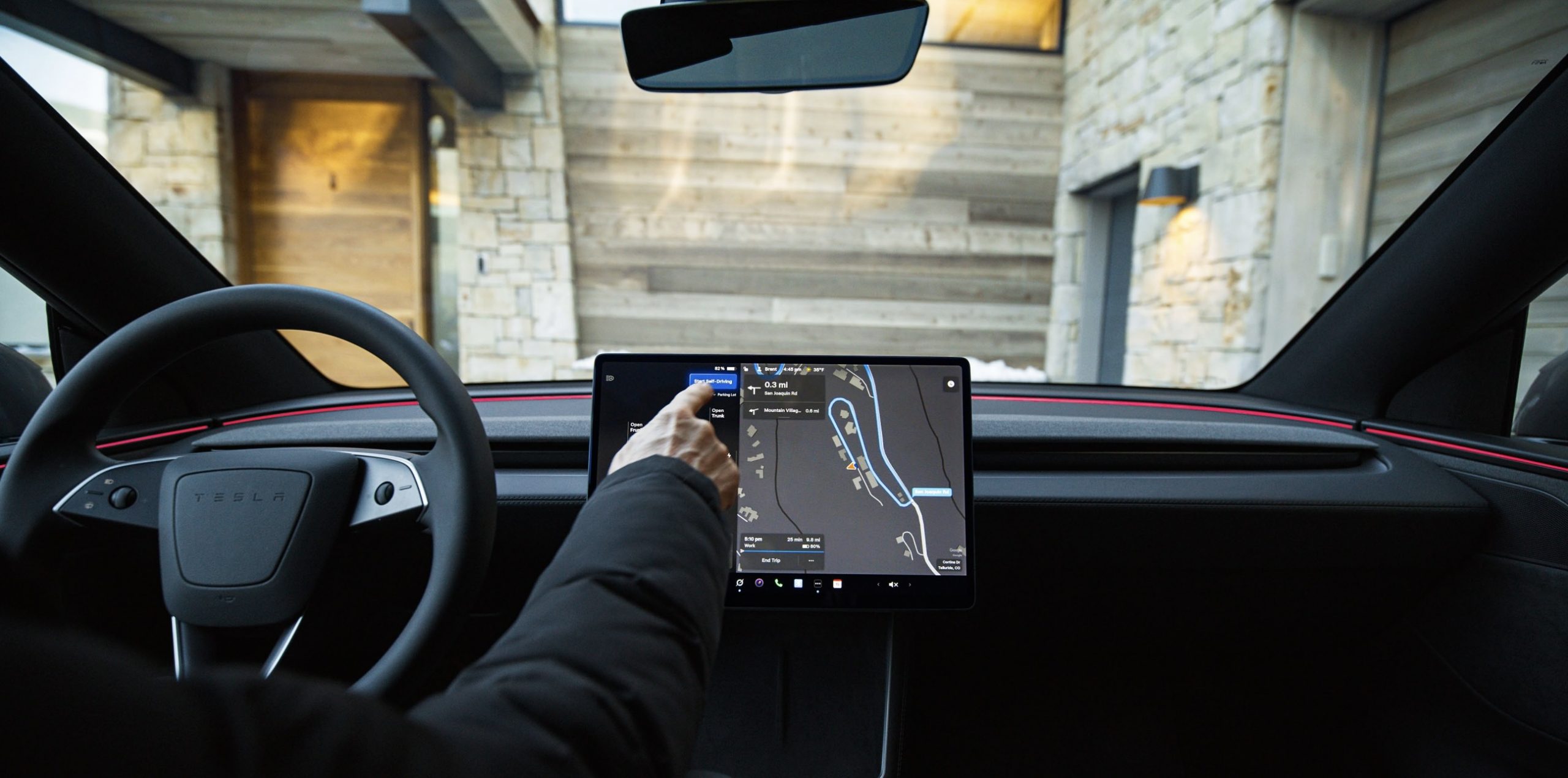
According to Teslarati, Musk’s remark was a direct response to a Tesla influencer who complained that his vehicle sometimes ignored the settings he had enabled. Musk replied, "The car will start to remember your specific interventions and match each person’s individual preferences." The implication is that the Full Self‑Driving (FSD) software will begin to weight a driver’s manual overrides—such as taking control during parking or lane changes—and adjust its future decisions accordingly.
Musk also noted earlier that parking is the biggest reason drivers intervene with Full Self‑Driving, underscoring the desire to reduce non‑safety‑critical take‑overs that stem from personal‑preference mismatches.
To illustrate that Tesla’s neural networks already exhibit selective learning, the article points to a tweet from the outlet showing FSD handling an "Except Right Turn" stop sign in Pennsylvania with confidence, while other, less‑frequent variations remain less reliable. The tweet reads, "Tesla Full Self‑Driving v14.3 proceeds through an Except Right Turn Stop Sign" and is presented as evidence that the system can already differentiate between nuanced traffic scenarios based on exposure frequency.
Beyond the autonomous software, the same source also reports on SpaceX’s schedule for Starship Flight 13. Teslarati notes that SpaceX announced a new launch window for Monday, July 20, 2026 at 6:45 p.m. ET/5:45 p.m. CT after a prior scrub. Musk explained, "Some of the engines didn’t start, triggering an automatic launch abort," and added, "To be confident of a good flight, 2 Raptors will be removed and replaced. Most probable launch timing is early next week." While unrelated to the vehicle‑learning claim, the inclusion shows Musk’s habit of coupling multiple product updates in a single communication burst.
The deeper implication of a car that learns individual preferences is the creation of a new class of driver‑specific data. Unlike conventional telemetry—speed, location, battery health—this data reflects personal comfort zones, preferred parking spots, lane‑keeping tolerances, and route choices. In jurisdictions such as the European Union, the General Data Protection Regulation (GDPR) treats any data that can be linked to an individual as personal data, requiring explicit consent, transparent processing, and the right to erasure. In the United States, emerging state laws (e.g., California’s Consumer Privacy Act) are moving in a similar direction. If Tesla’s vehicles begin to store and act on these nuanced preferences, regulators may demand that drivers be given clear opt‑in/opt‑out mechanisms, audit trails of learned behaviors, and the ability to delete the preference profile.
From a safety certification perspective, the Federal Motor Vehicle Safety Standards (FMVSS) currently assess autonomous functions against objective performance criteria (e.g., stopping distance, lane‑keeping accuracy). Introducing a personalized behavior layer could complicate compliance, as the same software version might behave differently for each driver. That variability raises questions about liability: if a car’s learned preference leads it to take a lane longer than a traffic rule permits, who is at fault—the driver for allowing the learning, the manufacturer for providing the feature, or the software itself?
Industry observers note that personalization is a double‑edged sword. On one hand, tailoring vehicle responses could reduce driver fatigue and increase acceptance of autonomous features. On the other, it may create a “black‑box” effect where the decision‑making process is opaque, making post‑accident investigations more complex. The lack of independent verification for the claim that this learning will meaningfully reduce interventions—identified as a single‑source statement—means that regulators will likely require empirical evidence before granting any safety exemptions.
Audit & Contradictions
The core claim that Musk announced Teslas will learn individual driver preferences is corroborated by multiple outlets, including The Times of India and Yahoo Finance, which reported the same X post. However, several related assertions appear only in the Teslarati article and are therefore single‑source:
- The expectation that learning driver preferences will truly begin to be less frequent in FSD interventions.
- The specific example of improved handling of "Except Right Turn" stop signs as evidence of existing learning.
- The new Starship Flight 13 launch date of July 20, 2026 and the engine‑failure details leading to an abort.
Our fact‑check audit found no contradictions among the reported statements; the contradiction level is low. Nonetheless, the single‑source nature of the supporting details means they should be treated as Musk’s own framing rather than independently verified outcomes.
Future Outlook
If Tesla proceeds with a driver‑preference learning module, competitors such as Waymo, Cruise, and emerging Chinese firms will likely accelerate their own personalization research to stay competitive. At the same time, regulators may issue guidance or rulemaking that requires manufacturers to disclose how personal preference data is collected, stored, and used. Potential outcomes include mandatory consent dialogs before the feature is enabled, periodic audits of the learning algorithm, and perhaps a requirement that any personalized behavior be reversible on demand.
From a market standpoint, the promise of a car that adapts to you could be a strong selling point, especially in regions where driver comfort is a key barrier to autonomous adoption. Yet the privacy‑risk narrative may also deter privacy‑conscious consumers, prompting Tesla to develop clear data‑governance policies as part of the feature rollout.
In sum, Musk’s tweet signals a strategic shift toward ultra‑personalized autonomy, but the path forward will be shaped as much by data‑privacy legislation and safety certification as by engineering breakthroughs. How regulators and the market respond will determine whether this capability becomes a differentiator or a regulatory hurdle for Tesla’s autonomous ambitions.