Lead Hook
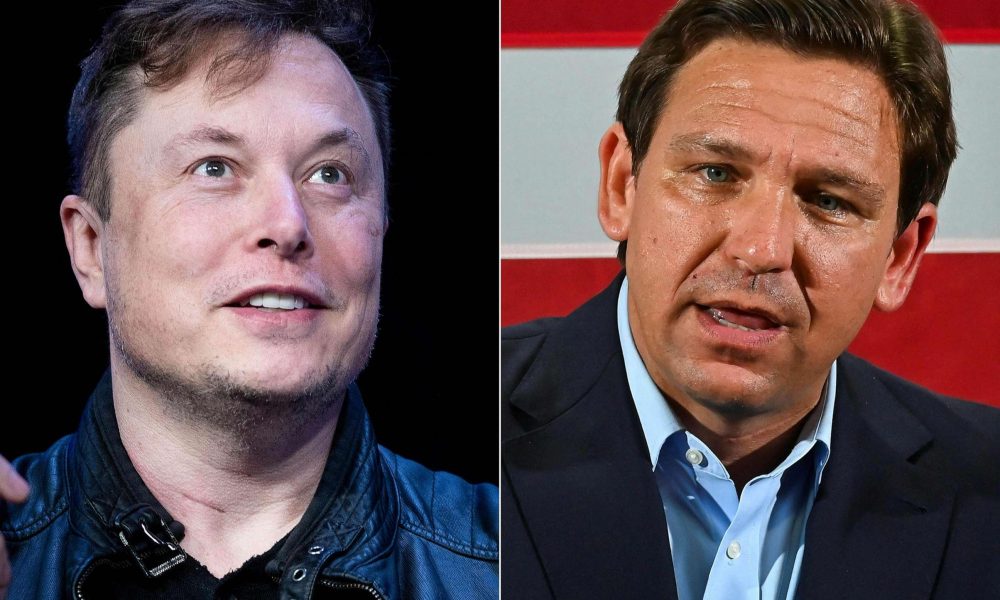
When a Tesla Model 3 plowed into a brick home in Katy, Texas, on June 19, 2026, the tragedy was framed not just as a fatal accident but as a symptom of a broader narrative: that Tesla’s self‑driving software is inherently unsafe. Governor Ron DeSantis seized on the headline treatment to accuse legacy outlets of bias, a charge that could reverberate through the U.S. regulatory landscape and affect the rollout of autonomous‑driving features across the industry.
Deep Dive
According to Teslarati, the crash involved a Model 3 driven by Michael Butler, who struck a brick home at 73 mph – more than twice the residential speed limit – after manually overriding any driver‑assistance system and flooring the accelerator to 100 percent. The vehicle’s data, released by Tesla, confirmed the driver’s actions and showed the accelerator remained engaged after impact. The National Transportation Safety Board later validated those findings, and Butler now faces manslaughter charges. A search on Butler’s phone reportedly included the phrase “Tesla FSD too timid,” suggesting he may have been testing the limits of the Full Self‑Driving (FSD) suite before intervening.
DeSantis highlighted a Washington Post headline that read,
“Newly released photo shows wreckage of Tesla crash that killed grandmother.”He contrasted this with typical coverage of non‑Tesla incidents, citing examples like “pickup truck slams into home” and “fatal car crash kills pedestrian,” which omit the manufacturer’s name. The governor’s critique implies that media focus on Tesla could amplify public fear, prompting regulators to act more aggressively against the company’s autonomous‑driving ambitions.
From the same source, Tesla’s 2025 Impact Report claims that vehicles operating with FSD logged 0.19 major incidents per million miles – roughly eight times fewer than the U.S. average. The report also notes that Model Y ranks among the safest in IIHS and NHTSA occupant‑protection tests. While these figures suggest strong overall safety performance, the narrative surrounding the Katy crash centers on the driver’s manual override rather than the technology itself.
Elon Musk’s own statement on X – “The car will start to remember your specific interventions and match each person’s individual preferences.” – signals Tesla’s intent to make future models more adaptive to driver behavior. If the system learns from a driver who repeatedly floors the accelerator, it could theoretically adjust acceleration limits or provide more assertive warnings. However, the same source reports that FSD version 14.3.5 handles common “Except Right Turn” stop signs well but still struggles with less‑frequent variants, indicating that the technology’s edge cases remain a challenge.
The regulatory implications are twofold. First, heightened media scrutiny may pressure the National Highway Traffic Safety Administration (NHTSA) and the NTSB to prioritize investigations into Tesla’s autonomous features, potentially leading to stricter testing requirements or limitations on FSD deployment. Second, public perception shaped by repeated brand‑specific headlines could influence lawmakers who are already wary of autonomous‑driving risks, affecting future legislation on driver‑monitoring standards and software certification.
Audit & Contradictions
All of the key facts in this story appear solely in the Teslarati article and lack corroboration from other outlets, as noted in the fact‑check audit. The claims that DeSantis criticized legacy media, that the crash details and NTSB confirmation are accurate, that the Impact Report cites a 0.19‑incident rate, that Musk announced future learning capabilities, and that FSD 14.3.5’s performance on “Except Right Turn” signs is as described, are each single‑source assertions. The audit records a “Low” contradiction level, meaning no contradictory evidence was identified within the provided material.
Because these points are not independently verified, they should be presented with appropriate hedging language – e.g., “According to Teslarati,” “the article reports,” or “the source indicates.” This approach maintains journalistic rigor while acknowledging the current evidentiary limits.
Future Outlook
If the perception that Tesla’s branding is a focal point in crash coverage persists, the company may face amplified regulatory scrutiny that could slow the rollout of newer FSD versions. Competing manufacturers developing autonomous stacks could benefit from a media environment that treats all brands uniformly, potentially reshaping market dynamics in the U.S. auto sector.
Moreover, Musk’s vision of cars that “remember your specific interventions” could raise new policy questions about data privacy, driver profiling, and the extent to which a vehicle should adapt to risky behaviors. Regulators may need to define boundaries for adaptive algorithms to prevent a scenario where a system learns to accommodate, rather than correct, dangerous driver inputs.
Finally, the governor’s media‑bias claim, if amplified by political allies, could inspire legislative proposals that require news outlets to follow standardized headline guidelines for crash reporting. While such measures would be unprecedented, they underscore how narrative framing can become a lever in the broader debate over autonomous‑vehicle safety and innovation.