Lead Hook
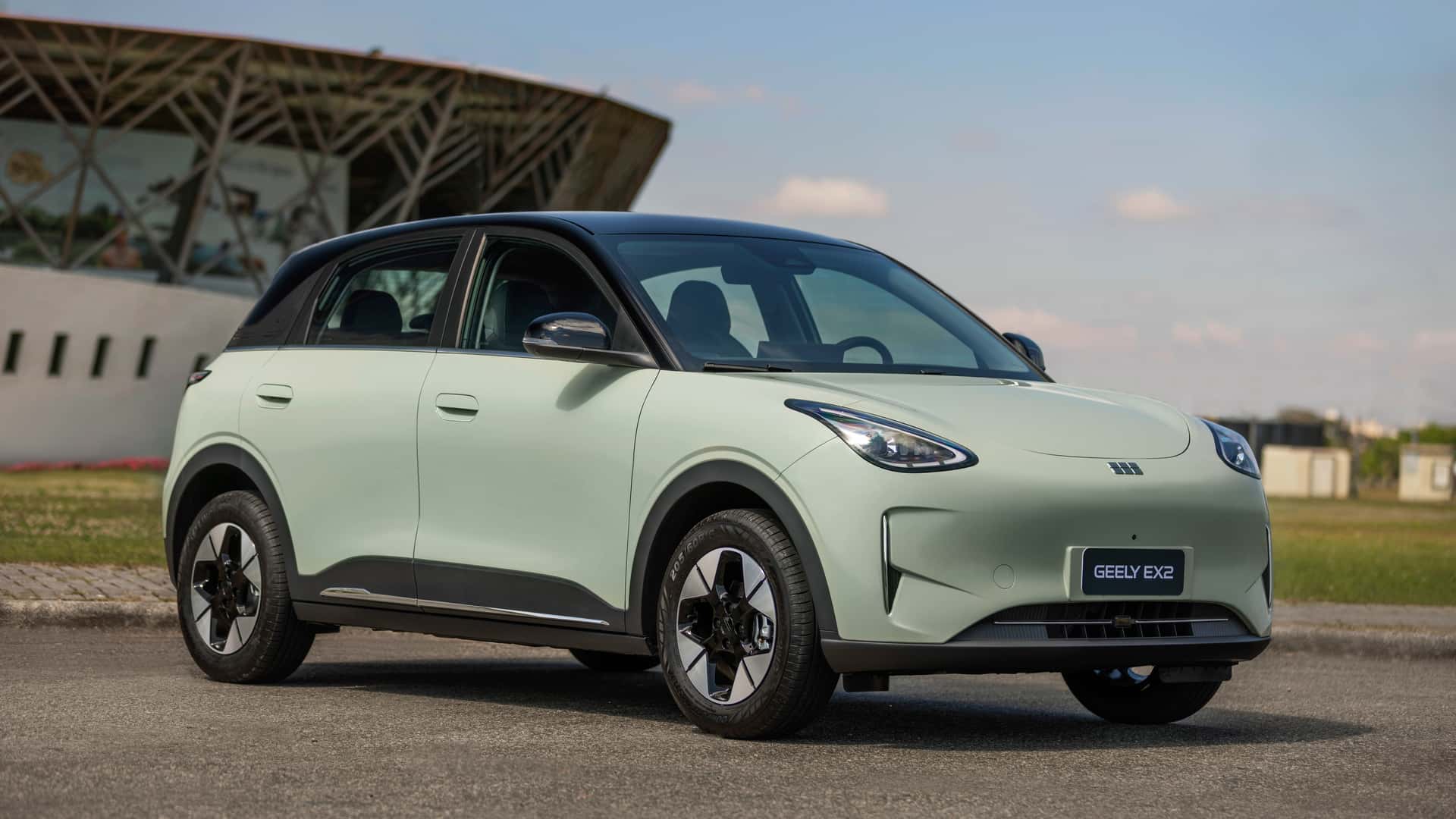
When a five‑door hatchback priced at roughly $9 k outsells the Tesla Model Y in China, the story is more than a sales headline – it signals a shift in how electric vehicles can be built, priced, and sold at scale. The Geely E2’s rapid ascent challenges the assumption that EVs must be premium‑priced to be desirable, and forces global manufacturers to confront a new cost frontier that could reshape pricing strategies worldwide.
Deep Dive
According to Motor1, the Geely E2 (also marketed as the EX2 or Galaxy Xingyuan) moved an estimated 244,000 units in the first half of 2026. Those sales would eclipse the Tesla Model Y (215,000), Xiaomi’s SU7 (182,000) and Leapmotor’s A10 (171,000) in the same period. While the figure is not yet officially confirmed, it is the centerpiece of the vehicle’s narrative.
The hatchback’s price point is the most striking lever of its success. Motor1 reports a starting price of ¥64,800, which translates to about $9,000 in today’s exchange rates. That price sits just above the Wuling Hongguang Mini EV (¥44,800) and under the BYD Seagull (¥69,900), while the Tesla Model Y begins at ¥263,500 – roughly $39,000 (Motor1). The combination of a sub‑$10k sticker and a practical five‑door form factor makes the E2 a rare case of mass‑market appeal in a segment traditionally dominated by higher‑priced crossovers.
Beyond price, the E2’s dimensions and equipment package give it a competitive edge. Motor1 notes a length of 162.0 inches and a wheelbase of 104.3 inches, positioning it at the larger end of the B‑segment hatchback class. Inside, the car offers an 8.8‑inch digital instrument cluster, a 14.6‑inch infotainment screen, full‑LED headlights, adaptive cruise control, 13.2 cu ft of cargo space behind the rear seats (expanding to 46.6 cu ft with the seats folded), and a 2.5 cu ft front trunk. Such a feature set is uncommon for a vehicle priced below $10 k.
The powertrain is equally pragmatic. Motor1 describes a single rear‑mounted electric motor paired with lithium‑iron‑phosphate (LFP) batteries, delivering a range between 157 and 214 miles depending on the version. LFP chemistry, widely produced in China, is cheaper and more stable than nickel‑cobalt‑manganese blends, contributing to the low overall cost.
These specifications are not isolated technical choices; they reflect a broader strategy of capital efficiency. By standardising on a rear‑motor layout, using domestically sourced LFP cells, and limiting the vehicle’s size to a compact hatchback platform, Geely reduces material costs, simplifies assembly, and benefits from economies of scale. The result is a product that can be priced aggressively while still delivering a modern user experience.
Corroborating the sales claim, The Sun reported that the Geely EX2 was bought over 450,000 times in the previous year, making it China’s most popular car (The Sun). While the exact figure differs, both outlets agree that the model holds the top spot in the Chinese market, underscoring its mass‑appeal.
Geely’s success also dovetails with Chinese government policy that has, for years, subsidised low‑cost electric vehicles and set NEV (new‑energy vehicle) targets that favour high‑volume, affordable models. The country’s NEV share now sits at roughly 63 % of all new‑car sales (Motor1), creating a fertile environment for budget‑focused EVs to thrive.
From a supply‑chain perspective, the reliance on LFP batteries eliminates exposure to volatile nickel and cobalt markets, allowing Geely to keep costs predictable. Moreover, the domestic component ecosystem in China—spanning motor manufacturers, electronic modules, and interior suppliers—means that the E2 can be produced with shorter lead times and lower logistics expenses than imported rivals.
Audit & Contradictions
The announcement leaves several key data points unverified by independent sources. The 244,000‑unit sales figure for H1 2026, the exact Chinese price of ¥64,800, the Tesla Model Y price comparison, the vehicle’s precise dimensions, the detailed equipment list, and the stated range of 157‑214 miles are all reported solely by Motor1. According to the fact‑check audit, these are “single‑source claims” that should be treated with caution.
Conversely, the claim that the Geely E2 is China’s best‑selling vehicle is corroborated by The Sun and echoed in other automotive outlets, giving it stronger credibility.
The audit noted a low contradiction level, indicating no direct conflicts between sources, but it emphasised the need to flag the single‑source statistics as potentially provisional until official data are released.
Future Outlook
If Geely can sustain its volume at sub‑$10k pricing, the ripple effects could be profound. International EV makers that have positioned themselves at higher price tiers—such as Tesla, BYD’s premium lines, or European newcomers—may be forced to develop ultra‑affordable platforms or risk losing market share in cost‑sensitive segments.
In Europe, the E2 is already slated for launch in Italy at a starting price of around €20,900 (Motor1). While still higher than the Chinese price, it undercuts many entry‑level EVs in the region, suggesting Geely aims to export its cost‑efficiency model abroad.
Regulators may also take note. The Chinese policy environment that nurtured the E2—subsidies for low‑cost EVs and aggressive NEV targets—could become a template for other markets seeking to accelerate electrification without burdening consumers with premium prices.
Ultimately, the Geely E2 demonstrates that mass‑market EV adoption does not require a premium price tag. Its blend of affordable pricing, adequate range, and a generous feature set challenges the prevailing narrative that electric cars must be expensive to be desirable. Whether this model reshapes global pricing strategies will depend on Geely’s ability to replicate its Chinese success in other regions while maintaining profitability.