Lead Hook
When Ferrari slips its first production battery‑electric car, the Luce, into a charity auction, it isn’t just a fundraiser—it’s a litmus test for how the marque’s ultra‑wealthy clientele will value electrification versus tradition. The auction, slated for Monterey Car Week, could fetch more than $1 million, a figure that dwarfs the model’s $640,000 base price and hints at how Ferrari may leverage scarcity and philanthropy to smooth the transition to an electric lineup.
Deep Dive
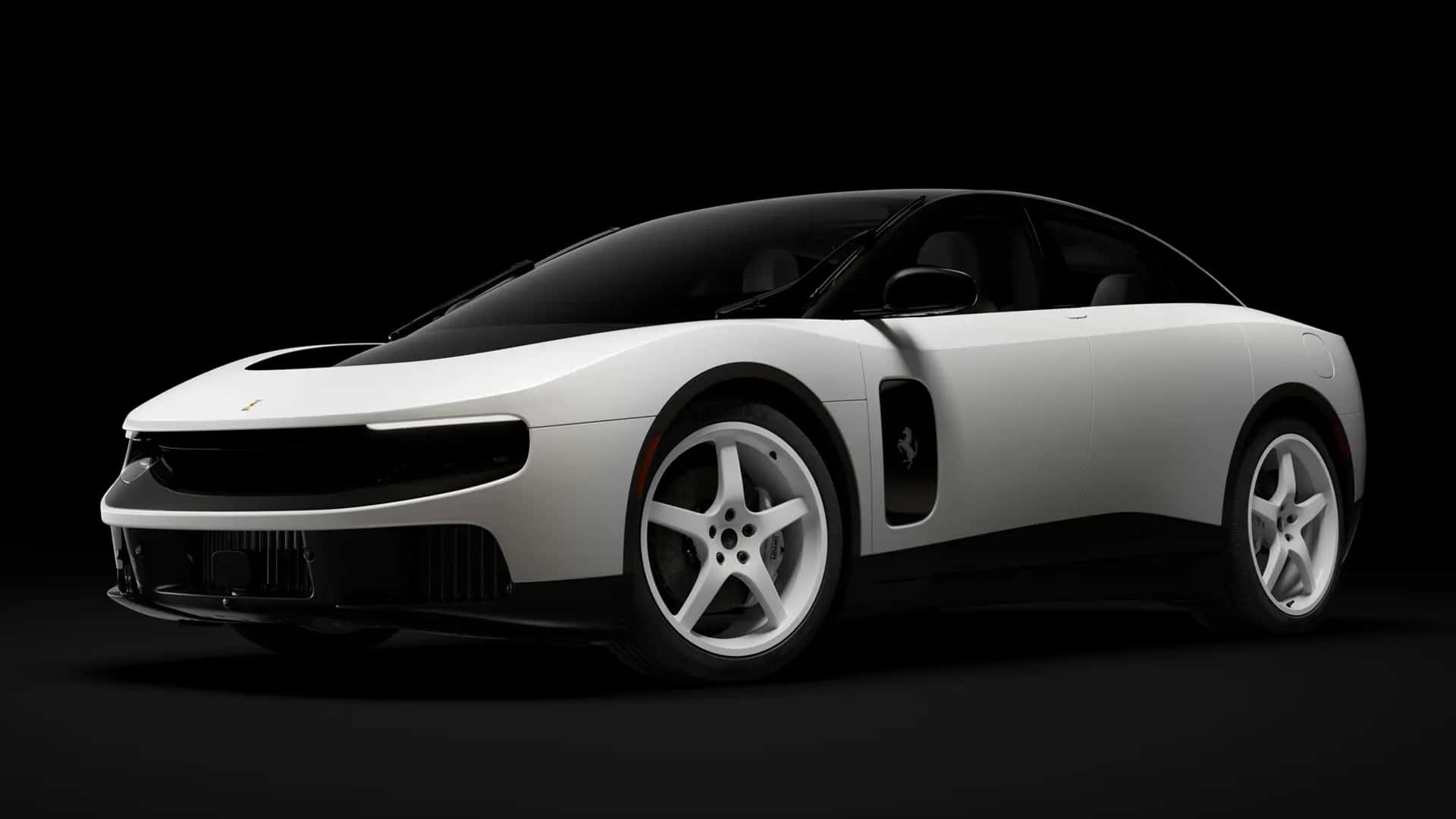
According to InsideEVs, the vehicle up for sale is the very first production example of the Luce – chassis 0 – and will be offered at RM Sotheby’s historic charity auction during Monterey Car Week. The same detail appears in coverage from Yahoo Autos, Robb Report and Hypebeast, confirming the timing, venue and charitable nature of the sale.
The Luce marks Ferrari’s entry into mass‑produced battery‑electric propulsion, a first for a brand that has famously guarded its internal‑combustion heritage. To preserve the aura of exclusivity, Ferrari paired the car with its Tailor Made program and Design Studio. The customization package includes dedicated wheels, bespoke brake calipers, an emblem set against an “optical white” background, interior upholstery in the program‑exclusive Le Mans metallic leather, and Grigio Corvara accents. A dedicated plaque further distinguishes the chassis from any future Luce that may roll off the assembly line.
RM Sotheby’s, the auction house handling the sale, describes the offering as “
an unrepeatable opportunity” and projects a hammer price of roughly $1.1 million. Proceeds are earmarked for the Ferrari Foundation, aligning the event with the brand’s philanthropic image. The projected price is more than 70 % above the car’s stated base price of $640,000, a premium that underscores the collector market’s appetite for first‑of‑its‑kind EVs.
Ferrari’s decision to auction the inaugural Luce rather than simply deliver it to a customer serves multiple strategic purposes. First, it creates a high‑visibility moment that frames the EV as a collectible artifact rather than a routine production model, reinforcing the brand’s luxury cachet. Second, the charitable component offers a public‑relations buffer against potential backlash from purists who view electrification as a betrayal of Ferrari’s racing DNA. Finally, the auction price provides a data point for Ferrari’s internal pricing model as it plans to scale the Luce – a model the company reportedly hopes will eventually represent 20 % of its annual sales, a target mentioned only in the primary source.
From a financial perspective, the disparity between the $640,000 baseline and the anticipated $1.1 million auction price raises questions about the elasticity of demand in the ultra‑high‑net‑worth segment. While the $640,000 figure appears solely in the InsideEVs article, the expectation of a $1.1 million sale is corroborated across multiple outlets, suggesting that the market may be willing to pay a substantial premium for the novelty of owning Ferrari’s first EV. This premium could help offset the higher production costs typically associated with early‑stage EV platforms, especially for a low‑volume, high‑margin luxury brand.
Engineering-wise, the Luce’s battery‑electric architecture is not detailed in the source material, but the emphasis on bespoke paint (a “special coat of Madreperla Semi‑Gloss”) and interior materials signals Ferrari’s intent to differentiate the EV experience through sensory design rather than raw performance metrics. By foregrounding aesthetic innovation, Ferrari sidesteps the performance parity debate that often pits legacy manufacturers against pure EV startups.
Audit & Contradictions
The announcement leaves several key details unaddressed. Most notably, the source does not disclose the Luce’s battery capacity, range, or charging specifications, information that would be critical for potential buyers assessing real‑world usability. Additionally, while the primary source claims Ferrari aims for the Luce to account for 20 % of its annual sales, this target is not corroborated by any secondary outlet and therefore should be treated as a single‑source statement.
Other single‑source claims include the $640,000 base price. InsideEVs is the only outlet that mentions this figure, so readers should regard it as an unverified price point pending confirmation from Ferrari or an official price list.
Fact‑checkers have marked the core story—auction location, EV first‑of‑its‑kind status, expected $1.1 million price, and charitable proceeds—as fully corroborated. No contradictions have been identified across the reporting outlets, resulting in a low contradiction level.
Future Outlook
Ferrari’s high‑profile auction could set a precedent for how legacy luxury manufacturers introduce electrified models. By leveraging a charity auction, the brand extracts a premium price while simultaneously framing the EV as a collectible, potentially easing the brand’s transition for its most affluent customers.
Competitors such as Lamborghini and Aston Martin are also eyeing EV rollouts, but none have yet paired a first‑generation electric model with a bespoke, charitable auction. If the Luce sells at or above the projected $1.1 million, it may encourage other marques to adopt similar strategies—using exclusivity and philanthropy to justify higher price tags on early EVs.
Regulators are unlikely to intervene directly in the pricing of a one‑off auction, but the event spotlights the broader market dynamics of luxury EV adoption. Should the Luce’s auction prove successful, it could signal sufficient demand among ultra‑high‑net‑worth buyers to justify accelerated investment in EV platforms, potentially influencing supply‑chain decisions, battery sourcing, and the pace at which European emissions standards push legacy manufacturers toward electrification.
In the meantime, the Luce remains a symbol of Ferrari’s balancing act: preserving the brand’s heritage of performance and exclusivity while stepping onto the electric stage. The outcome of the Monterey auction will be the first real‑world gauge of how well that balance can be monetized.