Lead Hook
When a Chinese automaker upgrades a retro‑styled Beetle knock‑off from 169 hp to 201 hp, the headline reads like a niche curiosity. Yet the move hints at a broader shift: Chinese EV makers are standardising low‑cost lithium‑iron‑phosphate (LFP) batteries and tailoring features to domestic lifestyles, a strategy that could ripple through global supply chains and reshape how manufacturers think about niche versus mass‑market models.
Deep Dive
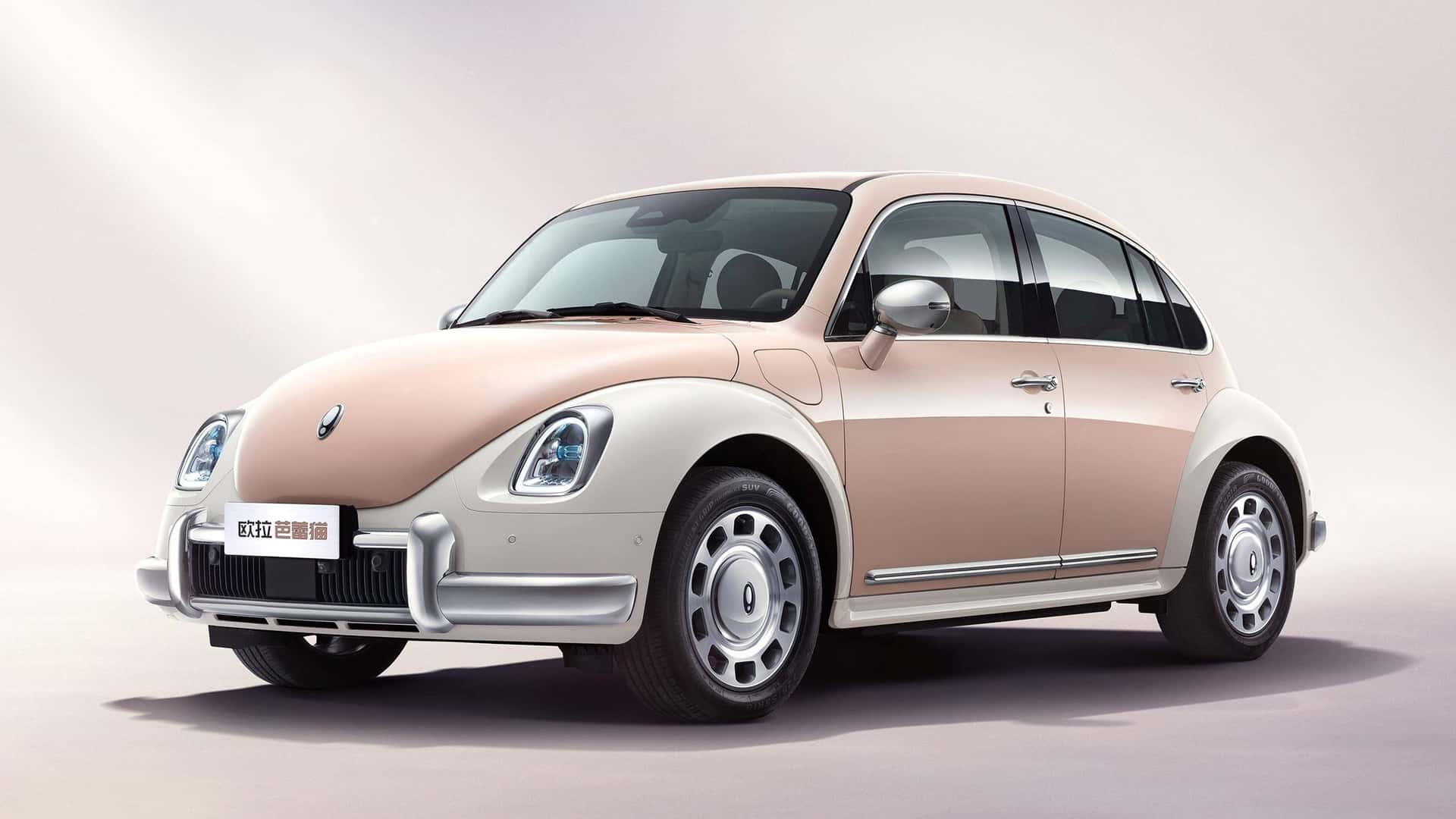
The Ora Ballet Cat, a Beetle‑inspired electric vehicle, debuted in 2022 and has remained a low‑volume model, with annual sales measured in only a few thousand units. For the 2026 model year, the manufacturer says the car receives a new electric motor that raises output from 169 horsepower to 201 horsepower, according to Motor1. The same source notes a top‑speed increase from 96 mph to 112 mph, a modest but noticeable jump for a vehicle that previously positioned itself more on style than performance.
Equally significant is the switch to a lithium‑iron‑phosphate battery pack. LFP chemistry, prized for its thermal stability, lower material cost and longer cycle life, has become the backbone of many Chinese EV line‑ups. By adopting LFP for the Ballet Cat, Ora aligns the niche model with the same battery architecture that powers high‑volume sellers such as the BYD Dolphin and the SAIC‑Volkswagen ID. 3. This convergence suggests that even limited‑run vehicles are being used as testbeds for cost‑effective power‑train components, allowing manufacturers to spread R&D expenses across a broader portfolio.
Pricing, another key data point, starts at roughly ¥193,000 (about US$28,000), as reported by Motor1. That price places the Ballet Cat squarely within the sub‑30 k segment that dominates Chinese city‑car sales, where buyers weigh affordability against a growing suite of convenience features. The 2026 refresh retains the model’s signature quirks: a large vanity mirror designed for on‑the‑go makeup application, a selfie‑camera that can upload directly to social media, and a “Warm Man Mode” that blasts cabin heat at the push of a button. All of these are highlighted by Motor1 as unchanged from the previous iteration.
From an engineering standpoint, the power increase is achieved without a dramatic redesign of the vehicle’s chassis. The modest 32 hp gain can be attributed to a higher‑output motor paired with the LFP pack’s stable voltage curve, which allows the controller to sustain higher torque without overheating. However, the top‑speed bump to 112 mph also raises questions about the vehicle’s aerodynamic efficiency and battery range at higher velocities. The source does not disclose any range figures, leaving analysts to speculate that the LFP pack’s energy density—typically lower than nickel‑cobalt‑manganese (NCM) chemistries—may limit real‑world mileage, especially when the car is driven at its new top speed.
Regulatory considerations also play a role. China’s recent emphasis on LFP adoption, driven by both safety concerns and a desire to reduce reliance on imported cobalt, creates a policy environment that rewards manufacturers who standardise on the chemistry. By retrofitting the Ballet Cat with an LFP pack, Ora not only benefits from lower material costs but also aligns with government incentives that may include tax breaks or preferential licensing for domestic battery production.
Audit & Contradictions
All of the performance, battery and pricing details cited above originate from a single outlet—Motor1. The fact‑check audit flags each of these statements as single‑source claims, meaning there is no independent corroboration from other news agencies or industry reports at this time. No contradictions have been identified, and the audit’s contradiction level is marked as "Low". Readers should therefore treat the horsepower increase, LFP battery adoption, top‑speed boost, price point and the list of interior quirks as statements reported by Motor1, pending verification from additional sources.
Future Outlook
The Ballet Cat’s incremental upgrade may seem modest, but it exemplifies a larger trend: Chinese manufacturers are using even low‑volume models to trial cost‑saving technologies that can be scaled across their broader line‑ups. If LFP proves reliable in the Ballet Cat’s daily use—especially given the added cabin‑heating demand of "Warm Man Mode"—other niche or even premium models could adopt the chemistry, accelerating its global market share.
For competitors, the move signals that price‑sensitive consumers in China are being courted with a blend of retro aesthetics and lifestyle‑focused tech, rather than outright performance. International brands eyeing the Chinese market may need to reconsider how much weight they place on horsepower versus cost‑effective battery solutions and culturally resonant features.
Export prospects remain uncertain. The source notes that the Ballet Cat is unlikely to reach the U.S. market, a limitation that reflects both regulatory hurdles (such as safety standards and emissions testing) and the vehicle’s niche positioning. Nonetheless, the engineering lessons learned—particularly around integrating LFP packs into compact platforms—could inform future models that are designed for export, potentially reshaping the composition of EV line‑ups worldwide.
In sum, the 2026 refresh of China’s Beetle clone is more than a cute facelift; it is a micro‑case study of how low‑cost battery chemistry, government policy and lifestyle‑centric design are converging to define the next wave of Chinese electric vehicles.