Lead Hook
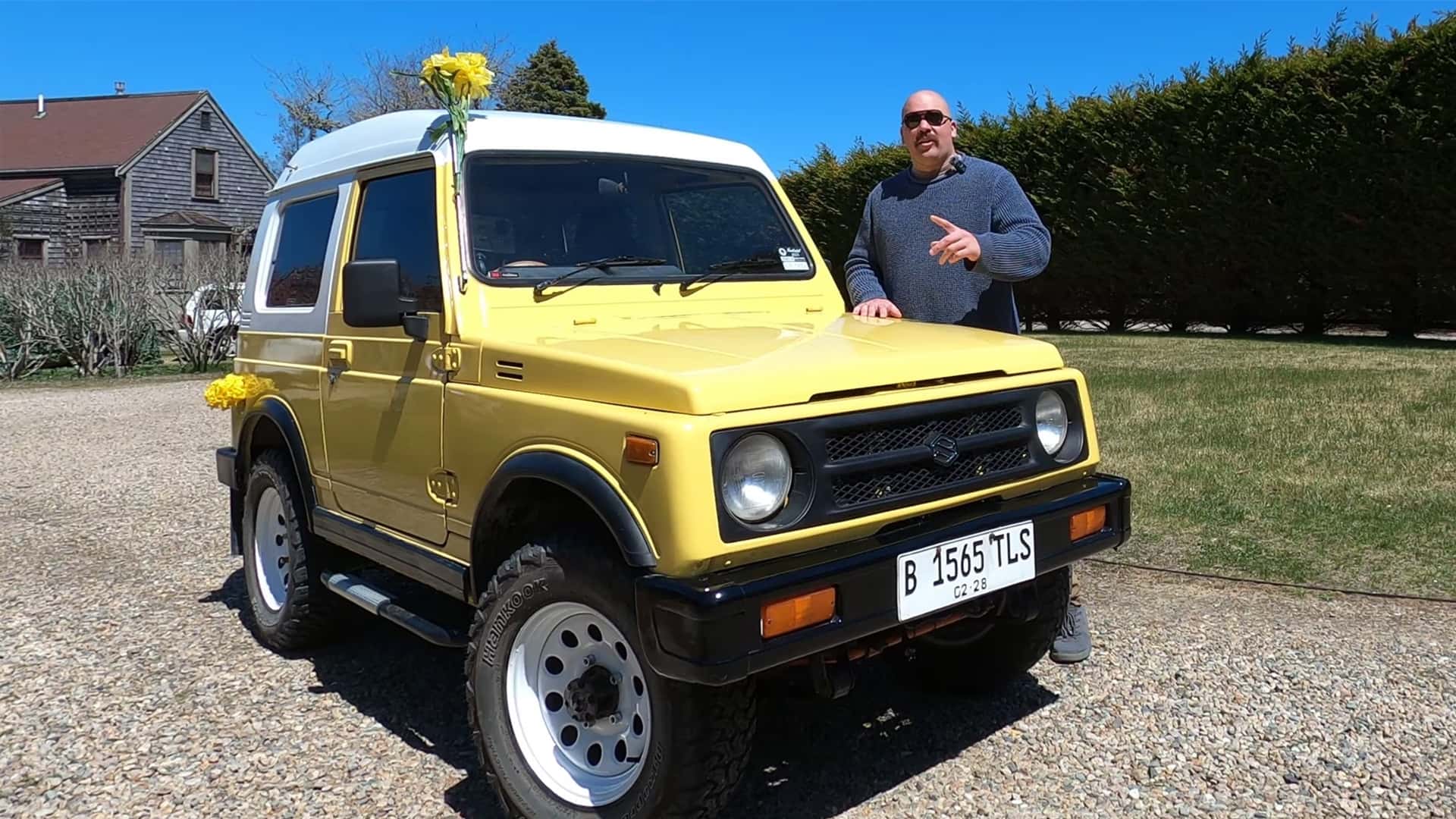
When a 1996 Suzuki Jimny—once sold in the United States as the Samurai—was stripped of its 1.0‑liter gasoline engine and reborn as an electric vehicle for less than $5,000 in just five days, it did more than prove a hobbyist’s ingenuity. The build spotlights a growing, ultra‑budget corner of the EV market that could force regulators, OEMs, and parts suppliers to confront a new reality: everyday enthusiasts can now retrofit aging cars with off‑the‑shelf electric components, sidestepping the high‑priced conversions traditionally reserved for the ultra‑rich.
Deep Dive
According to InsideEVs, the project was undertaken by YouTuber “Life of Troy,” who imported the 1996 Jimny from Indonesia and faced a recurring head‑gasket failure on its original 1.0‑liter four‑cylinder engine. Rather than replace the engine, Troy opted for an electric makeover that he describes as “one of the simplest and cheapest conversions out there.”
“It’s one of the simplest and cheapest conversions out there,” Troy says in his video.
The conversion replaced the gasoline powerplant with a 72‑volt direct‑current motor sourced from D&D Motor. The motor delivers nine horsepower and 65 lb‑ft of torque—modest on paper, but enough to propel the lightweight Jimny to about 50 mph, roughly matching the original vehicle’s quoted top speed. The motor’s retail price of $929, as reported by InsideEVs, illustrates how inexpensive power‑train components have become.
Power delivery is managed by a 500‑amp controller priced at $815, also purchased off the shelf. A 105‑amp‑hour lithium‑iron‑phosphate (LiFePO₄) battery—originally designed for golf carts—provides the energy storage. The battery, costing roughly $1,900, sits where the fuel tank once lived and offers a realistic driving range of 20‑30 miles per charge. Charging is performed from a standard 120‑V household outlet, taking about five hours for a full charge.
Mechanically, the build retains the Jimny’s original five‑speed manual transmission, bolted directly to the electric motor via an adapter plate. The conversion eliminates the clutch but leaves the gearset intact, and because the vehicle never had vacuum‑assist brakes, there was no need to install a vacuum pump. This simplicity helped keep labor time under a week—a stark contrast to professional conversion shops that can charge hundreds of thousands of dollars for bespoke builds.
While the numbers sound modest—$5,000 total cost, a 20‑30‑mile range, and a top speed near 50 mph—the significance lies in the accessibility of the parts. The motor, controller, and battery are all available through generic suppliers or online marketplaces like eBay. Their low price points reflect a broader trend: components once confined to niche hobbyist circles are now mass‑produced for a variety of applications, from small utility vehicles to electric bikes. This commoditization lowers the barrier to entry for DIY converters and creates a parallel market that operates outside traditional automotive supply chains.
From an environmental perspective, the conversion extends the useful life of a vehicle that would otherwise be scrapped, potentially offsetting the embodied carbon of a new EV. However, the modest range and low power output limit the conversion’s practicality for most daily commuters, confining its appeal to short‑haul, low‑speed use cases such as neighborhood errands or off‑road recreation.
Regulatory oversight is another blind spot. In many jurisdictions, converting a gasoline vehicle to electric requires type‑approval, safety testing, and compliance with emissions‑free standards—processes that can be costly and time‑consuming. The InsideEVs article does not detail whether Troy pursued any formal certification, leaving open the question of how such builds are treated under existing vehicle‑safety laws. This regulatory ambiguity could either encourage a surge of DIY conversions or invite stricter enforcement that curtails the hobby.
Audit & Contradictions
The InsideEVs piece is the sole source for every quantitative claim in this story. The fact‑check audit flags the following statements as single‑source and therefore hedged with “According to InsideEVs”:
- The conversion cost under $5,000 and was completed in five days.
- The vehicle was a 1996 Suzuki Jimny (Samurai) imported from Indonesia.
- The original engine produced roughly 45 hp; the 72‑V DC motor provides nine hp, 65 lb‑ft torque, and retails for $929.
- The build uses a $815, 500‑amp controller and a 105‑Ah LiFePO₄ battery costing about $1,900, delivering a 20‑30‑mile range and a five‑hour charge from a 120‑V outlet.
- The converted Jimny reaches about 50 mph, retains its manual gearbox (no clutch), and required no vacuum‑assist brake system.
There are no contradictory reports from other outlets; the audit notes a “Low” contradiction level, meaning the information is internally consistent but unverified beyond the single article.
Future Outlook
If the low‑cost, rapid‑turnaround model demonstrated by Troy proves replicable, it could catalyze a grassroots movement that redefines how aging vehicle fleets are electrified. Potential implications include:
- Aftermarket Expansion: Parts manufacturers may start packaging conversion kits specifically for popular legacy models, creating a new revenue stream distinct from OEM EV sales.
- Regulatory Evolution: Governments might develop streamlined certification pathways for DIY conversions, balancing safety with the desire to reduce overall fleet emissions.
- OEM Response: Original equipment manufacturers could offer official retrofit programs, leveraging their brand trust to capture a segment of the market that currently operates in a legal gray area.
- Environmental Impact: Widespread adoption could meaningfully extend the life of older, high‑emission vehicles, though the net carbon benefit would depend on the scale and efficiency of the conversions.
For now, the Suzuki Jimny conversion remains a proof‑of‑concept—a reminder that the democratization of electric propulsion is already underway, driven not by large corporations but by hobbyists with a wrench, a modest budget, and a willingness to experiment.