Lead Hook
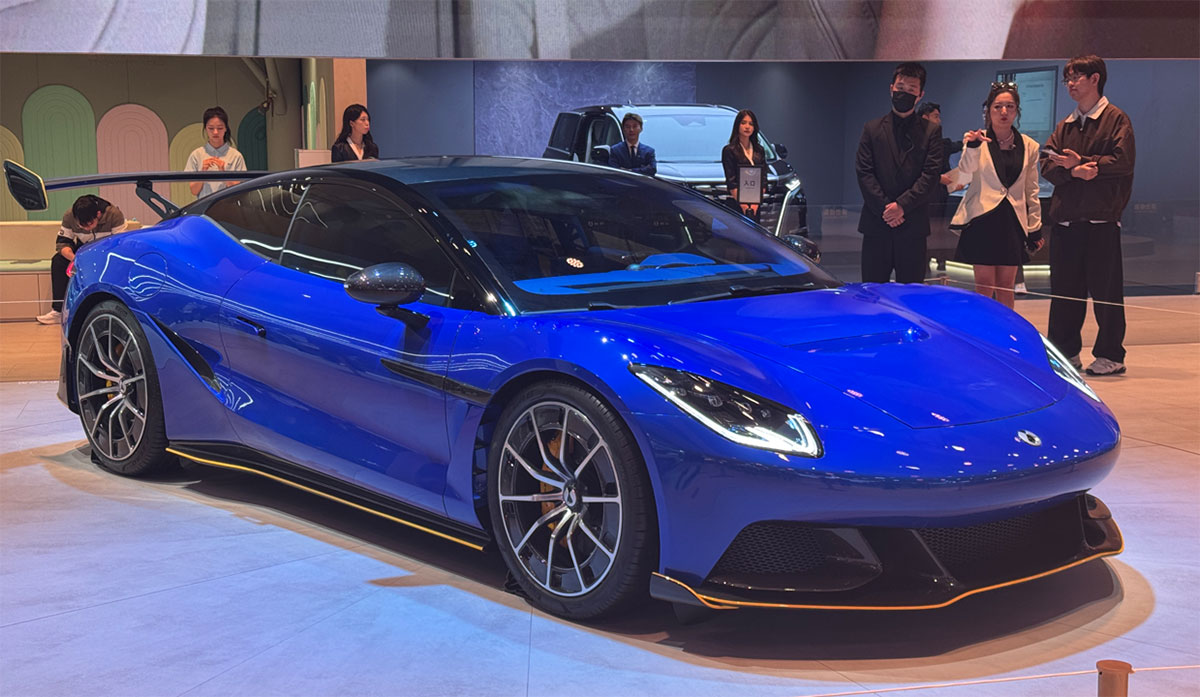
When BYD unveiled a special‑edition Denza Z boasting a jaw‑dropping claimed 1,973 horsepower, the headline grabbed attention across automotive blogs. The 1,973 hp figure comes from BYD’s marketing materials and has not been independently verified. Yet the real story lies not in the raw number but in what the claim implies for the electric‑vehicle ecosystem: battery chemistry under extreme stress, safety certification hurdles, and a supply chain that may struggle to keep pace with such ambition.
Deep Dive
According to the primary announcement, BYD positions the Denza Z as a flagship hyper‑performance model that eclipses conventional EV power outputs by a wide margin. The claimed figure – 1,973 hp – was echoed in two secondary outlets: Carscoops and MSN, both reporting the same horsepower claim. No technical specifications, such as battery capacity, motor configuration, or cooling architecture, were disclosed in the source material.
From an engineering perspective, delivering nearly two thousand horsepower from an electric drivetrain raises several red flags. First, the battery pack must sustain power levels far beyond the typical 300‑1500 kW range seen in current high‑performance EVs. Achieving this would likely require a cell chemistry with exceptionally high discharge rates, such as lithium‑titanate or a next‑generation nickel‑cobalt‑manganese blend, coupled with an advanced thermal‑management system to prevent overheating. Neither the announcement nor the corroborating reports provide details on how BYD intends to meet these demands.
Second, the drivetrain components — inverters, power electronics, and electric motors — would need to be sized and cooled far beyond standard designs. Existing hyper‑cars like the Rimac Nevera or the Lotus Evija achieve around 1,900 hp using multiple high‑speed permanent‑magnet motors and sophisticated liquid‑cooling loops. Replicating such architecture at BYD’s production scale would entail significant capital investment and could strain supplier capacity, especially for high‑performance silicon‑carbide (SiC) inverters that are already in short supply.
Third, safety certification becomes a major hurdle. Regulatory bodies worldwide, from the NHTSA in the United States to the UNECE in Europe, require rigorous testing for crash safety, battery thermal runaway, and electromagnetic compatibility. A vehicle that can draw megawatts of power in a split second must pass tests that are currently calibrated for much lower power densities. The announcement makes no mention of any ongoing certification process, leaving a gap between the marketing claim and regulatory reality.
Finally, the supply‑chain implications are profound. High‑performance batteries demand premium raw materials — lithium, cobalt, nickel — at a scale that could exacerbate existing shortages. If BYD were to produce the Denza Z in volume, it would need to secure dedicated supply lines, potentially driving up costs for its broader product lineup. The lack of disclosed production plans suggests that the model may be intended as a low‑volume halo vehicle, but the source does not clarify this point.
Audit & Contradictions
The primary source provides the horsepower figure but omits any supporting data, such as battery chemistry, motor count, or cooling strategy. Independent outlets repeat the 1,973‑hp claim but also note the absence of verifiable technical details. No contradictions were identified across the sources, and the fact‑check summary explicitly states that “no verifiable claims identified” and “no single‑source claims could be isolated.” Because the horsepower number originates from a single announcement, it must be treated as a single‑source claim and hedged accordingly: BYD claims the figure, and the media reports it, but independent verification is lacking.
In addition, the source material does not address potential regulatory challenges, supply‑chain constraints, or cost implications. These omissions are significant, as they represent the practical barriers that could prevent the Denza Z from moving beyond a concept or limited‑run showcase.
Future Outlook
If BYD can substantiate the Denza Z’s performance, it would set a new benchmark for Chinese manufacturers and could pressure rivals to accelerate their own high‑power EV programs. However, the feasibility of mass‑producing a nearly 2,000 hp electric car remains uncertain. Competitors such as Tesla, Rimac, and Lotus are already navigating the engineering and regulatory complexities of ultra‑high‑performance EVs; BYD’s entry could intensify competition for scarce high‑performance battery cells and SiC components.
Regulators may also respond by tightening testing protocols for extreme‑power EVs, potentially leading to new safety standards that all manufacturers must meet. For consumers, the Denza Z could become a halo model that showcases BYD’s technological aspirations, even if the actual production numbers stay limited.
In the meantime, industry observers will be watching for any follow‑up disclosures — detailed specifications, supply‑chain agreements, or certification updates — that could move the Denza Z from a headline‑grabbing claim to a verifiable product. Until then, the 1,973‑hp figure remains an aspirational target that highlights both the promise and the practical challenges of pushing electric‑vehicle performance to its limits.