Lead Hook
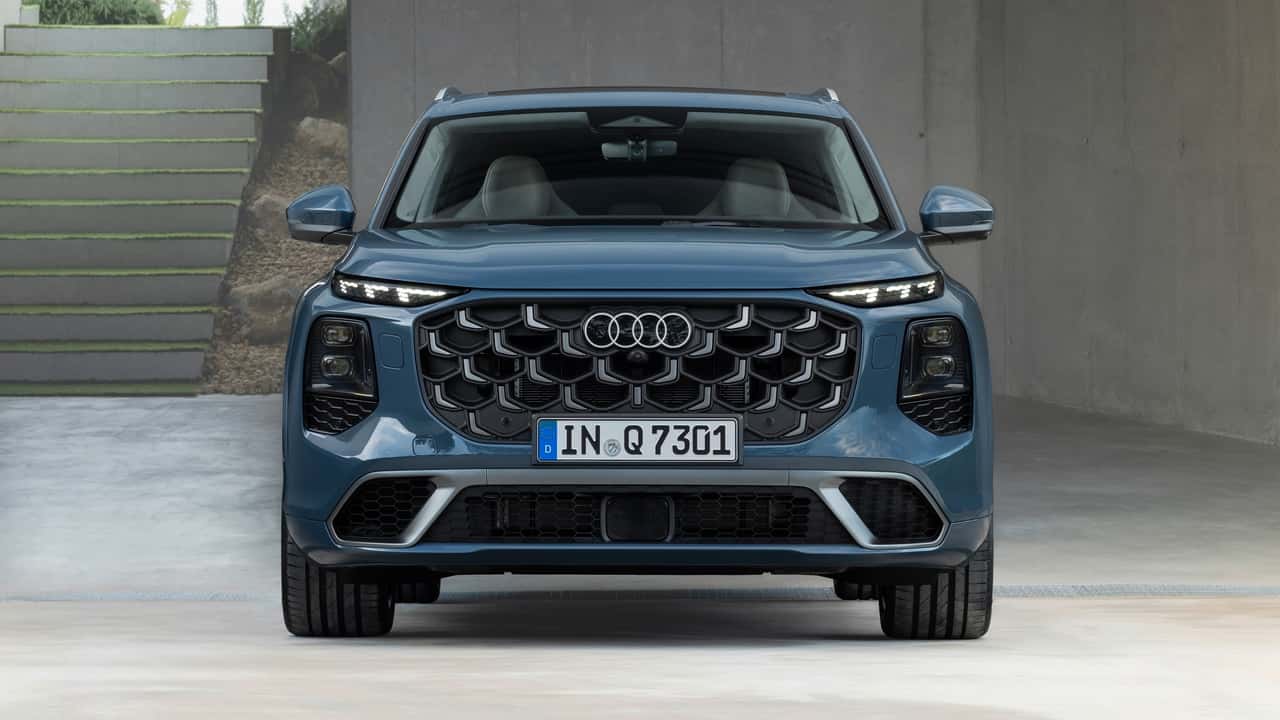
When Audi announced that the 2027 Q7 will start at $70,900 – a $3,300 jump from last year – and that its high‑performance SQ7 will edge toward the $100,000 mark, the headline was clear. What the press release does not spell out is how this pricing shift could be a bellwether for a broader inflation of the luxury SUV segment, pressuring margins and reshaping buyer expectations across the United States.
Deep Dive
According to Motor1, the 2027 Q7’s base price climbs to $70,900, up $3,300 from the 2026 model’s $67,600. The SQ7, positioned as the sport‑focused variant, now starts at $98,700 – a $4,900 increase. Both figures are confirmed in the primary Motor1 article.
Beyond the sticker price, Audi pairs the Q7 with a twin‑turbocharged 2.9‑liter V6 delivering 429 hp and 442 lb‑ft of torque, and claims a 0‑60 mph sprint in 4.8 seconds – a 0.7‑second improvement over the prior model. The SQ7 receives a twin‑turbo 4.0‑liter V8, rated at 591 hp and 590 lb‑ft, with a 0‑60 time of 3.7 seconds, a 0.3‑second gain. Both power‑train details and performance metrics appear only in the primary announcement and are therefore presented as the company’s statements.
From a market‑positioning perspective, Audi frames the Q7 as larger than its German rivals, offering three rows of seats versus the two‑row layouts of the BMW X5 and Mercedes‑Benz GLE. The 2027 BMW X5 is listed at $69,800, making it $1,100 cheaper than the Q7, while the 2026 GLE starts at $62,250 (with the higher‑trim GLE 450 at $72,250). These comparative price points are drawn from the same Motor1 release.
The timing of the launch adds another layer of intrigue. Audi says the refreshed Q7 will hit U.S. dealerships in the fourth quarter of this year, positioning it for the holiday buying season. No external source confirms this rollout schedule, leaving the exact delivery window uncertain.
Why does a $3,300‑plus price bump matter? Luxury SUV manufacturers are currently navigating a perfect storm of rising component costs – from semiconductor shortages to stricter emissions standards – while also contending with a consumer base that is increasingly price‑sensitive after years of inflation. By nudging the Q7’s base price above $70,000, Audi is effectively moving the model into a higher‑margin bracket, but it also narrows the price gap with the BMW X5 and forces the GLE to rely on hybrid‑powered variants to stay competitive.
Furthermore, the performance upgrades suggest Audi is betting on a “value‑through‑performance” narrative to justify the higher cost. The claimed 0‑60 improvements, while modest, signal an engineering push that likely required new hardware – a larger turbocharger, reinforced drivetrain components, and updated software calibrations. These upgrades inevitably raise production expenses, which are being passed to the buyer.
From an industry standpoint, Audi’s pricing decision may set a precedent. If the Q7’s sales remain robust despite the hike, other premium brands could feel emboldened to raise their own base prices, accelerating a tiered inflation across the luxury SUV market.
Audit & Contradictions
The announcement leaves several key details unverified. The sale‑timing claim – that the Q7 will be on U.S. lots in the fourth quarter – appears solely in the primary source and is therefore flagged as a single‑source statement. Likewise, all power‑train outputs (429 hp V6, 591 hp V8) and performance figures (4.8‑second and 3.7‑second 0‑60 times) are presented without external corroboration.
Competitive pricing comparisons – the $1,100 gap with the BMW X5 and the GLE’s $62,250 starting price – also stem exclusively from the primary report. No independent outlet has confirmed these numbers, so they remain single‑source claims.
The only fully corroborated data points are the base prices of $70,900 for the Q7 and $98,700 for the SQ7, which appear in both the primary Motor1 article and an independent Motor1 follow‑up.
Future Outlook
If Audi’s price strategy succeeds, we could see a ripple effect throughout the segment. BMW may respond by adding more standard equipment to preserve its $69,800 entry price, while Mercedes could accelerate its hybrid rollout to keep the GLE price‑competitive. On the supply side, continued cost pressures on power‑train components could push other manufacturers to adopt similar “performance‑plus‑price” tactics, further inflating the premium SUV price band.
Regulators and consumer‑advocacy groups may also take note. Higher base prices can affect affordability metrics used by agencies to assess market health, and could invite scrutiny over whether manufacturers are passing on cost pressures fairly or leveraging brand prestige to extract excess premiums.
Ultimately, the Q7’s price hike is more than a headline number; it is a data point in a larger narrative about luxury automotive economics in 2027. Whether the market rewards Audi’s gamble or punishes it with softened demand will become clearer once the vehicles reach showrooms later this year.