Lead Hook
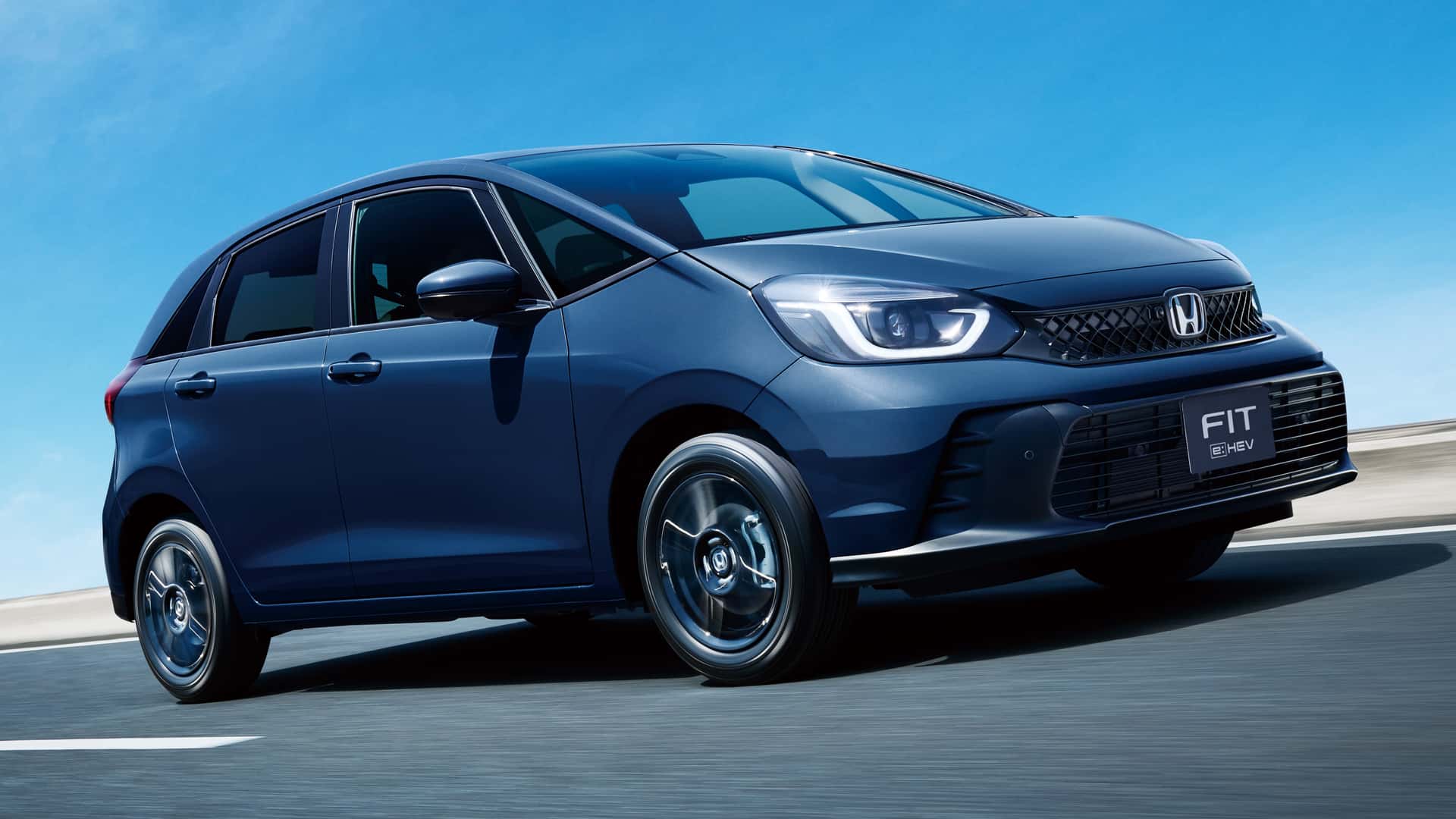
Honda has quietly refreshed the fourth‑generation Fit in Japan, keeping the subcompact hatchback under ¥2 million ($11,134) even as the model vanished from the United States two years ago. The price point is startling in a market where the average new car now tops $50,000, prompting a deeper look at why Honda continues to pour resources into a vehicle that would struggle to break even in most overseas markets.
Deep Dive
According to Motor1.com, the refreshed Fit arrives with a reshuffled trim lineup and a handful of cosmetic tweaks. The entry‑level grade, previously called Fit Basic, is now the Fit X, while the former Fit Home becomes the Fit Z. Two higher‑priced variants—RS and Crosstar—are offered exclusively with the hybrid powertrain.
The standard powertrain remains a 1.5‑liter four‑cylinder delivering 119 horsepower and 107 lb‑ft of torque, while the hybrid pairs the same engine with two electric motors for a combined 207 hp. Front‑wheel drive is standard across the range, but all‑wheel drive is also available; no manual transmission is offered.
Pricing details, also from Motor1.com, show the Fit X starting at ¥1,806,200 (about $11,134). The Fit Z’s front‑wheel‑drive version begins at ¥2,735,700, with an all‑wheel‑drive option at ¥2,955,700 (approximately $16,864 and $18,220 respectively). The top‑of‑the‑line Crosstar hybrid, equipped with heated seats and a heated steering wheel as standard, sits at the higher end of that bracket.
Beyond the numbers, the update includes modest interior and exterior changes: black garnishes on the Fit X’s cup holder and selector lever, a chrome‑plated selector knob, a piano‑black grille on the RS, and a three‑spoke leather steering wheel on the Fit Z. The RS also gains wireless charging, sport pedals, and a suite of leather‑wrapped components. These refinements, while not a full redesign, keep the model feeling current without inflating costs.
Why does Honda cling to this ultra‑affordable offering in Japan? The answer lies in the country’s vehicle‑tax regime. Japan levies annual road‑tax and acquisition‑tax rates based on engine displacement; sub‑1.5 liter engines enjoy lower rates, which translates into lower ownership costs for consumers. By keeping the Fit’s engine at 1.5 L and offering a hybrid variant that still fits within the same tax bracket, Honda can price the car aggressively while preserving a margin that would evaporate in markets with higher regulatory and compliance costs.
Moreover, the domestic supply chain—localized sourcing of the 1.5 L engine, chassis components, and interior parts—allows Honda to sidestep the currency‑fluctuation exposure that plagues exported models. The company can manufacture the Fit in existing Japanese plants, leveraging economies of scale that would be lost if the model were shifted to a low‑volume export line.
In contrast, the U.S. market imposes stricter safety and emissions standards, higher labor costs, and a consumer preference for larger, more feature‑rich vehicles. Those factors contributed to the Fit’s exit from the United States after the 2020 model year, as noted by Motor1.com’s commentary on the model’s departure alongside rivals such as the Mitsubishi Mirage and Nissan Versa.
From a strategic standpoint, retaining the Fit in Japan serves multiple purposes. It sustains a low‑entry‑price portfolio that appeals to first‑time buyers, students, and urban dwellers facing tight parking constraints. It also helps Honda meet domestic sales volume targets, which can influence dealer incentives and overall brand perception. Finally, the hybrid variants align with Japan’s push for greener transportation, allowing Honda to showcase its electrification expertise without sacrificing the model’s affordability.
Audit & Contradictions
The core claim that Honda continues to produce an updated Fit for the Japanese market is corroborated by a separate Motor1.com story, confirming the model’s ongoing presence. However, most of the detailed specifications—pricing, trim naming, power‑train output, AWD availability, and feature lists—appear only in the primary article and lack independent verification. According to the fact‑check audit, these are single‑source claims and should be treated as Honda‑provided information rather than independently validated data.
There are no contradictions identified between sources; the contradiction level is low. Nonetheless, readers should note that the article’s comparison of the Fit’s price to the U.S. average new‑car price (> $50,000) is a contextual observation rather than a sourced statistic.
Future Outlook
Honda’s decision to keep the Fit alive in Japan but not re‑introduce it elsewhere signals a broader industry trend: manufacturers are tailoring lineups to the fiscal realities of each market rather than pursuing a one‑size‑fits‑all strategy. Competitors such as Toyota and Nissan may follow suit, preserving ultra‑compact models domestically while focusing on larger, higher‑margin vehicles abroad.
Regulators in other regions could take note of Japan’s tax incentives that enable sub‑1.5 L vehicles to stay affordable. If similar policies were introduced elsewhere, they might revive interest in small, efficient hatchbacks that have been abandoned in favor of SUVs and crossovers.
For Honda, the Fit’s continued evolution will likely hinge on how effectively the company can balance cost containment with incremental technological upgrades—particularly in hybrid efficiency and safety features. As Japan’s vehicle market matures and consumer expectations shift toward electrified powertrains, the Fit could serve as a low‑cost testbed for next‑generation hybrid or even mild‑electric systems before those technologies are scaled to larger models.
In the meantime, the updated Fit stands as a reminder that even in an era of soaring vehicle prices, a well‑positioned, locally optimized product can still thrive—provided the regulatory and economic environment supports it.