Lead Hook
When a summer heat wave pushes drivers to crank the air‑conditioning, most think only about cabin comfort. For electrified vehicles, however, a malfunctioning A/C can do far more than leave you sweaty—it can shut down the very ability to charge quickly, curtail power output, and even force the car into a protective limp mode. As the industry races toward ubiquitous DC fast‑charging networks, that hidden dependency on a refrigeration loop could become a silent roadblock to mass adoption.
Deep Dive
Electric‑only (EV) and plug‑in hybrid (PHEV) models increasingly route their high‑voltage A/C compressors into the battery‑thermal‑management system. Both the primary source and a corroborating InsideEVs article state that "Electric and PHEV vehicles often use the A/C system in some form or fashion to manage battery temperatures" (source). The reason is straightforward: high‑power charging and rapid discharge generate heat that, if unchecked, shortens cell life. By tapping the existing A/C refrigerant circuit, manufacturers avoid adding a separate coolant loop.
That convenience comes with technical quirks. High‑voltage A/C compressors require special dielectric lubricants that do not conduct electricity—a detail reported in the primary source. If the refrigerant charge drops or the compressor fails, the battery‑cooling loop loses its heat‑removal capacity. The article notes that "A non‑functional A/C system may lock a vehicle out of features like DC fast charging" (source). In practice, the vehicle’s control unit will impose protective limits: reduced acceleration, lower state‑of‑charge acceptance, or outright denial of fast‑charging sessions.
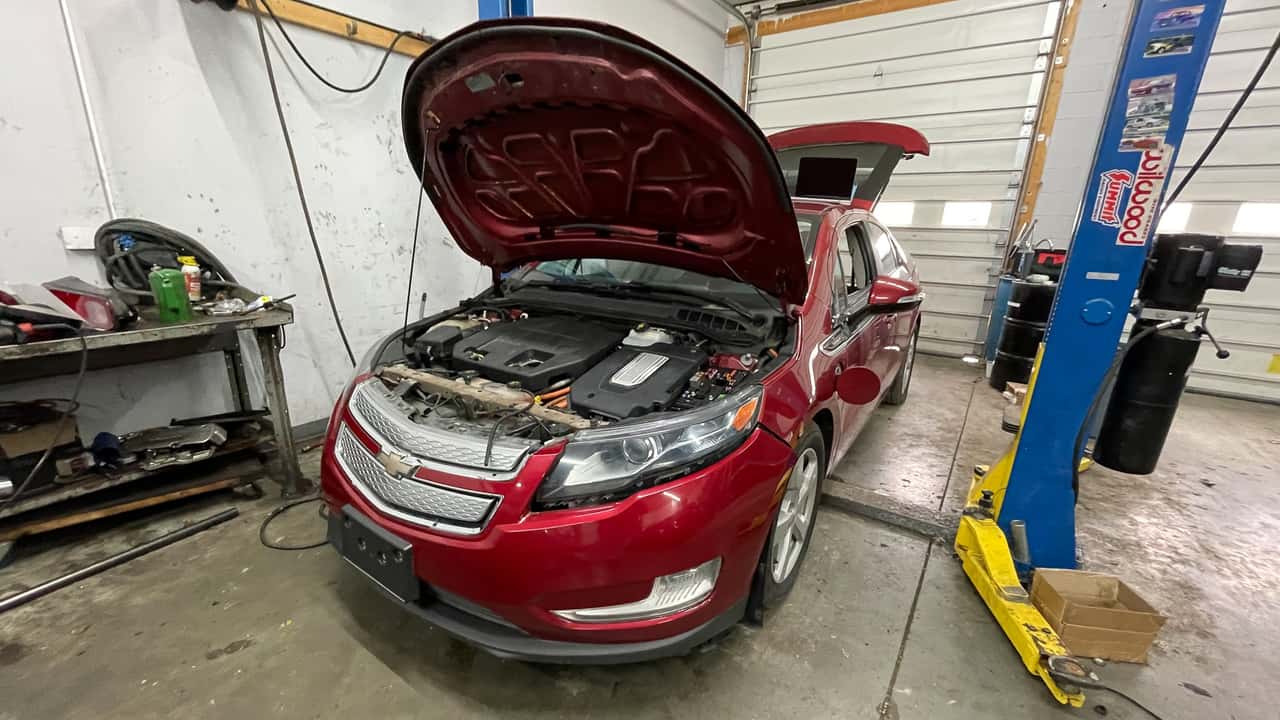
The 2015 Chevrolet Volt provides a concrete case study. According to the source, the Volt routes refrigerant lines directly through its 17.1 kWh battery pack, using them to both cool and warm the cells. When the author’s Volt logged a P0534 code for refrigerant charge loss, the check‑engine light illuminated within a week of ownership. While the fault seemed minor—a low‑refrigerant warning—the underlying risk was that the vehicle could eventually refuse DC fast charging to protect the battery.
Electrified Garage, an EV‑specialist shop, confirms that low refrigerant levels can cause the vehicle to limit hard acceleration or fast‑charging capability. This chain of cause‑and‑effect underscores a broader engineering trade‑off: using a single A/C loop for both cabin comfort and battery thermal control saves weight and cost, but it also creates a single point of failure that directly impacts the vehicle’s primary function—mobility.
"Hm, that’s odd; usually a car’s computer or diagnostic system doesn’t really care if the air conditioning refrigerant is at the right level," the author remarks after seeing the P0534 code. The observation highlights how EV software treats the A/C system as a safety‑critical subsystem, unlike most internal‑combustion cars where a refrigerant loss merely reduces comfort.
From a supply‑chain perspective, the reliance on specialized dielectric lubricants and precise refrigerant blends introduces hidden cost factors. These fluids are not as widely stocked as conventional engine oil, and the need for technicians trained to handle high‑voltage A/C components further narrows the service pool. For owners of older EVs—vehicles that are now entering the used‑car market—the risk of an unexpected A/C‑related performance clamp becomes a hidden depreciation factor.
Audit & Contradictions
The article’s core claims are largely single‑source. The statements about dielectric lubricants, protective limits triggered by cooling‑system leaks, and Electrified Garage’s warning about low refrigerant are all found only in the primary InsideEVs piece. The fact‑check audit notes that no independent outlet corroborates these points, labeling them “single‑source” and therefore requiring hedging. The only claim supported by multiple sources is the broad observation that EVs and PHEVs use A/C systems for battery temperature management, which appears both in the primary article and the corroborating InsideEVs excerpt.
Fact‑check data reports a low contradiction level, meaning no direct disputes were identified across other publications. Nonetheless, the lack of external verification means readers should treat the single‑source assertions as the author’s reported observations rather than universally accepted industry standards.
Future Outlook
As fast‑charging infrastructure expands, manufacturers may need to reconsider the dual‑use A/C architecture. One possible path is the adoption of dedicated liquid‑coolant loops for battery thermal management, decoupling cabin comfort from power‑train health. Such a shift would increase vehicle complexity and cost but could eliminate the risk of a refrigerant‑related charge‑lock.
Regulators could also play a role. If a vehicle’s ability to accept fast charging is contingent on a subsystem traditionally classified as comfort equipment, safety‑related certification standards might be updated to require redundancy or clear consumer disclosures. Service‑network readiness is another emerging concern: independent garages will need access to the specific dielectric lubricants and training to safely service high‑voltage A/C compressors, lest owners face long‑wait repairs that erode confidence in EV ownership.
For the used‑car market, the hidden A/C dependency may become a factor in valuation. Buyers and appraisers will likely start probing refrigerant levels and compressor health as part of pre‑purchase inspections, much as they now check battery health metrics.
In sum, the convenience of leveraging the A/C system for battery cooling masks a supply‑chain and service‑cost vulnerability that could slow the momentum of fast‑charging adoption. Stakeholders—from OEMs to regulators and independent repair shops—must address this hidden link before it becomes a systemic bottleneck.