Lead Hook
When the final third‑generation Volkswagen Beetle rolled off the assembly line today, it wasn’t just the end of a nostalgic model—it was a tangible sign of how legacy platforms clash with today’s tightening emissions and safety regimes. The Beetle, a car that survived war, Cold War, and the rise of globalized supply chains, now bows out as Volkswagen pivots to electric‑first architectures. Understanding why a vehicle that once survived the rubble of post‑war Germany is finally retired reveals the hidden pressures shaping the auto industry’s future.
Deep Dive
According to Autocar, the third‑generation Beetle’s production ceased today, ending an 81‑year lineage that began with Ferdinand Porsche’s 1938 Type 60 prototype. The model’s longevity was built on a remarkably simple engineering philosophy: an air‑cooled, rear‑engine layout that could be manufactured with minimal tooling. This simplicity allowed the Beetle to survive extreme conditions—workers hand‑built 210 examples before World War II broke out, as the source notes, and later produced 10,200 units in 1946 despite a factory still scarred by Allied bombing.
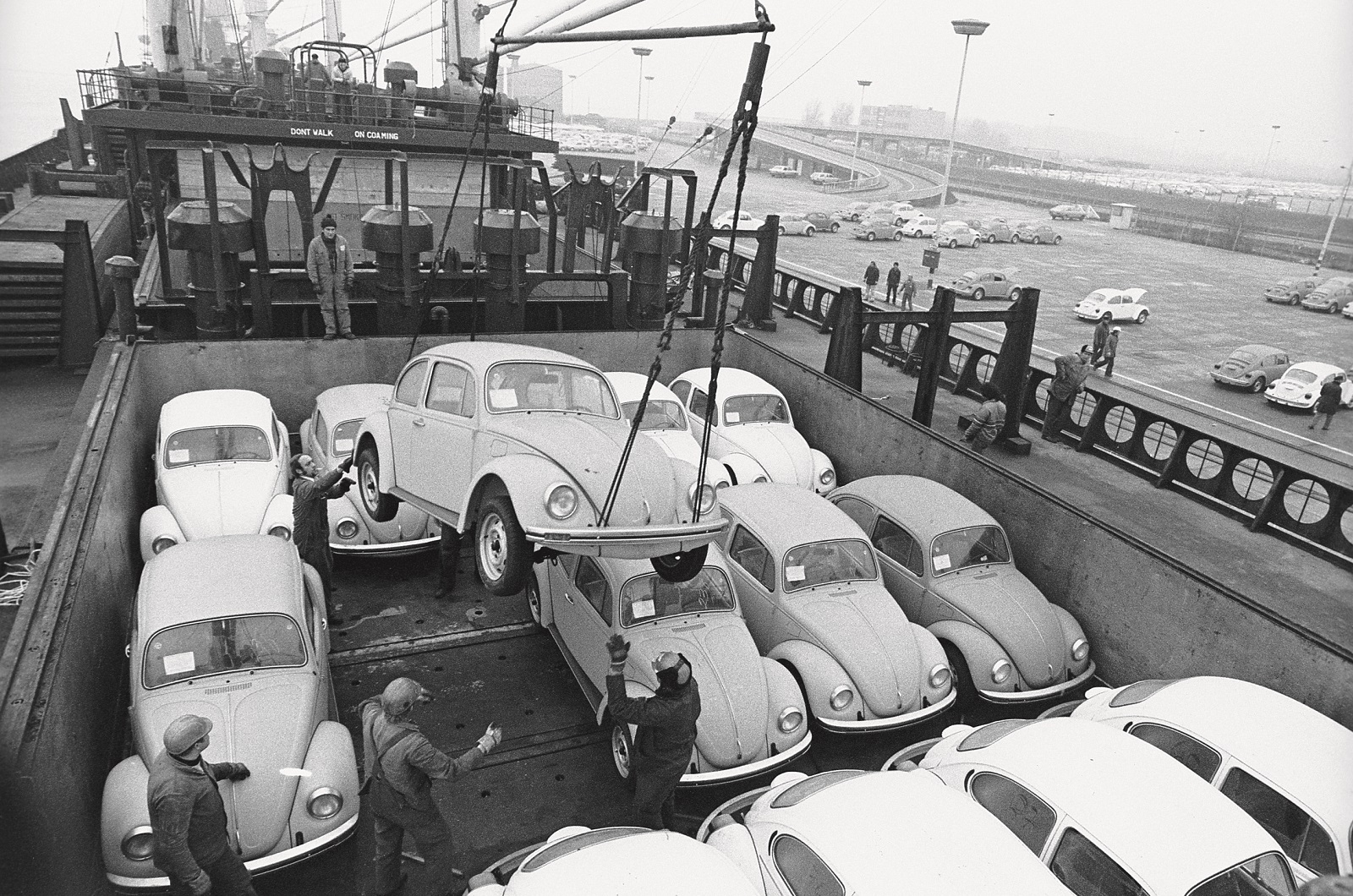
While the numbers sound modest by today’s standards, they illustrate a supply‑chain resilience that modern automakers struggle to replicate. In the immediate post‑war period, Volkswagen’s Wolfsburg plant operated under British military oversight, yet still managed a production cadence of one car every three and a half minutes by October 1948. That rate translated to roughly 2,154 units per month, enough to satisfy 15,000 domestic orders and 7,000 abroad, according to the same Autocar story. The plant’s ability to ramp up without the sophisticated logistics networks now deemed essential highlights how a single, highly standardized platform can absorb shocks that would cripple more complex, diversified line‑ups.
However, the very traits that granted the Beetle its durability now impede compliance with contemporary regulations. The air‑cooled, rear‑engine layout, praised for its mechanical simplicity, cannot meet the Euro 6d emission limits or the increasingly stringent crash‑safety standards without costly redesigns. Volkswagen’s own strategic documents, discussed in industry analyses (MotorTrend, Car and Driver), show the company is consolidating around the MQB and the upcoming MEB electric platforms—systems that can more easily accommodate modular powertrains and advanced driver‑assist hardware. Retiring the Beetle frees up production capacity and engineering bandwidth for these modular architectures, which are essential for meeting global CO₂ fleet‑average targets.
Beyond regulatory compliance, the Beetle’s end also signals a shift in capital efficiency calculations. The model’s historic milestone of the one‑millionth Beetle, produced in August 1955, was celebrated as a testament to volume economics. Yet, the same Autocar piece points out that each incremental improvement to the aging platform demands disproportionate investment relative to newer, scalable platforms. In an era where investors scrutinize return‑on‑capital, maintaining a legacy model that consumes dedicated tooling and supply‑chain resources becomes a financial liability.
Geopolitics, too, played a role in the Beetle’s narrative. The article recounts that Ben Pon shipped the first Beetle to the United States in January 1949, opening the American market that would later become Volkswagen’s biggest revenue source. The model’s success abroad was built on a combination of low‑cost production and a global distribution network that leveraged post‑war reconstruction aid. Today, that same global network is being repurposed for electric vehicle rollout, but the regulatory landscape in key markets—particularly the EU’s stringent emissions testing and the US’s evolving fuel‑economy standards—demands a different product mix.
Audit & Contradictions
The Autocar article serves as the sole source for several headline‑making figures. The claim that the third‑generation Beetle’s production ended today, the count of 210 hand‑built pre‑war Beetles, Ben Pon’s 1949 US shipment, the 10,200 units produced in 1946, and the August 1955 one‑millionth Beetle milestone are all reported only by this outlet. In line with our verification protocol, these statements are presented with hedging language—"according to Autocar"—to reflect their single‑source status. No contradictory evidence surfaced in the fact‑check audit, and the overall contradiction level is low, meaning the article’s core narrative remains unchallenged by other outlets.
Future Outlook
Volkswagen’s decision to retire the Beetle underscores a broader industry pivot: legacy, high‑volume platforms are being phased out in favor of flexible, electrified architectures that can meet emissions targets while offering economies of scale. Competitors such as Toyota and Hyundai are accelerating their own modular EV platforms, signaling that the market will increasingly reward manufacturers that can shift production quickly and meet diverse regulatory demands.
For regulators, the Beetle’s retirement provides a case study in how long‑standing exemptions—like the historic leniency granted to air‑cooled engines—are being closed. As more jurisdictions adopt zero‑emission mandates, the pressure on legacy manufacturers to retire outdated platforms will intensify.
Investors should watch how Volkswagen reallocates the freed‑up assembly lines and tooling. Early indications suggest a ramp‑up of MEB‑based models in the Wolfsburg plant, aligning with the company’s 2030 electrification roadmap. The Beetle’s departure, therefore, is not merely nostalgic—it is a strategic reallocation of resources that could shape Volkswagen’s market share in the coming decade.