Lead Hook
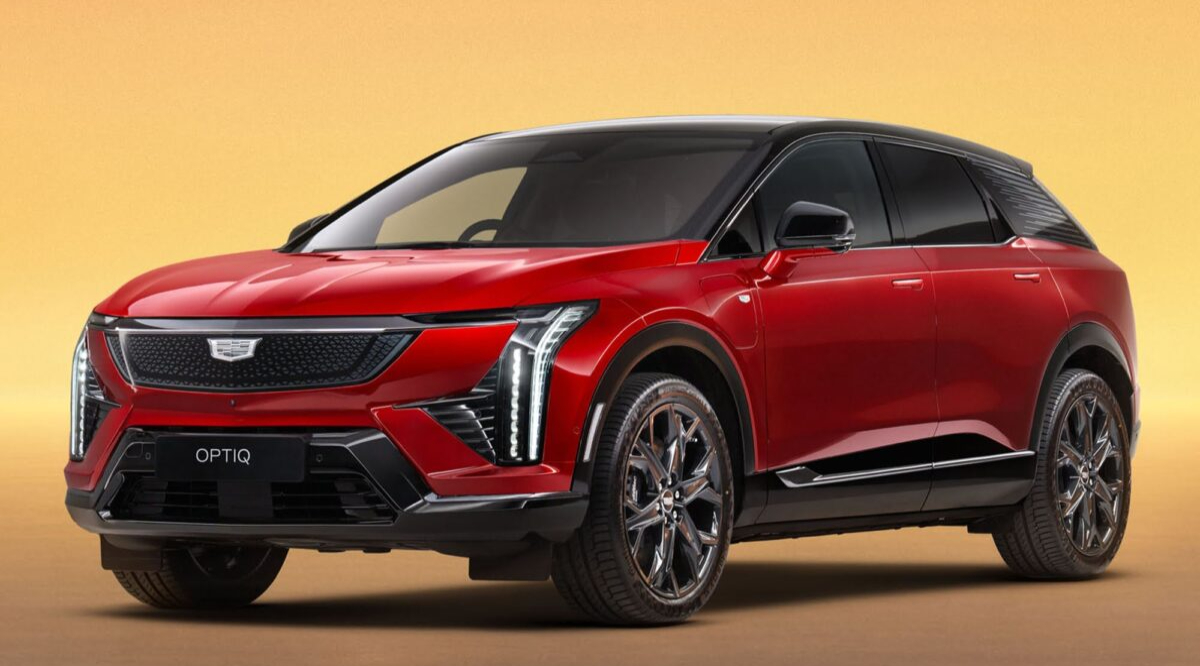
The global automotive industry is undergoing significant changes, with many manufacturers struggling to keep up with the shift towards electric vehicles. In a surprising move, Cadillac's smallest EV, the OPTIQ, may switch to a Chinese-made Xiao Yao platform, according to CleanTechnica. This decision could have far-reaching implications for the future of the automotive industry.
Deep Dive
The Xiao Yao platform, developed by SAIC-GM's Pan Asia Technical Automotive Center in Shanghai, is a China-tailored platform that combines GM's global expertise with strong local capabilities. According to the company, it integrates propulsion, chassis, intelligent driving, and smart-cabin technologies. The platform supports EVs, plug-in hybrids, and extended-range vehicles and can be adapted for nearly all body types, including MPVs, sedans, and SUVs.
Several Buick models, such as the Electra L7 and the E7, already use the 900-volt Xiao Yao platform. However, it's worth noting that GM's Ultium platform has been described as archaic and a flop in China, with sales of the Buick Electra E5 and E4 sluggish at best. Chinese customers strongly prefer cars from NIO, BYD, and XPENG, leading GM to decide that Ultium was a non-starter and that developing a platform in China, for China, was the only solution to be competitive.
A GM spokesperson in the US told InsideEVs,
The Xiao Yao architecture is a China-tailored platform developed by PATAC that combines GM’s global expertise with strong local capabilities. It integrates propulsion, chassis, intelligent driving and smart-cabin technologies. The reporting about the Optiq is speculative.
Audit & Contradictions
The fact-check audit data reveals that the central claim about the Cadillac OPTIQ potentially being built on the Xiao Yao platform is corroborated by multiple independent outlets, including Autoblog, The Weekly Driver, and CarExpert. However, other notable assertions, such as the current use of Xiao Yao on Buick models, the GM spokesperson quote, Mexican production of the OPTIQ, and potential sales in Canada, Mexico, and Australia, appear only in the CleanTechnica article and lack external confirmation.
The contradiction level is marked as Low, with no identified contradictions. However, it's essential to note that some claims are single-source and should be treated with caution.
Future Outlook
The implications of Cadillac's potential switch to a Chinese-made platform are significant. If successful, it could give Cadillac a competitive edge in the global EV market. The move could also pave the way for other manufacturers to follow suit, potentially leading to a shift in the balance of power in the automotive industry.
As the industry continues to evolve, it's likely that we'll see more collaborations between Western manufacturers and Chinese companies. The fact that Renault has developed the latest Twingo E-Tech at its R&D center in Shanghai, and that Audi and Hyundai are planning to make China their next big R&D hubs, suggests that China is becoming an increasingly important player in the global automotive industry.