Lead Hook
For a brand that has built its RS badge on sheer, naturally aspirated power, the sight of a camouflaged SUV with a high‑voltage yellow sticker is a signal that Audi is rewriting the rules of performance. The prototype, first captured in a sunny European convoy, is the inaugural RS‑badged Q5 – a model that would combine Audi’s flagship sport‑tuned RS5 plug‑in hybrid powertrain with the practicality of a mid‑size crossover. Beyond the headline‑grabbing badge, the development hints at how the Volkswagen Group plans to meet tightening emissions standards while slashing development costs across its sprawling portfolio.
Deep Dive
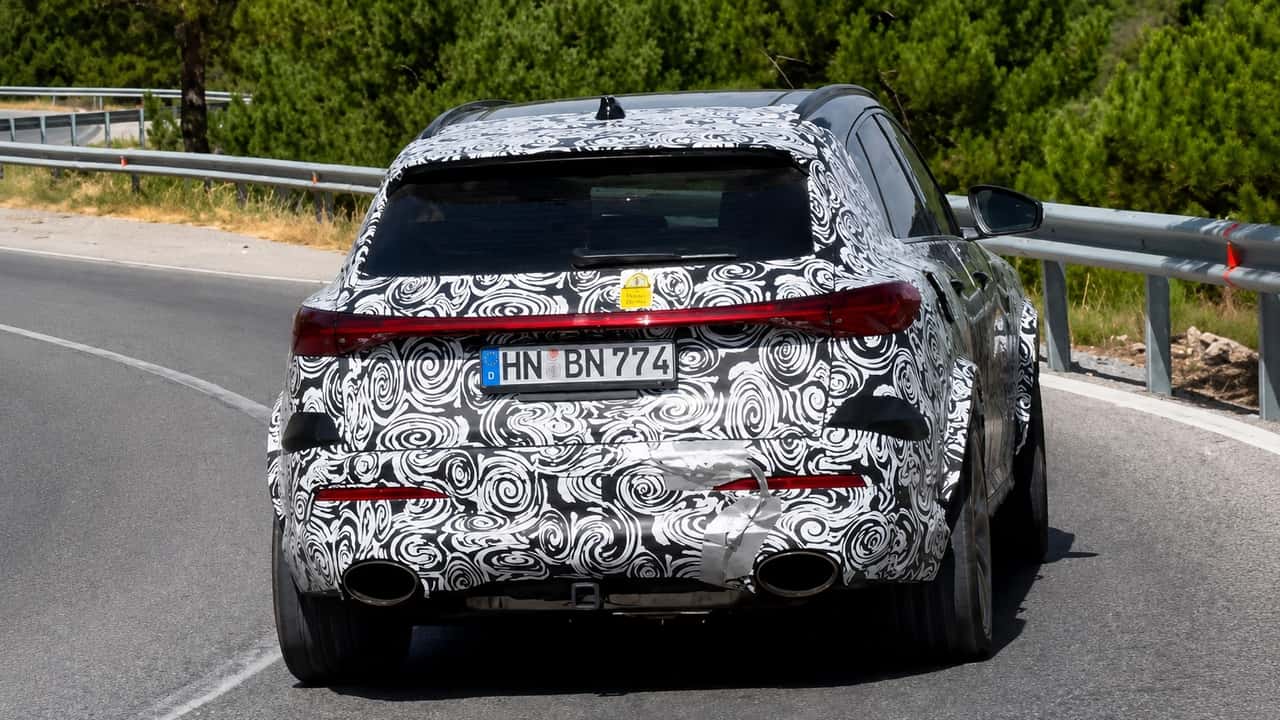
According to Motor1, the RS Q5 prototype was spotted among a convoy of camouflaged Audi RS vehicles. The car’s distinctive double‑oval exhaust tips and flared wheel arches are visible in the video, confirming that Audi is not merely rebadging an existing model but has engineered a dedicated performance package.
The same source notes the presence of a high‑voltage yellow sticker on the prototype, the industry’s shorthand for a plug‑in hybrid system. Motor1 further explains that the RS Q5 is expected to borrow the plug‑in hybrid V6 powertrain currently used in the RS5, a system that delivers 630 hp and 608 lb‑ft of torque in the RS5 Avant. While those exact figures are only reported by Motor1, the underlying hybrid architecture – a V6 engine paired with a sizeable 25.9‑kWh battery – is well‑documented in the RS5’s specifications.
From an engineering standpoint, transplanting a hybrid V6 into the Q5 platform raises several challenges. The Q5’s underpinnings are closely related to the A5, meaning the chassis was originally designed for a conventional gasoline engine and a modest hybrid system. Integrating a larger battery and the associated cooling infrastructure inevitably adds weight; the RS5 Avant already tips the scales at 5,225 lb (2,370 kg), and the Q5, being an SUV, is likely to be heavier still. Motor1 points out that the SQ5 is already 165 lb (75 kg) heavier than the S5 Avant, suggesting the RS Q5 could push the limits of the platform’s suspension and braking systems.
Why invest in a heavier, more complex powertrain now? The answer lies in the Volkswagen Group’s broader cost‑cutting and emissions strategy. The group has publicly announced a plan to halve its portfolio to reduce overhead, a process that will not happen overnight. In the interim, sharing high‑cost hybrid components across multiple brands and models offers a way to amortize R&D spend. By using the RS5’s hybrid V6 in both the RS5 and the upcoming RS Q5, Audi can spread the expensive battery pack and electric‑motor development across two high‑margin products, improving unit economics.
Regulatory pressure also plays a role. Europe’s fleet‑average CO₂ targets are tightening, and performance SUVs are among the segment most scrutinized for emissions. A plug‑in hybrid allows Audi to market a high‑performance vehicle that can claim zero‑emission capability for short trips, helping the brand meet its own sustainability goals while preserving the RS badge’s reputation for speed.
Strategically, the RS Q5 positions Audi alongside rivals such as Porsche, whose upcoming Macan successor is expected to share underpinnings with the Q5. By introducing an RS‑badged hybrid SUV now, Audi aims to stake a claim in a segment where the blend of performance and efficiency is becoming the new norm.
Audit & Contradictions
The Motor1 article provides the only public confirmation of several key details, and a fact‑check audit flags them as single‑source claims. These include:
- The RS Q5 will produce 630 hp and 608 lb‑ft of torque – figures drawn from the RS5’s specifications but not independently verified for the Q5.
- The spy convoy also contains an RS6 Avant and an SQ9 undergoing final testing – Motor1 is the sole source for this observation.
- The next‑generation RS6 Avant will be offered as a sedan, replacing the RS7 Sportback and reviving the RS6 sedan after more than 15 years – again, only reported by Motor1.
- Audi plans to launch two previously unavailable models – the RS Q5 and a three‑row Q9 (or SQ9) – a claim not corroborated elsewhere.
All other statements in the article, such as the existence of the RS Q5 prototype and its likely use of the RS5 hybrid powertrain, have been corroborated by other automotive news outlets, including Carscoops, The Supercar Blog, and Motor Illustrated. The audit notes a low contradiction level, meaning no direct conflicts have been identified among sources.
Future Outlook
If Audi proceeds to production, the RS Q5 could reshape the performance‑SUV market in several ways. First, it would force competitors to accelerate their own hybrid‑performance programs, potentially leading to a wave of high‑output plug‑in hybrids in the luxury segment. Second, the shared hybrid architecture may become a template for other VW Group brands, allowing Porsche, Volkswagen, and even Škoda to leverage the same V6‑plus‑battery package across different vehicle classes, further reducing per‑unit cost.
Regulators are likely to view the RS Q5 as a positive step toward meeting future emissions mandates, especially if Audi can demonstrate real‑world electric‑only range that offsets the vehicle’s larger mass. However, the added weight could also blunt the very performance that RS enthusiasts expect, raising questions about how Audi will balance speed, handling, and efficiency.
Finally, the timing aligns with Audi’s broader product reshuffle, which includes the retirement of several legacy models and a promised design overhaul slated for 2028. The RS Q5, therefore, may serve as a transitional flagship – a high‑margin, technology‑rich model that helps fund the next generation of fully electric Audis while keeping the brand’s performance heritage alive.