Lead Hook
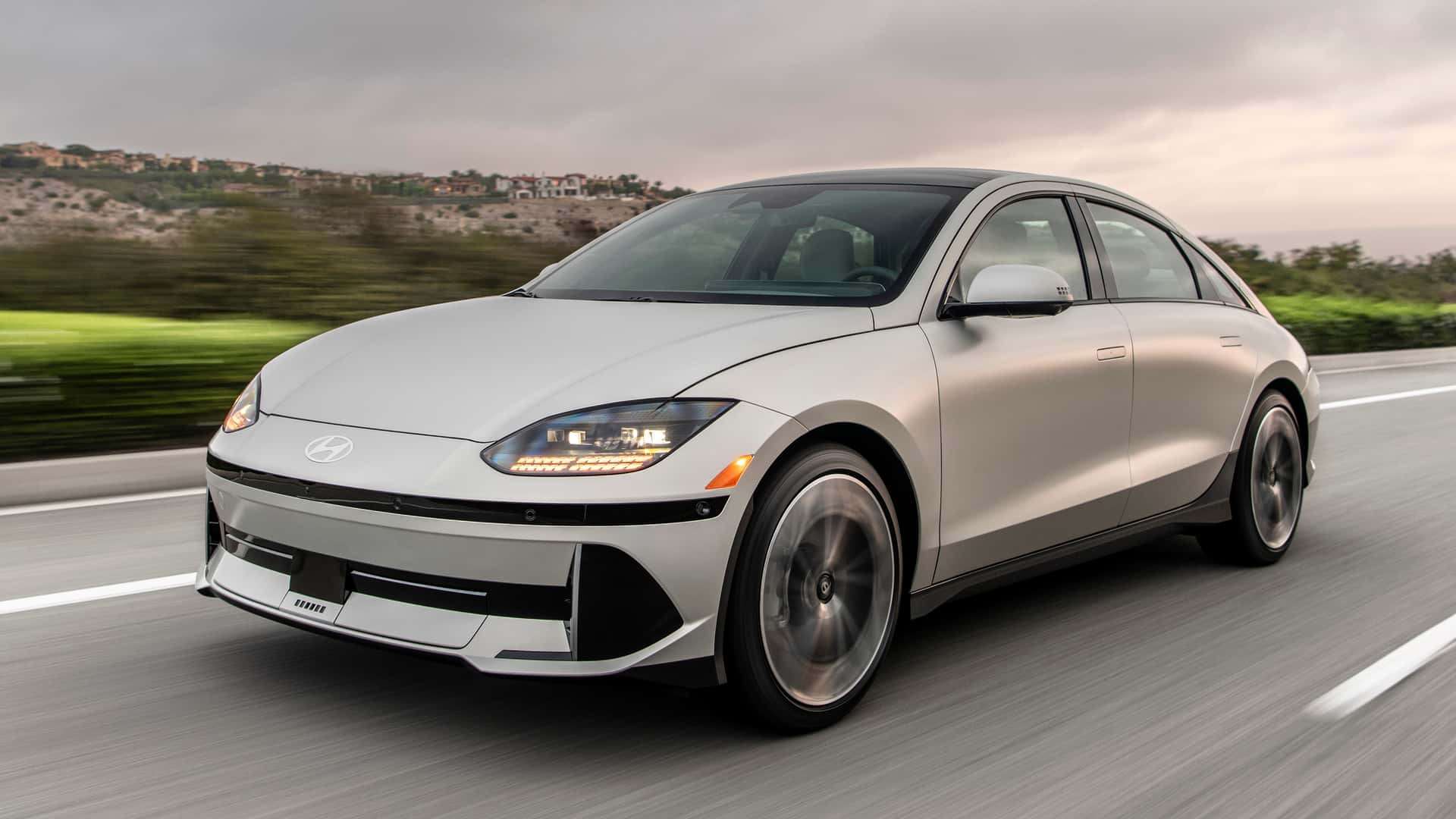
At less than $200 a month, the 2025 Hyundai Ioniq 6 lease reads like a night‑out budget rather than a car payment. Yet the headline‑grabbing price masks a deeper market shift: manufacturers are aggressively off‑loading inventory of slower‑selling electric models now that the $7,500 federal EV tax credit has disappeared. Hyundai’s steep discount, limited to select U.S. states and expiring on August 3, offers a window into how the industry is coping with a looming inventory glut and the pressure to keep sales momentum alive.
Deep Dive
According to InsideEVs, the base‑trim 2025 Ioniq 6 SE Standard Range can be leased in California for $189 per month on a 24‑month term, with $3,999 due at signing. The same trim in New York costs $229 per month, while the longer‑range SE variant is $239 per month, both also requiring $3,999 down. The deal is framed as a “clear‑out” of inventory, with Hyundai aiming to move the model before the promotion ends on August 3.
The Ioniq 6 SE Standard Range is described as offering 240 miles of EPA‑estimated range, powered by a single rear‑mounted electric motor that delivers 149 hp. Hyundai claims the vehicle can reach 80 % state of charge in 18 minutes when connected to a 350‑kW fast‑charger. For a $10 monthly increase, the brand also offers the 2025 Ioniq 5 SE, which carries a larger battery, 342 miles of range, and a 225‑hp motor, with identical down‑payment and lease length.
Beyond leasing, Hyundai is reportedly offering a cash discount of up to $7,500, pulling the starting price of the Ioniq 6 down to $32,095. Financing options include 0 % APR for up to 60 months and a 90‑day payment holiday, further sweetening the proposition for cash‑averse buyers.
These incentives arrive against a backdrop of policy change. The federal $7,500 tax credit, which previously helped offset EV purchase costs, was eliminated last year. Industry observers note that the credit’s removal has forced automakers to devise alternative pricing tactics to sustain demand. Hyundai’s approach mirrors broader trends: CarBuzz and CarsDirect have compiled “Best EV Lease Deals” lists for July 2026 that highlight deep discounts across multiple brands, while Electrek reported Hyundai keeping its Ioniq 5 lease at $189 a month. Though the exact figures for the Ioniq 6 are unique to InsideEVs, the pattern of aggressive lease pricing is corroborated across these outlets.
Complicating the picture is Hyundai’s decision to discontinue the regular Ioniq 6 in the U.S. due to poor sales, while maintaining production for overseas markets. The company argues that shared components with the Ioniq 5 will mitigate parts‑availability concerns for U.S. lessees. Nevertheless, the limited production run suggests that new lessees may become among the last to drive this model domestically, a nuance that could affect resale values and service infrastructure.
Audit & Contradictions
All of the specific lease pricing, cash‑discount, financing terms, and technical specifications cited above are drawn solely from the InsideEVs article; no independent outlet provides the same granular numbers. Consequently, these claims must be presented as statements from the source, e.g., “According to InsideEVs…”. The fact‑check audit flagged each of these details as single‑source, and no contradictions were identified in the provided material. The broader observation that Hyundai is leveraging steep discounts after the tax‑credit removal is supported by multiple secondary listings of EV lease deals, but the exact $189/month figure for the Ioniq 6 remains uncorroborated beyond the primary report.
Future Outlook
If manufacturers continue to rely on deep lease discounts to move inventory, the EV market could see a bifurcation: high‑volume, price‑sensitive models like the Ioniq 6 may become increasingly scarce, while newer, higher‑margin models retain premium pricing. Competitors such as Tesla and Rivian, which have not announced comparable lease slashes, might retain pricing power, potentially widening the gap between legacy automakers and newer entrants.
Regulators may also take note. Persistent inventory clear‑outs could signal that the current incentive structure is insufficient to sustain a balanced EV market, prompting discussions about alternative subsidies or tax‑credit reforms. Meanwhile, dealers and service networks will need to adapt to a shrinking pool of Ioniq 6 units, relying on parts commonality with the Ioniq 5 to maintain profitability.
For consumers, the window to secure a sub‑$200 EV lease is narrow. As the August 3 deadline approaches, demand may spike among cost‑conscious shoppers, potentially driving up residual values and affecting the profitability of the lease program itself. Observers will be watching whether Hyundai extends the promotion or introduces similar offers for other models, a move that could further reshape pricing dynamics in the post‑credit era.