Lead Hook
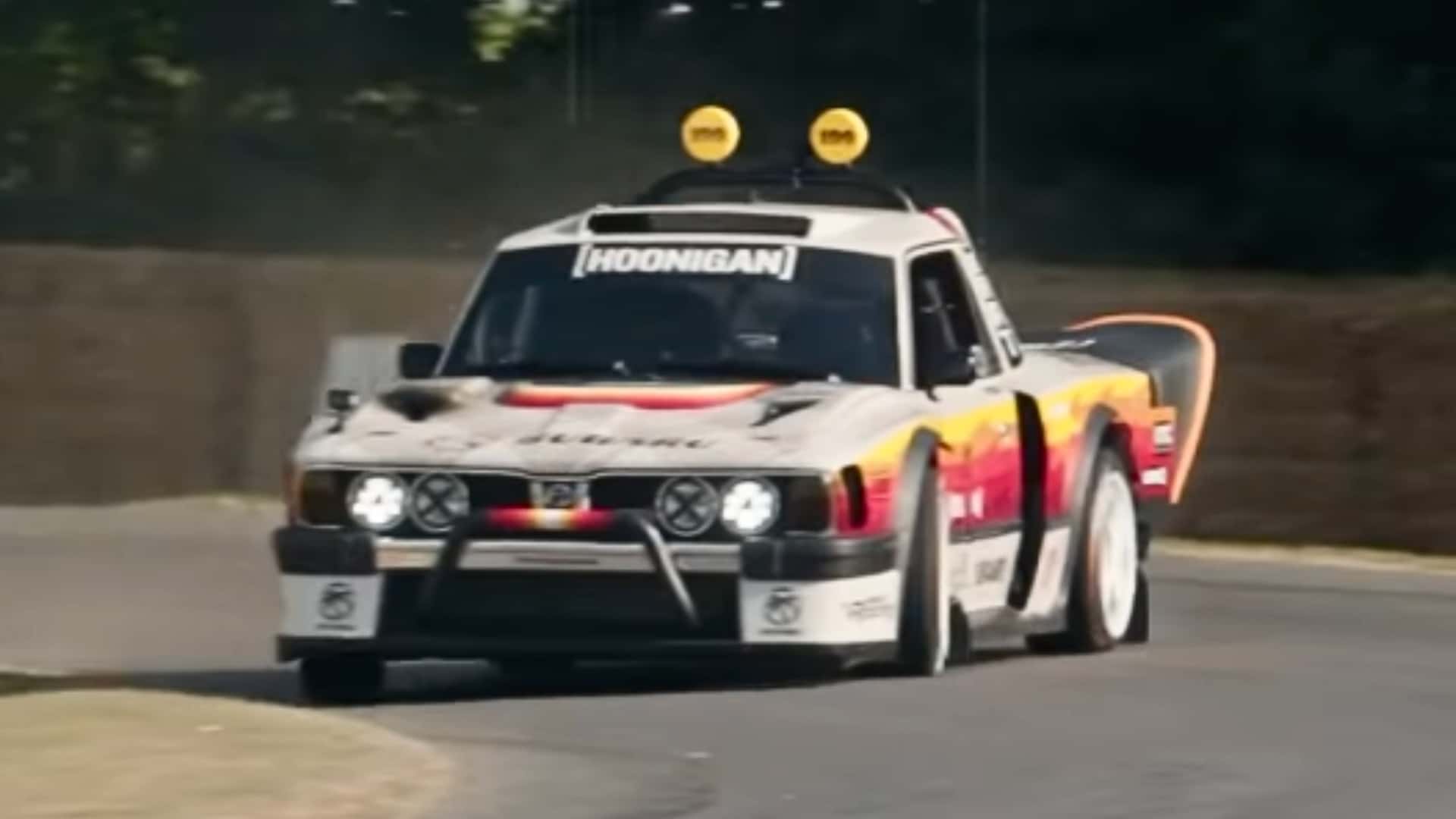
When Travis Pastrana roared up the 1.16‑mile Goodwood hill‑climb in a 670‑horsepower Subaru Brataroo, the spectacle was more than a stunt for a YouTube video. It highlighted how a one‑off, carbon‑bodied machine can push the envelope of power‑to‑weight ratios, while sidestepping the safety and emissions rules that govern production cars. The episode underscores a growing tension in motorsport: the freedom to experiment at the extreme end of engineering versus the need for regulatory oversight as performance levels soar.
Deep Dive
According to Motor1, the Brataroo is a carbon‑body, one‑off track car inspired by the original Subaru Brat. The chassis, built for lightweight agility, houses a 670‑hp powerplant that dwarfs the output of most road‑legal Subarus. In a practice run before the official timed shootout, Pastrana “drifted through nearly every corner” on the hill‑climb, showcasing the car’s raw torque and the driver’s willingness to test its limits.
Goodwood’s hill‑climb is a 1.16‑mile uphill sprint that rewards both outright speed and precise handling. Pastrana’s prior performances at the event provide context for the Brataroo’s ambition. Motor1 notes that he first appeared in 2021 with a custom Subaru Airslayer STI, delivering 862 hp and posting a 46.20‑second lap. He returned in 2023 in an 862‑hp Subaru Family Huckster, recording 49.32 seconds, and improved to 47.50 seconds in 2024. Those figures illustrate a pattern: Pastrana repeatedly upgrades his machinery, chasing marginal gains on a course where every tenth of a second counts.
The engineering challenges of marrying 670 hp to a carbon‑fiber shell are non‑trivial. High output stresses the drivetrain, brakes, and suspension, demanding bespoke solutions that are rarely cost‑effective for volume production. The Brataroo’s one‑off status means Subaru can experiment without the financial risk of tooling a new model line, but it also means the vehicle operates outside the typical homologation framework that governs safety standards and emissions compliance. In a historic event like Goodwood—where classic cars share the stage with modern prototypes—regulators tend to grant limited exemptions, yet the presence of such extreme power raises questions about the adequacy of existing safety protocols, especially when the driver is intentionally over‑steering through corners.
From a capital‑efficiency perspective, the Brataroo is a showcase rather than a revenue generator. The investment in carbon‑fiber construction, a bespoke engine tune, and a custom chassis is justified only by the marketing clout it provides to Subaru’s performance image and to Pastrana’s Hoonigan brand. This mirrors a broader trend where manufacturers use high‑profile, low‑volume builds to test technologies—such as hybrid powertrains or advanced aerodynamics—that may later filter into production models, albeit in a diluted form.
Road & Track independently confirmed the existence of a 670‑hp Subaru Brataroo at Goodwood, lending credibility to the core claim of the vehicle’s presence on the hill‑climb. However, the detailed description of its carbon‑body, the drifting practice run, and the specific lap‑time history all appear solely in the Motor1 article, leaving those particulars without external verification.
Audit & Contradictions
The fact‑check audit flags a clear split between corroborated and single‑source information. The vehicle’s 670‑hp rating and Pastrana’s participation at Goodwood are corroborated by Road & Track. All other specifics—its carbon‑bodied, one‑off design; the practice run where he “drifted through nearly every corner”; the historical lap times from 2021‑2024; and the stated goal of setting a new course record in 2026—are reported only by Motor1 and therefore must be presented as the outlet’s claims. No contradictions were identified across sources, and the overall contradiction level is low.
In practice, this means readers should treat the technical description of the Brataroo and the narrative of Pastrana’s practice run as Motor1’s reporting, not as independently verified facts. The audit underscores the importance of distinguishing between what is broadly confirmed (the car’s power and presence) and what remains uncorroborated (its construction details and performance intentions).
Future Outlook
Pastrana’s Brataroo could influence how other manufacturers approach hill‑climb entries. If the carbon‑body, high‑output formula proves successful—whether by setting a new record or by generating viral content—more brands may invest in bespoke, low‑volume prototypes to test extreme power‑to‑weight configurations. This could spur a mini‑arms race in hill‑climb engineering, prompting event organizers to revisit safety standards, especially around tire grip, braking force, and driver protection for vehicles that deliberately over‑steer.
Regulators may also feel pressure to tighten oversight. While Goodwood currently enjoys a degree of flexibility due to its historic nature, the appearance of ever‑more powerful one‑offs could lead to stricter scrutineering, noise limits, or emissions caps, even for exhibition runs. The balance between preserving the event’s experimental spirit and ensuring spectator safety will likely become a focal point for the FIA and local authorities.
For Subaru, the Brataroo serves as a high‑visibility testbed. Should any of its engineering solutions—such as lightweight carbon construction or bespoke cooling for a 670‑hp engine—prove viable, they may inform future performance sub‑brands or limited‑edition road cars. Meanwhile, Pastrana’s media presence amplifies the brand’s performance credentials, potentially attracting a younger, enthusiast‑oriented demographic.
In sum, the Brataroo is more than a headline‑grabbing video; it is a microcosm of how motorsport can accelerate extreme engineering while simultaneously exposing gaps in regulatory frameworks. As the hill‑climb community watches Pastrana’s next run, the broader industry will be watching the ripple effects on design, safety policy, and the economics of one‑off performance machines.