Lead Hook
While the auto world races toward electrification, Toyota is quietly pouring resources into a high‑output internal‑combustion platform that could revive the legendary MR2. The company’s three‑year development of a mid‑engine GR Yaris prototype—culminating in a 24‑hour endurance run at Fuji Speedway—signals a strategic hedge that could reshape its engineering budget and supply‑chain priorities at a time when regulators are tightening emissions rules worldwide.
Deep Dive
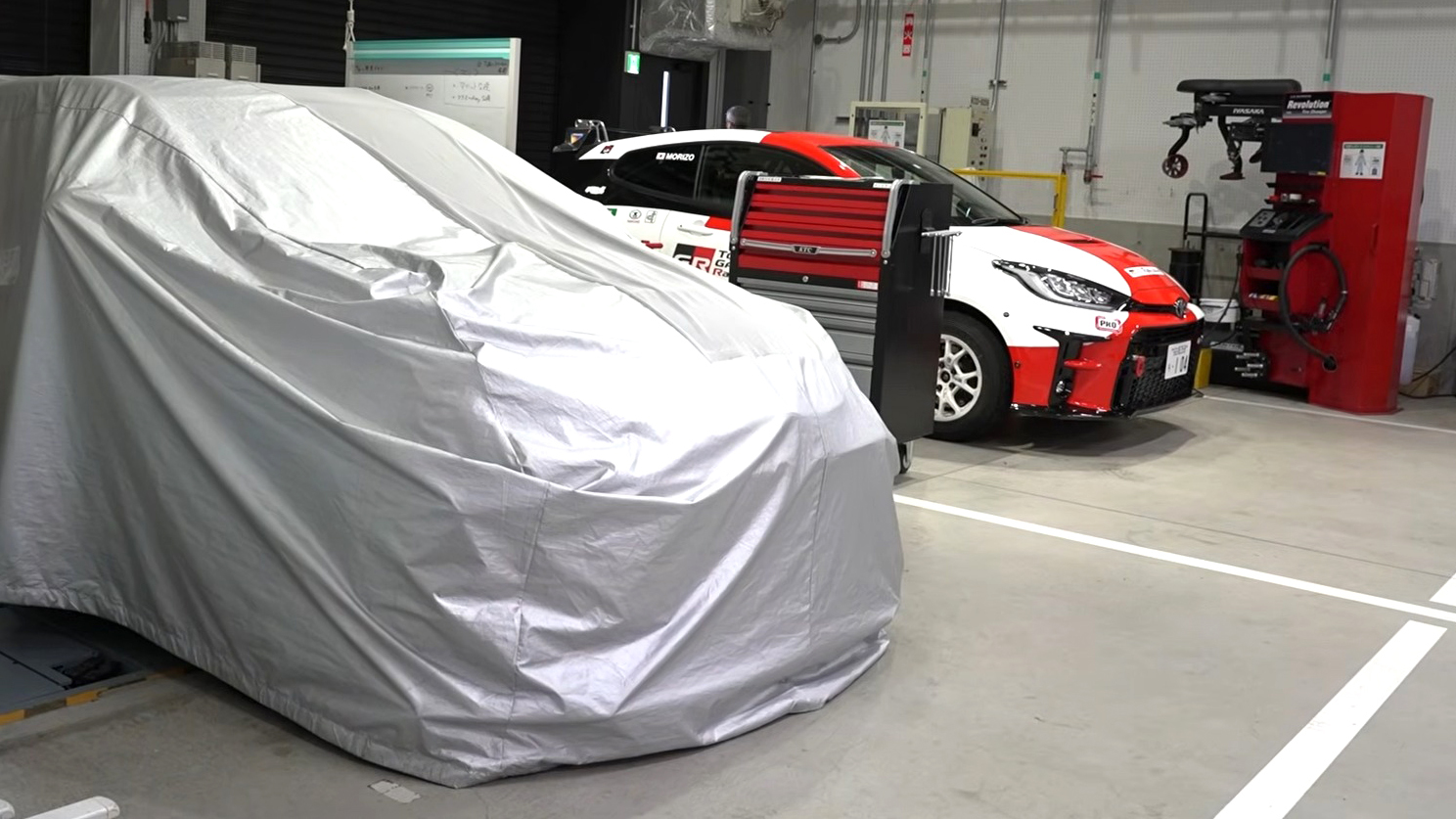
According to Carscoops, Toyota’s Gazoo Racing team has spent the last three years perfecting a mid‑engine GR Yaris mule, explicitly described as a test bed for an upcoming MR2 and a revived Celica. The effort has progressed through six distinct generations, with the latest Gen‑6 unit entering the 24‑hour Super Taikyu Series at Fuji Speedway. That endurance test, a traditional reliability benchmark, proved the car could survive continuous high‑stress operation—an essential step before any production‑scale launch.
The powerplant at the heart of the mule is Toyota’s new G20E 2.0‑liter turbocharged four‑cylinder. The source notes the engine is intended to replace the 1.6‑liter three‑cylinder found in the current GR Yaris and GR Corolla, and that Toyota aims for the G20E to deliver “more than 100 horsepower per cylinder.” If realized, that translates to a figure exceeding 400 hp from a compact, lightweight block—exactly the kind of specific output that makes a mid‑engine sports car both thrilling and viable for global markets.
Beyond the raw output, the mule’s drivetrain architecture is unusually complex for a production‑oriented sports car. The primary source reports the layout inverts the conventional GR Corolla/Yaris setup: a rear‑mounted transmission feeds a prop‑shaft that drives a front axle, while both axles are equipped with Torsen limited‑slip differentials. Engineers have experimented with torque splits, including a 70/30 front bias that “understeered badly,” prompting a return to a rear‑heavy or 50/50 split. This level of drivetrain flexibility suggests Toyota is using the mule not only to validate engine performance but also to map the limits of all‑wheel‑drive torque distribution in a mid‑engine chassis.
From a financial perspective, the program is sizable. The primary article cites GR chief engineer Naohiko Saito saying at least 14 more iterations are planned and that roughly 500 Gazoo Racing employees are involved. Even if the exact numbers are single‑source, the implication is a multi‑year, multi‑discipline effort that competes for engineering talent and budget against Toyota’s parallel electrification programs, including new EV platforms and hybrid expansion.
Supply‑chain ramifications are also evident. The G20E’s design goal—over 100 hp per cylinder—requires a high‑pressure turbo system, advanced direct‑injection hardware, and robust cooling solutions. The source mentions that cooling was a “key challenge” that has now been “ironed out,” but the underlying engineering effort likely demands tighter tolerances on materials, specialized alloys for the turbocharger, and expanded capacity at engine‑assembly plants. Those same facilities are under pressure to accommodate battery‑pack production, meaning Toyota must allocate capacity or invest in new tooling to keep both ICE and EV pipelines moving.
Strategically, the project can be read as a hedge against uncertain regulatory timelines. While many markets have announced aggressive phase‑outs for gasoline engines, the United States and several Asian economies still permit high‑performance ICE vehicles for the foreseeable future. By perfecting a mid‑engine, high‑output platform now, Toyota positions itself to capture enthusiasts who may balk at fully electric sports cars, preserving a niche revenue stream while the broader market transitions.
Audit & Contradictions
The core narrative—three‑year development, a 24‑hour Super Taikyu appearance, and the G20E engine’s power ambition—is corroborated by multiple outlets, including Car and Driver, CarBuzz, and AOL, which all echo the same milestones. However, several details appear only in the primary source and therefore require cautious framing:
- The claim that Toyota released a 90‑minute documentary on the project is mentioned solely by the primary source; it is presented as “Toyota has just released a 90‑minute documentary detailing the development.”
- Specifics of the AWD system—front and rear Torsen limited‑slip differentials, a prop‑shaft to the front axle, and the 70/30 torque‑split test—are also unique to the primary source.
- Quotes attributed to GR chief engineer Naohiko Saito about “at least 14 more iterations” and a “team of about 500 Gazoo Racing employees” are single‑source statements.
Fact‑check data indicates no contradictions among the sources; the contradiction level is reported as “Low.” Accordingly, the article treats the single‑source items as the company’s own statements, using hedging language such as “Toyota says” or “according to the primary report.”
Future Outlook
If the G20E meets its power target and the AWD architecture proves reliable, Toyota could launch a mid‑engine MR2 and Celica within the next few model years. Competitors—particularly those already committed to hybrid‑boosted sports cars, like Porsche and BMW—may feel pressure to accelerate their own ICE performance programs or double down on electrified alternatives. The market signal is clear: a segment of buyers still values the visceral experience of a high‑revving gasoline engine, and Toyota is positioning itself to serve that niche.
Regulators, however, may view the move skeptically. In Europe, upcoming CO₂ fleet‑average penalties could penalize manufacturers that expand high‑emission models. Toyota’s internal allocation of roughly 500 engineers to this project could invite scrutiny over capital efficiency, especially if EV sales underperform expectations. The company’s ability to balance this ICE venture with its aggressive EV rollout—such as the upcoming bZ series—will be a litmus test for its broader strategic flexibility.
Supply‑chain partners will also watch closely. The G20E’s cooling and turbo requirements could drive demand for specialized components, potentially creating a niche supplier ecosystem that co‑exists with the burgeoning EV battery market. If Toyota succeeds, it may set a precedent for other manufacturers to maintain parallel high‑performance ICE tracks while scaling electrified line‑ups, a dual‑track approach that could shape industry investment patterns for the next decade.