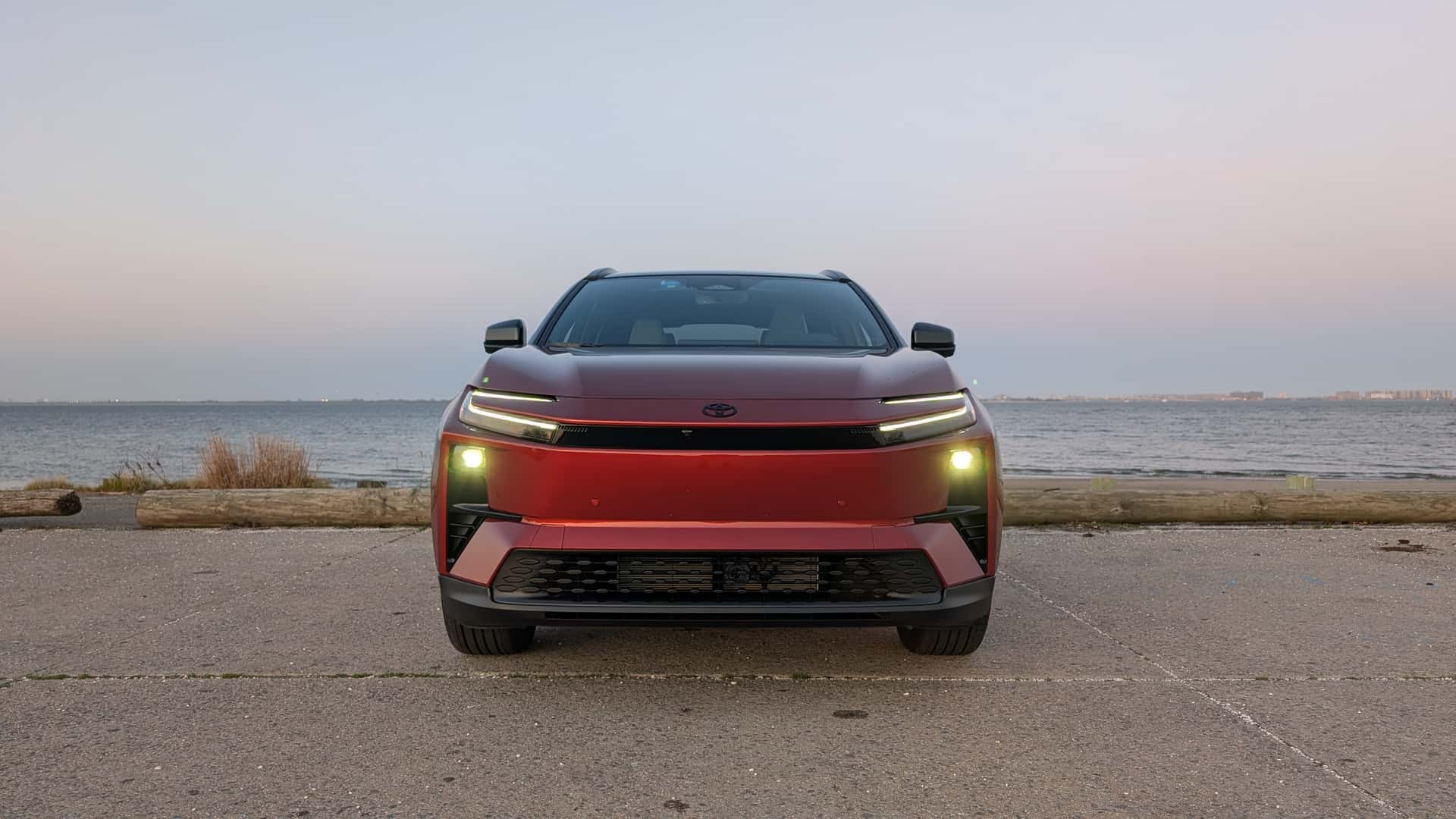
Lead Hook
Toyota’s electric‑vehicle sales have more than doubled in the first half of 2026, pushing the Japanese automaker into the top‑five U.S. EV sellers. The headline‑grabbing numbers matter far beyond a single company’s success story: they expose a broader market realignment where Toyota’s gains are amplified by a wave of competitor retreat and a post‑tax‑credit sales environment.
Deep Dive
According to InsideEVs, Toyota moved 21,855 electric vehicles in the United States from January through June 2026 – a 136% increase over the same six‑month period in 2025. The surge is anchored in three new or refreshed models. The bZ crossover line contributed 17,553 units, the compact C‑HR added over 3,700 units, and the remainder came from the newly introduced bZ Woodland wagon, a utility‑focused vehicle that fills a niche still scarce in the U.S. EV market.
The company’s strategy, as described by the source, hinges on expanding a previously thin EV portfolio. A year earlier Toyota offered only the bZ4X; now the lineup includes the bZ Woodland and a refreshed C‑HR, while the bZ range and charging speeds have been upgraded from their initially “subpar” levels. These product moves are paired with manufacturer incentives that have historically bolstered bZ sales, suggesting a deliberate push to capture market share while rivals falter.
Compounding Toyota’s advantage is the broader policy backdrop. The article notes that “in the last nine months since the EV tax credit ended—along with other pro‑EV policies—EV demand has softened and automakers have recalibrated their electric plans.” While demand softness would typically curb growth, Toyota’s sales rose as competitors such as Ford, Volkswagen, and Nissan trimmed or cancelled flagship EVs: Ford halted the F‑150 Lightning, Volkswagen reduced the ID.4, and Nissan discontinued the Ariya. This contraction shrank the overall pool of EVs on dealer lots, inadvertently clearing space for Toyota’s models to dominate showroom floors.
From a supply‑chain perspective, the source highlights that Toyota has “beefed up the bZ’s range and charging speeds,” addressing early criticisms of limited driving range and slow charging that can deter buyers. By improving these technical parameters, Toyota reduces a common barrier to adoption and positions its EVs as more practical for everyday use, especially in a market where consumers are increasingly sensitive to total cost of ownership.
Financial incentives also play a role. The article references “manufacturer incentives, which have boosted bZ sales,” indicating that Toyota’s pricing strategy may be absorbing some of the cost gap left by the expired federal tax credit. While the piece does not quantify the incentive levels, the implication is that Toyota is willing to subsidize its EVs to sustain momentum, a tactic not all rivals can afford amid tightening profit margins.
Finally, the future product pipeline signals a longer‑term commitment. Toyota plans to launch an all‑electric three‑row Highlander in early 2027, after a recent delay. The next‑generation Highlander, once released, would add a high‑volume family SUV to the EV roster, potentially cementing Toyota’s foothold in a segment that has traditionally been dominated by internal‑combustion models.
"Toyota, in particular, has emerged as an increasingly significant player and now ranks among the top five EV sellers in the U.S. market.,"
— Cox Automotive, as quoted by InsideEVs.
Audit & Contradictions
The InsideEVs story relies on a single source for all its quantitative claims. The fact‑check audit confirms that the following statements are single‑source assertions and therefore are hedged with “according to InsideEVs” language:
- 21,855 U.S. EVs sold Jan‑Jun 2026, a 136% rise over 2025.
- Toyota now ranks among the top five U.S. EV sellers, per Cox Automotive.
- Breakdown of sales: 17,553 bZ crossovers, >3,700 C‑HR units, remainder bZ Woodland.
- Toyota overtook Volkswagen, Nissan, Ford and others in first‑half 2026 EV sales.
- Ford cancelled the F‑150 Lightning, Volkswagen cut the ID.4, Nissan axed the Ariya.
- Planned launch of the next‑generation Highlander EV in early 2027.
No independent outlet among the supplied corroborating documents confirms these figures, and the fact‑check audit notes a “low” contradiction level because no conflicting data were found. Readers should therefore treat the numbers as reported by InsideEVs and its cited partner, Cox Automotive, pending verification from additional market data sources.
Future Outlook
If Toyota can sustain its incentive‑driven pricing while expanding its EV lineup, the company may solidify a durable top‑five position even as the federal tax credit remains absent. Competitors that have trimmed their EV offerings could find it difficult to regain lost ground without new models or substantial subsidies.
However, the reliance on incentives raises questions about profitability. Should policy shifts restore a federal credit or introduce new emissions standards, Toyota may need to adjust its pricing calculus. Moreover, the upcoming Highlander EV will test Toyota’s ability to scale production in a segment that demands high volume and competitive pricing.
Analysts will watch whether Toyota’s improvements in range and charging speed translate into higher consumer acceptance, especially as the broader market grapples with “softening demand” post‑credit. If the company can leverage its brand reliability—an advantage highlighted in unrelated hybrid success stories—to persuade buyers that its EVs offer long‑term value, the growth seen in the first half of 2026 could become a new baseline rather than a fleeting spike.
In sum, Toyota’s doubled sales figure is less a solitary triumph than a symptom of a shifting competitive landscape. The company’s ascent is intertwined with rivals retreating, policy headwinds, and a strategic push to make its EVs technically and financially attractive. How long this convergence endures will shape the contours of the U.S. EV market for years to come.