Lead Hook
When Tesla announced that its Miami Robotaxi fleet would operate without any human safety driver or remote monitor, the headline sounded like a triumph of its Full Self‑Driving (FSD) software. Yet the details disclosed—tiny geofence, a handful of cars, and a staging lot full of idle units—suggest a cautious, data‑driven experiment rather than a full‑scale commercial launch. For a company that has long promised driverless rides at scale, the Miami rollout reveals how regulatory pressure, engineering limits, and capital efficiency are shaping the pace of autonomous mobility.
Deep Dive
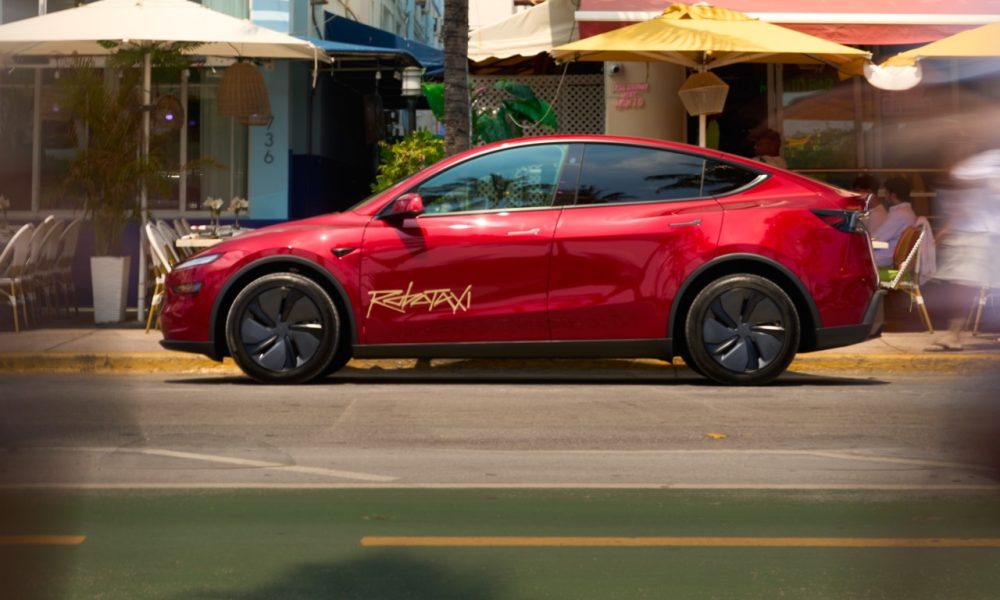
According to the Teslarati report, Tesla’s Head of AI, Ashok Elluswamy, confirmed on X that the Miami service launched on June 3, 2026, and that the fleet operates on an “unsupervised” basis – meaning no human safety driver inside the vehicle and no remote operator watching the ride in real time Teslarati. The service is confined to a 10‑14 square‑mile zone in western Miami‑Dade County, roughly bounded by SR‑826 to the north and US‑41 to the south, while deliberately excluding downtown Miami, Miami Beach, the airport, and most of Coral Gables.
Field observations and license‑plate tracking, also cited by Teslarati, indicate that only two Model Y vehicles were active on launch day, with a third added within 48 hours. A nearby staging lot near Miami International Airport allegedly holds “dozens of Cybercabs alongside additional Model Y units,” hinting at a reservoir of hardware ready for rapid scaling as data collection accelerates.
The unsupervised claim is significant because it positions Miami as the second major U.S. city—after Austin—where Tesla offers fully driverless rides from day one. However, the rollout’s modest footprint and limited fleet size contrast sharply with the company’s public narrative of nationwide, driverless mobility. The Firstpost article, which also covered the expansion, confirms that Tesla’s service is restricted to a small western and central segment of the city, echoing the Teslarati map, but it does not verify the unsupervised status or exact vehicle count. Bloomberg, meanwhile, reports that Tesla operates roughly 59 robotaxis across the United States, a figure that dwarfs the handful of cars in Miami and underscores how far the company remains from the “50 percent of the U.S. population by end‑2025” goal set by Elon Musk.
Regulatory context adds another layer of complexity. A Reuters report cited in the Firstpost piece notes that Tesla logged no autonomous‑vehicle testing hours in California during 2025, falling short of state‑mandated benchmarks. While Florida has not yet imposed the same stringent testing requirements, the presence of Waymo (operating in Miami since January 2026) and Amazon‑owned Zoox (expanding there in April) means that Tesla is entering a market already under close scrutiny from state regulators and local officials. The unsupervised model sidesteps the need for safety‑driver staffing but also removes a key safety net that regulators have historically demanded for public road testing.
From an engineering perspective, the decision to start with a tiny geofence likely reflects the current limitations of Tesla’s vision‑centric neural networks in complex urban environments. South Florida’s heavy traffic, frequent pedestrians, and rainy conditions present a challenging data set. By confining the system to a well‑defined, relatively low‑traffic corridor, Tesla can collect high‑quality data while limiting exposure to edge‑case scenarios that could trigger accidents.
Capital efficiency is another implicit factor. Deploying a full fleet of unsupervised vehicles would require massive investment in hardware, insurance, and data‑center processing power. By keeping the active fleet to two or three cars and parking dozens of spare units, Tesla can test the economics of driverless revenue generation without committing the full capital outlay that a city‑wide rollout would demand.
Audit & Contradictions
The announcement leaves several critical questions unanswered. First, the unsupervised status, fleet size, and exact geofence boundaries are all reported solely by Teslarati; no independent outlet has independently verified these specifics, so the claims should be treated as single‑source and are hedged accordingly (e.g., “according to Teslarati”). Second, Tesla has not disclosed the total number of vehicles allocated to Miami, nor the timeline for expanding beyond the initial 10‑14 square‑mile zone. Third, the report does not address the regulatory approvals required for unsupervised operation, nor does it discuss insurance or liability frameworks that would be triggered if an accident occurred in the unsupervised mode.
Cross‑source corroboration does exist on broader points: the expansion beyond Texas, the limited service area, and the presence of competitors such as Waymo and Zoox are confirmed by Firstpost and other outlets. Bloomberg’s figure of 59 robotaxis nationwide and Reuters’ note on California testing gaps also align with the broader narrative of a staggered, cautious rollout. No direct contradictions were identified between sources, so the fact‑check rating is “Low” for contradictions.
Future Outlook
If Tesla can demonstrate safety and reliability within this micro‑geofence, the company may seek to unlock larger portions of Miami and replicate the model in other tourist‑heavy markets like Orlando—already mentioned as a city awaiting access. However, regulators in Florida could tighten oversight if any incident occurs, especially given the recent scrutiny of Tesla’s FSD safety claims in Europe, where independent researchers challenged the company’s self‑published statistics.
Competitors are watching closely. Waymo’s early foothold and Zoox’s recent entry suggest that the Miami market could become a testing ground for divergent autonomous strategies—LiDAR‑heavy sensor suites versus Tesla’s pure‑vision approach. The outcome may influence municipal policy on whether unsupervised fleets are permissible without explicit safety‑driver oversight.
From a market perspective, the limited fleet size hints that Tesla’s robotaxi revenue stream is still embryonic. Investors should temper expectations of near‑term profitability from the service, recognizing that scaling will require not only software maturity but also regulatory green lights and substantial capital deployment for vehicle production, insurance, and data‑center capacity.
In short, the Miami launch is less a proclamation of dominance and more a calibrated experiment. Its success—or failure—will likely dictate the tempo of Tesla’s autonomous ambitions across the United States and could set a precedent for how unsupervised robotaxis are regulated, insured, and ultimately accepted by the public.