Lead Hook
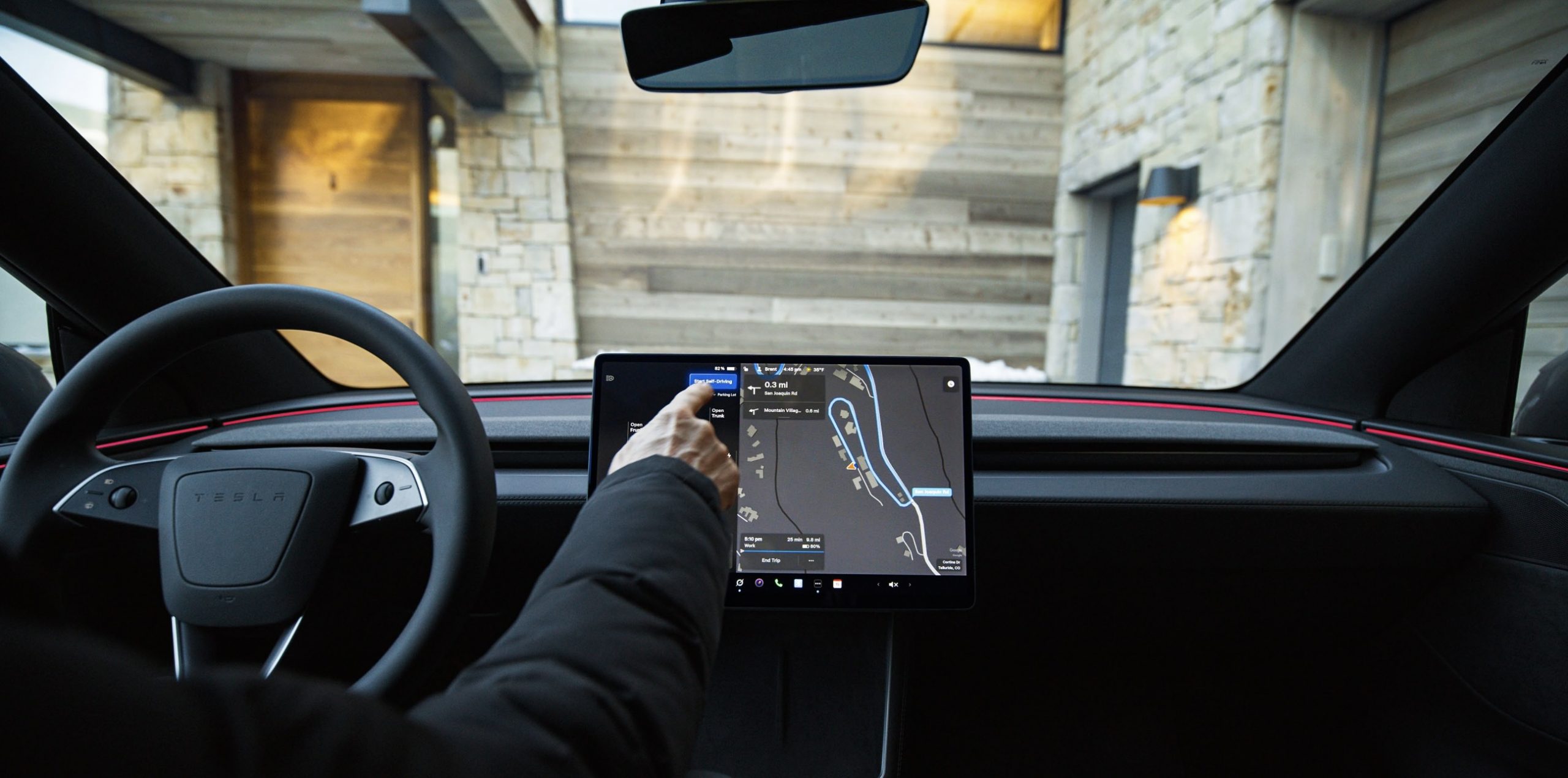
When New Street Research analyst Pierre Ferragu declared that Tesla’s Full Self‑Driving (FSD) suite is at an “inflection point,” he invoked the same market‑changing narrative that surrounded the first iPhone. The comparison matters far beyond a clever metaphor: if Tesla’s software truly reaches a consumer‑adoption tipping point, the company could move from selling cars to selling mobility as a service, reshaping regulatory frameworks, supply chains, and the very definition of a vehicle.
Deep Dive
Ferragu’s assessment rests on two observable trends.
First, the technical maturity of FSD. A Piper Sandler analyst, quoted by Yahoo Finance, has stated that Tesla has “effectively achieved Level 4 autonomy,” meaning the system can handle most driving tasks without driver intervention under defined conditions. This aligns with Ferragu’s view that the software is no longer a novelty but a functional product that can scale.
Second, Tesla’s manufacturing re‑allocation. On July 10, 2026, Tesla posted a video showing the complete teardown of the original Model S and Model X assembly line at its Fremont factory, completed in just 46 days. The post, from the company’s official @gigafactories account, framed the event as an “End of an era” and a pivot toward the upcoming Optimus humanoid robot. The decision to wind down the flagship sedan and SUV was first announced during the Q4 2025 earnings call in late January 2026, with production slated to cease by the end of Q2 2026.
These two strands—software maturity and freed‑up production capacity—suggest a strategic shift. By retiring the Model S/X line, Tesla can repurpose high‑precision robotics, tooling, and floor space for Optimus assembly, potentially accelerating the rollout of a robotaxi fleet that relies on Level 4 FSD. The synergy could reduce per‑unit costs for both the robot and the autonomous‑driving stack, creating economies of scale that were previously impossible when the factory was split between automotive and robotics.
From a regulatory standpoint, Level 4 autonomy triggers stricter safety oversight. While the Federal Motor Vehicle Safety Standards (FMVSS) still treat FSD as driver‑assist, state‑level pilot programs—such as California’s autonomous‑vehicle testing framework—are beginning to require demonstrable disengagement‑free operation for Level 4 deployment. If Ferragu’s timeline holds and consumer adoption accelerates within the next two quarters, regulators may be forced to revisit testing exemptions and liability rules much sooner than anticipated.
Economically, the “inflection point” language hints at a pricing transition. Historically, early‑adopter pricing for breakthrough tech is high; the iPhone’s initial $600 price tag eventually gave way to a mass‑market ecosystem. Ferragu suggests a similar trajectory for FSD, where the current premium could be justified by the value of a hands‑free commute. However, the claim that a Model 3 priced at $35,000 plus $100 per month is “too expensive for most” appears only in the Teslarati piece and lacks external verification. The same applies to the cited average transaction price of $49,000 from Kelley Blue Book, which remains a single‑source figure.
Supply‑chain implications are also notable. The Model S/X platform relied heavily on specialized battery packs, powertrains, and interior components. Their phase‑out may free up lithium‑ion cell capacity and high‑voltage assembly lines for Optimus‑compatible hardware, potentially smoothing the bottlenecks that have plagued other manufacturers’ robot production schedules.
Audit & Contradictions
Our fact‑check finds the core claim—that Ferragu likens FSD to the iPhone’s market breakthrough—to be corroborated across multiple outlets, including TradingView’s analysis of Tesla’s broader valuation story. The Level 4 autonomy assertion is supported by independent reporting from Yahoo Finance, which quoted a Piper Sandler analyst.
Conversely, several statements in the original article remain single‑source and should be treated with caution:
- The average transaction price for a new vehicle being above $49,000, attributed to Kelley Blue Book.
- The iPhone’s addressable market growth from 10 million to roughly 250 million units per year.
- Personal anecdotes about daily FSD use reducing travel stress.
- The projection that two additional quarters will reveal the true impact of FSD.
None of these points are contradicted by other sources, so the contradiction level is low. Nonetheless, readers should note the lack of external verification before drawing firm conclusions.
Future Outlook
If Tesla’s FSD truly reaches a consumer‑adoption inflection point, the competitive landscape could shift dramatically. Rivian and Lucid, currently benefiting from California’s new EV incentive, may find themselves competing not just on hardware but on software ecosystems that enable robotaxi services. Traditional automakers that have lagged in autonomous software—such as Ford and GM—might accelerate partnerships or acquisitions to stay relevant.
Regulators will likely face pressure to formalize Level 4 testing standards, especially as Tesla repurposes its Fremont capacity for Optimus production. A rapid rollout could prompt the National Highway Traffic Safety Administration (NHTSA) to issue updated guidance on driver‑monitoring systems and liability.
Investors should watch two leading indicators: the speed at which Tesla scales Optimus units from the newly cleared factory floor, and the rate of FSD subscription uptake once the software is marketed as a stand‑alone service rather than a vehicle add‑on. A surge in either direction would validate Ferragu’s “inflection point” analogy; stagnation would suggest the iPhone comparison was premature.
In the meantime, Tesla’s decision to retire its flagship sedan and SUV lines—executed in a record‑fast 46‑day teardown—signals a bold reallocation of resources that could reshape the company’s identity from automaker to mobility‑technology platform.
"inflection point,"
— Pierre Ferragu, New Street Research analyst (as quoted by Teslarati)