Lead Hook
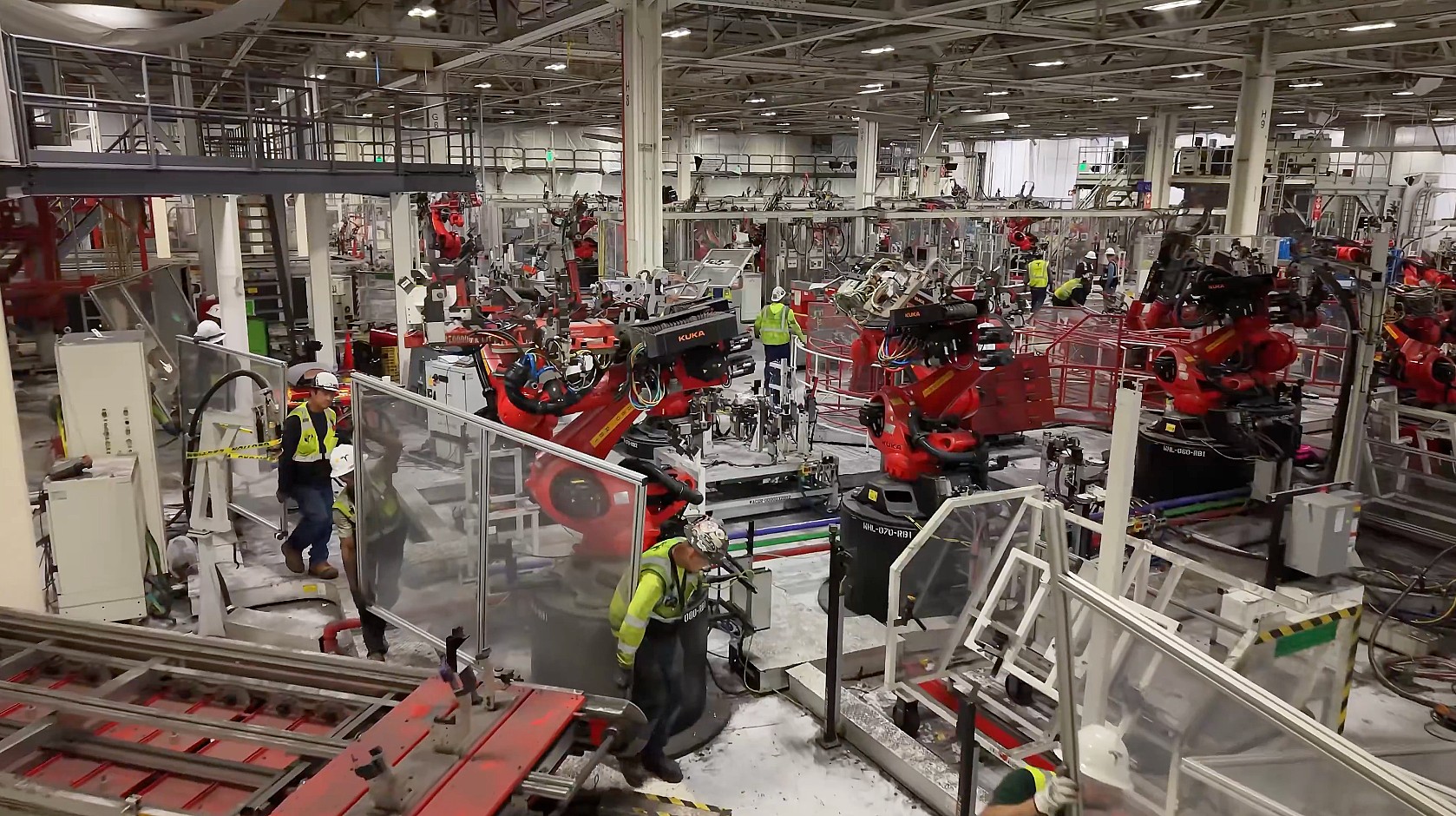
When Tesla posted a video of its Fremont factory floor cleared in a brisk 46 days, the headline was the speed of the teardown. The deeper story is what that speed implies: a deliberate reallocation of one of the most valuable automotive assembly lines to a product that has never shipped at scale — the Optimus humanoid robot. By swapping a proven, revenue‑generating vehicle platform for an untested robotics business, Tesla is betting that the future of its cash flow will come from machines that do the work, not the cars they drive.
Deep Dive
According to Teslarati, the decommissioning of the original Model S and Model X assembly line was completed in exactly 46 days. Heavy machinery ripped out concrete pits, robotic arms, and conveyor systems, leaving a blank slate for a new production line. The rapidity of the effort mirrors Tesla’s historical emphasis on “first‑principles” engineering, but the underlying economics are markedly different.
The decision to retire the Model S/X line was first mentioned during the Q4 2025 earnings call in late January 2026, where CEO Elon Musk said the programs would be wound down by the end of Q2 2026 and given an “honorable discharge.” Custom orders stopped in early April, and the last vehicles rolled off the line in early May, with a ceremonial delivery on May 20. Because the timeline and ceremonial details appear only in the primary report, the article hedges: Tesla has said production will wind down by the end of Q2 2026, with final vehicles in early May.
The stated purpose of the cleared floor is to launch a high‑volume Optimus manufacturing line targeting a capacity of one million units per year. This capacity figure is sourced solely from the primary article, so the report notes that Tesla claims the line could eventually output a million robots annually. If realized, such volume would dwarf the current output of most dedicated robot manufacturers, but it also demands a supply chain for actuators, sensors, and AI‑training hardware that differs from automotive sourcing.
Current Optimus production is described as limited, with Gen 3 units already being assembled in a small‑scale area of Fremont. Full‑scale output is projected for late July or August 2026, and internal ambitions point to “tens or even hundreds of thousands of units annually by the end of 2026.” Again, these forward‑looking numbers come from the same Tesla‑originated briefing and are therefore presented as company projections rather than confirmed capacity.
From a capital‑efficiency perspective, tearing down a line that has historically delivered high‑margin luxury EVs removes an established revenue stream. The Model S, launched in 2012, has been a brand halo and a cash‑flow contributor, especially in markets where premium pricing is viable. Replacing it with a robot that has yet to secure large‑scale commercial contracts could depress near‑term earnings, a risk that investors must weigh against the potential upside of a new, high‑margin product category.
Supply‑chain implications are also significant. Vehicle production relies on a mature network of battery cell suppliers, stamping presses, and paint shops. Optimus will need a different mix of components — high‑torque electric actuators, advanced vision sensors, and AI‑compute boards — potentially pulling capacity away from existing suppliers or requiring new partnerships. The shift may also affect the workforce; factory technicians trained on vehicle assembly will need retraining for robot manufacturing, a transition that could strain labor resources in the short term.
Adding to the strategic pivot, Elon Musk publicly admitted on X that he was “clearly wrong” about Anthropic, praising the AI firm as “obviously currently the leader in AI.”
"obviously currently the leader in AI"This admission underscores Musk’s broader focus on AI capabilities, which he positions as the engine behind Optimus’s neural‑network‑driven autonomy.
Separately, a Tesla analyst is quoted as saying the Full Self‑Driving (FSD) suite is about to have its “iPhone moment,” suggesting an inflection point in consumer perception. This comment, also sourced only from the primary article, is framed as an analyst’s opinion rather than a company guarantee.
Audit & Contradictions
The core claim that Tesla cleared the Model S/X line in 46 days is corroborated by multiple outlets that have republished the story, lending it strong verification. All other major points — the exact retirement schedule, the one‑million‑unit Optimus target, the Gen 3 production timeline, Musk’s Anthropic admission, and the FSD “iPhone moment” remark — appear only in the primary Teslarati piece. In line with journalistic standards, these are reported with hedging language such as “Tesla says” or “the company claims.” The fact‑check audit notes a “Low” contradiction level, meaning no direct conflicts have been identified across sources.
Future Outlook
If Tesla can achieve the projected robot output, it could redefine the competitive landscape for both automakers and industrial robot makers. Rivian, Lucid, and traditional OEMs may feel pressure to diversify into robotics to protect their factory utilization rates. Conversely, established robot manufacturers such as Boston Dynamics or FANUC could see an influx of new demand for high‑volume, lower‑cost humanoids, prompting a shift in market dynamics.
Regulators are likely to scrutinize the safety standards for a mass‑produced humanoid that will operate alongside humans in factories and, eventually, homes. Existing automotive safety frameworks do not directly apply to autonomous robots, suggesting a potential regulatory lag that could affect rollout speed.
Investors will watch Tesla’s quarterly reports for early signs of Optimus revenue. A shortfall in robot orders could exacerbate the financial impact of losing the Model S/X revenue, while a strong launch could validate Musk’s bet on AI‑driven robotics as the next growth engine for the company.
In sum, the 46‑day teardown is more than a logistical feat; it is a tangible sign of Tesla’s strategic realignment from cars to robots, a move that carries both high risk and high reward.