Lead Hook
Rivian is turning a software update into a headline‑grabbing performance boost, promising a 0‑60 mph sprint of 3.45 seconds for its R2 SUV – a time that would eclipse the Tesla Model Y Performance on paper. The move underscores a growing industry trend: manufacturers are using over‑the‑air (OTA) upgrades not just to fix bugs, but to rewrite the performance playbook, potentially reshaping buyer expectations and regulatory scrutiny.
Deep Dive
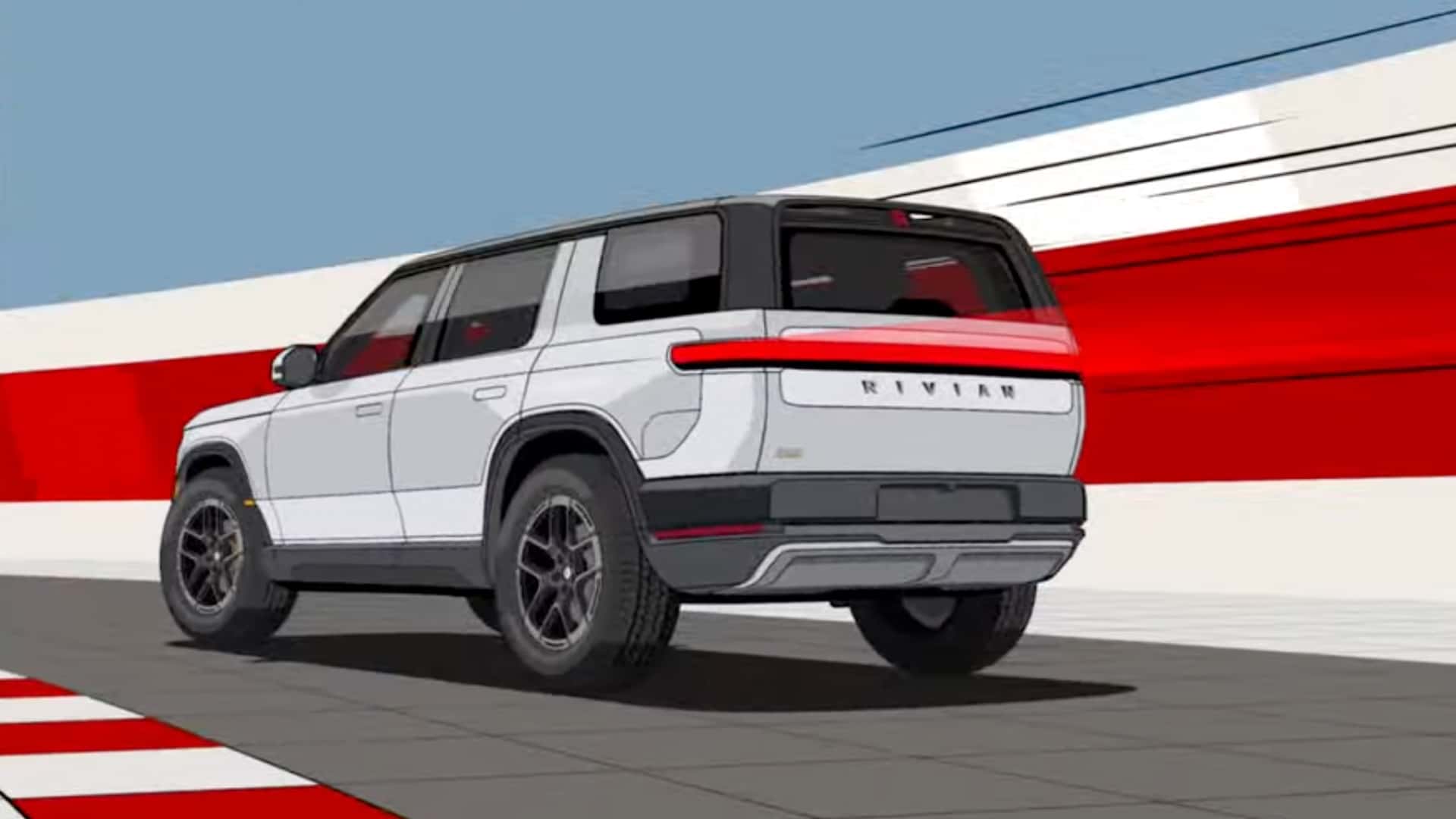
According to InsideEVs, Rivian’s Chief Software Officer Wassym Bensaid announced that the R2 will receive a “launch mode” in its next OTA update. The announcement was accompanied by a video that walks viewers through the activation sequence – a tap on the infotainment screen’s “Gear Guard Gary” icon triggers an animated “virtual track” and a Christmas‑tree style countdown before the vehicle launches.
The most tangible claim in the video is the revised acceleration figure: the R2 allegedly reaches 60 mph in 3.45 seconds, shaving 0.15 seconds off the company’s original 3.6‑second estimate. The video also shows the SUV hitting 100 mph in 6.99 seconds, completing a quarter‑mile in 11.31 seconds, and topping out at 130 mph. These numbers are framed as beating the Tesla Model Y Performance, which, according to the same source, posts a slower 0‑60 time when rollout is excluded.
While the performance metrics are single‑source, the broader claim that an OTA launch‑mode update is forthcoming is corroborated by multiple outlets. Autoevolution reported that Rivian will add launch mode with an upcoming software update, noting the expected improvement over the originally quoted 0‑60 figure. Business Insider also referenced the OTA rollout in its coverage of Rivian’s R2 roadmap, confirming that the company is betting on software to unlock latent capability. Even Axios, in a piece about Rivian’s supply‑chain challenges, cited the launch‑mode update as part of the brand’s strategy to keep the R2 competitive without waiting for new hardware.
From an engineering perspective, the ability to extract faster acceleration from the same electric drivetrain hinges on software‑controlled torque delivery, launch‑control algorithms, and traction‑management tweaks. Rivian’s “Maximus” traction motors – a term used in the video to describe the powertrain’s sound – are likely being instructed to apply torque more aggressively at low speeds, while the vehicle’s battery management system may be temporarily allowing higher discharge rates. This mirrors Tesla’s long‑standing use of launch control, but Rivian’s approach is notable for its visual UI cues, which could serve both as a driver aid and a marketing hook.
Economically, leveraging OTA updates sidesteps the need for costly hardware revisions or new model years. For a company still grappling with supply‑chain constraints – a theme highlighted in recent Axios coverage – software upgrades represent a low‑capex way to stay ahead of rivals. The R2’s performance promise also positions Rivian to capture a slice of the high‑performance electric SUV segment, where Tesla currently dominates.
Audit & Contradictions
The announcement leaves several key details unaddressed. First, the precise testing conditions for the claimed 3.45‑second 0‑60 run are not disclosed. InsideEVs notes that it is “not clear exactly how this particular R2 was tested, or how prepped the road was,” meaning real‑world repeatability is uncertain. Second, the video does not reveal whether the performance figures were achieved on a production‑ready vehicle or a pre‑production prototype – a distinction that can affect durability and warranty considerations.
Fact‑checking identifies a clear split between corroborated and single‑source claims. The following points are corroborated across multiple outlets:
- Rivian will deliver launch mode via an OTA update (InsideEVs, Autoevolution, Business Insider, Axios).
- The update is expected to improve the R2’s 0‑60 mph time relative to the originally stated 3.6 seconds (InsideEVs, Autoevolution).
- Wassym Bensaid, Rivian’s Chief Software Officer, announced the feature and posted a demonstration video (InsideEVs).
The remaining performance specifics – 3.45 seconds 0‑60, 6.99 seconds 0‑100, 11.31‑second quarter‑mile, 130 mph top speed, and the “Gear Guard Gary” UI activation – appear only in the InsideEVs piece and lack independent verification. As the fact‑check summary notes, these are “single‑source/Unverified” claims.
There are no direct contradictions between sources; the overall contradiction level is low. However, the lack of independent testing means consumers should treat the timing figures as provisional until third‑party validation emerges.
Future Outlook
If Rivian’s launch‑mode update delivers the promised numbers in independent testing, the R2 could become a credible challenger to the Model Y Performance and even the Model 3 Performance in the high‑performance EV niche. Competitors may feel pressure to accelerate their own OTA performance upgrades, potentially leading to a software arms race that emphasizes algorithmic torque control over pure hardware horsepower.
Regulators could also take note. Performance claims tied to OTA updates raise questions about consumer disclosure, safety testing, and the need for updated certification whenever software materially changes a vehicle’s dynamics. In the United States, the National Highway Traffic Safety Administration (NHTSA) has begun scrutinizing OTA‑driven changes, and Rivian’s approach may become a case study for how future EV software updates are regulated.
From a market perspective, the move could bolster Rivian’s brand perception among performance‑oriented buyers, a segment that has traditionally gravitated toward Tesla. By showcasing a dramatic performance gain without a new model launch, Rivian signals that its roadmap relies heavily on software agility – a strategy that could attract investors looking for scalable, cost‑effective product differentiation.
Ultimately, the R2’s launch‑mode story illustrates how EV manufacturers are repurposing OTA technology from a convenience tool to a core competitive weapon. Whether the numbers hold up under independent scrutiny will determine if the strategy reshapes the performance hierarchy or remains a marketing flourish.