Lead Hook
Peugeot has rolled out a one‑off electric SUV that is as much a pet‑care station as it is a road‑going vehicle. The E‑5008 Dog Edition Concept, unveiled this week, layers a suite of canine‑focused hardware and software onto an existing EV platform – a move that signals how automakers are probing niche lifestyle segments to differentiate themselves in an increasingly crowded electric‑vehicle market.
Deep Dive
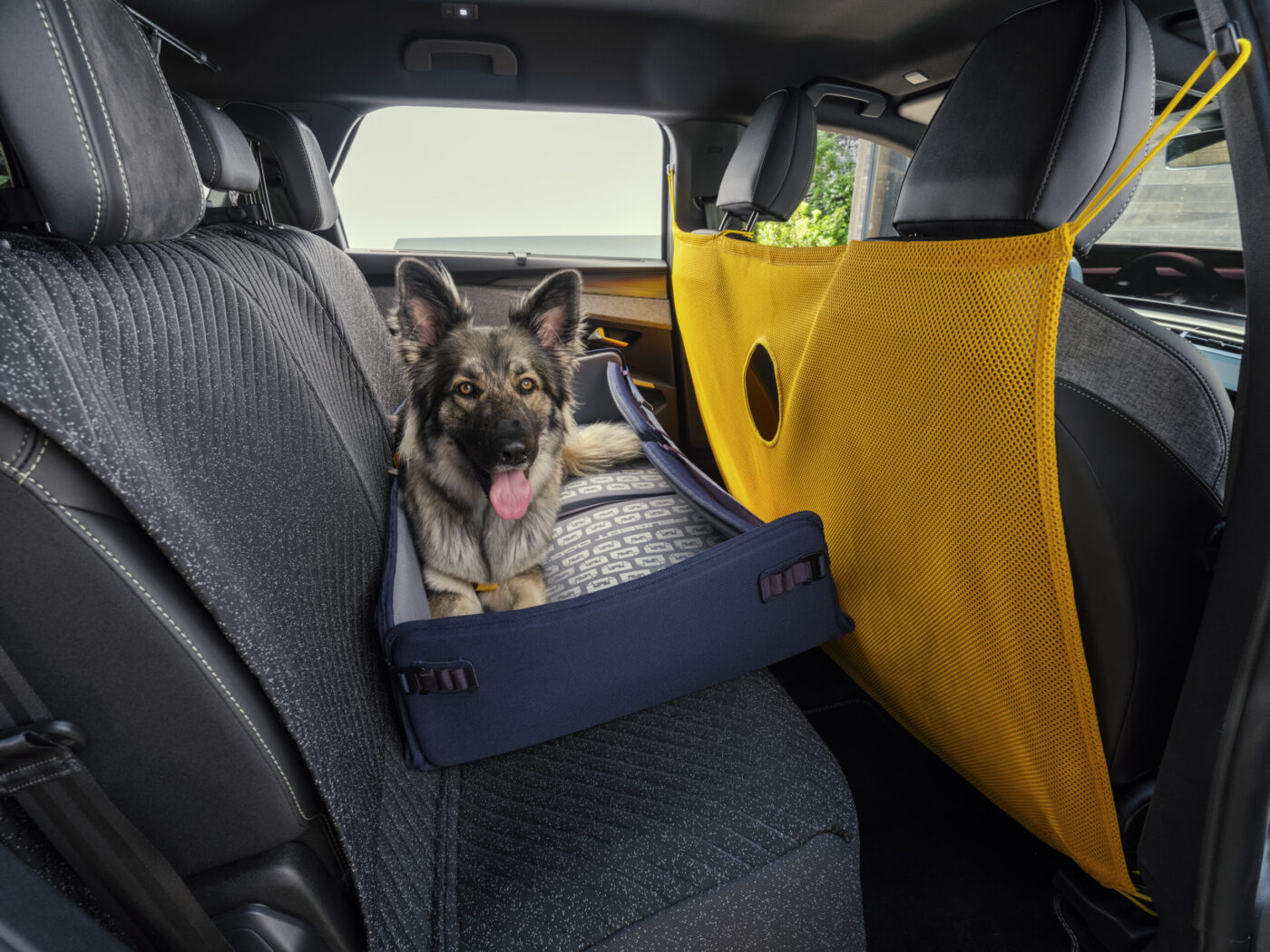
According to electrive, the concept is built on the five‑seat version of the fully electric Peugeot E‑5008 SUV. While the powertrain and battery specifications remain identical to the production model – no changes to performance, capacity or charging rates are announced – the vehicle is equipped with a suite of pet‑centric accessories. These include a modular dog mat that doubles as an external dog bed, a padded cushion for the window to support a dog’s head, protective floor mats, integrated feeding bowls, a connected harness, and a dog dryer that draws power from the vehicle‑to‑load (V2L) function and is stored beneath the boot floor.
The digital layer mirrors the hardware focus. The navigation system can be set to prioritize charging stops located near green spaces or walking trails, a feature the source says is intended to streamline outings with dogs. A “Dog Guardian Mode” monitors interior temperature and can alert the driver if a pet is left inside the cabin, while a “Dog Retriever” function emits an audible signal to coax a lost dog back to the vehicle.
All of these additions are presented as a study of how electric‑mobility could be better tailored to pet owners, a demographic the manufacturer believes is growing. The source cites an IFOP survey – also provided by Peugeot – that finds 64 % of dog owners want to take their dog on holiday and that more than 60 % say their pet influences the choice of destination.
From an engineering standpoint, the concept showcases the flexibility of the V2L system, which is typically marketed for external device charging (e‑bikes, tools, etc.). By routing that power to a dedicated dog dryer, Peugeot demonstrates a novel use case that could broaden the perceived utility of V2L. However, the source makes clear that the dryer is stored under the boot floor, raising questions about packaging constraints and weight distribution that are not addressed in the announcement.
Financially, the concept appears to be a low‑risk experiment. Because the drivetrain and battery remain untouched, development costs are limited to interior packaging, software integration, and a few mechanical add‑ons. The lack of a series‑production plan – explicitly noted by the source – suggests Peugeot is gauging market reaction before committing to tooling or supply‑chain changes.
Regulatory and safety considerations also linger in the background. While “Dog Guardian Mode” monitors temperature, the source does not explain whether the system complies with existing vehicle‑occupant safety standards, which typically focus on human passengers. In many jurisdictions, leaving an animal unattended in a vehicle can trigger penalties, and any automated alert system would need to align with those rules to avoid liability.
Audit & Contradictions
The announcement is wholly sourced from a single electrive article; no independent outlet has corroborated the specific hardware, software functions, or the IFOP survey figures. The fact‑check audit flags each of the following claims as single‑source and therefore hedged:
- Peugeot’s unveiling of a one‑off E‑5008 Dog Edition concept with no series‑production plans.
- The concept’s basis on the five‑seat version of the standard E‑5008.
- The inclusion of a modular dog mat, padded window cushion, protective mats, feeding bowls, connected harness, and V2L‑powered dryer stored under the boot floor.
- The digital suite – navigation prioritising green‑space charging stops, “Dog Guardian Mode”, and “Dog Retriever”.
- The unchanged drivetrain and battery technology compared with the production E‑5008.
- The IFOP survey results (64 % want to holiday with dogs; >60 % say pets influence destination choice).
Future Outlook
Pet‑centric concepts are not unique to Peugeot; other manufacturers have experimented with dog‑friendly accessories, though few have paired them with V2L capabilities. If consumer response proves positive, we may see a trickle‑down of features – such as temperature monitoring or external pet‑care power outlets – into mainstream EV line‑ups. Competitors could leverage similar V2L applications for non‑automotive uses (e‑bike charging, outdoor equipment), turning a niche pet feature into a broader value proposition.
Regulators may also take note. As vehicle software gains the ability to monitor non‑human occupants, safety standards could evolve to require explicit certification of such systems. Meanwhile, the cost‑benefit calculus for mass‑producing pet accessories will hinge on the size of the pet‑owner market segment, a figure that the IFOP survey hints at but does not quantify in monetary terms.
Ultimately, Peugeot’s Dog Edition serves as a testbed: it demonstrates that the underlying EV architecture can accommodate lifestyle‑specific add‑ons without altering core performance. Whether that translates into production‑ready features will depend on consumer demand, regulatory clarity, and the economics of scaling niche hardware. For now, the concept remains a glimpse into how electric‑mobility could become more personal – even canine‑friendly.