Lead Hook
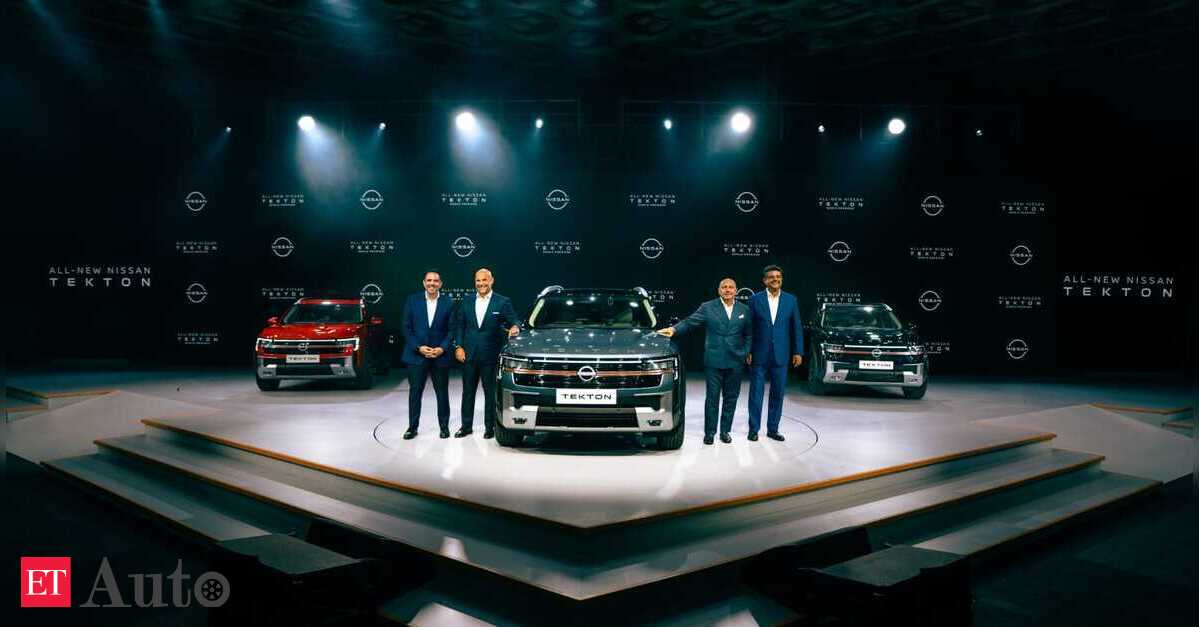
When Nissan unveiled the Tekton SUV, the headline focused on a fresh model for emerging markets. Beneath that glossy rollout lies a strategic gamble: the Japanese automaker is re‑engineering its global growth playbook around an asset‑light, export‑first model anchored in India. In a climate where China’s domestic demand is contracting and geopolitical headwinds are reshaping supply chains, Nissan’s pivot could redefine how midsize manufacturers balance scale, risk, and regional relevance.
Deep Dive
The announcement, published on July 10, 2026, details a multi‑pronged approach. Nissan says it will accelerate growth in “key markets” by leaning on existing alliances with Renault, Dongfeng, Honda and Mitsubishi, while tailoring operations to region‑specific regulations. Economic Times reports that the company plans to use its Renault partnership to reinforce its India strategy, specifically leveraging the Chennai plant as an export hub for the newly launched Tekton SUV.
The Tekton is not merely a new product; it is the centerpiece of an “asset‑light” manufacturing thesis. Nissan’s statement emphasizes technology sharing and regional agility as the next‑generation collaboration model. By co‑developing platforms with partners, the automaker hopes to reduce capital expenditures tied to owning full production lines in every market. This mirrors a broader industry trend where manufacturers outsource more of the value chain to cut fixed costs and respond faster to regulatory shifts.
Export ambition is explicit. The company cites a “decreasing” Chinese market and frames exports as a compensatory lever. Guillaume Cartier, Nissan’s Chief Performance Officer, is quoted saying:
"China is quick. China is aggressive. And what will be amplifying the phenomenon is the market of China now decreasing. They will try to compensate this with exports."Economic Times.
Industry observers note that the Tekton’s launch has already been echoed across several outlets, including ET Auto, Nissan’s own newsroom, South African site Sundayworld, and TopAuto. Those independent reports confirm the vehicle’s export‑oriented positioning, underscoring that the model is intended for markets across Africa, the Middle East and potentially other emerging regions.
From a supply‑chain perspective, basing production in Chennai offers several advantages. India’s comparatively lower labor costs, growing component ecosystem, and supportive export incentives create a fertile ground for an asset‑light strategy. Moreover, the Renault alliance provides Nissan with a shared platform and tooling, reducing the need for duplicate R&D spend. Massimiliano Messina, Chairperson of the AMIEO region for Nissan, stresses the importance of “flexibility in partnerships” and “agility” as imperatives for staying relevant now, indicating that the company is deliberately avoiding a rapid, capital‑intensive rollout in favor of a measured, partnership‑driven expansion.
Geopolitical and regulatory factors also shape the plan. By spreading production across multiple jurisdictions—India for exports, partnerships in China, Europe, and elsewhere—Nissan can mitigate tariff exposure and navigate divergent emissions standards. The announcement hints that future collaborations will be “shaped by geopolitical and regulatory factors,” suggesting that the company expects policy volatility to continue influencing its regional footprints.
Audit & Contradictions
The press release is largely self‑contained, with most strategic claims appearing only in Nissan’s own communication. According to the fact‑check audit, the only element corroborated by independent outlets is the launch of the Tekton SUV and its export focus. All other assertions—leveraging alliances with Renault, Dongfeng, Honda and Mitsubishi; using the Chennai plant as the cornerstone of the India strategy; the emphasis on technology sharing, asset‑light manufacturing, and regional agility; and the executives’ commentary on China and partnership flexibility—are single‑source statements. As such, they should be framed as Nissan’s perspective rather than independently verified facts.
The audit reports a low contradiction level, meaning no overt conflicts were found between the primary source and other reports. However, the lack of external verification for the partnership‑centric growth narrative leaves a gap: the announcement does not disclose concrete milestones, financial commitments, or timelines for the proposed collaborations. Neither does it detail how the asset‑light model will be operationalized—e.g., which components will be sourced locally versus outsourced, or how intellectual‑property sharing will be governed.
Future Outlook
If Nissan successfully executes this export‑first, partnership‑driven strategy, it could pressure rivals to reconsider their own manufacturing footprints. Hyundai, Kia and other midsize players already operate joint ventures in India; a proven asset‑light model from Nissan might accelerate consolidation or spur new alliances.
For regulators, the shift underscores the growing importance of cross‑border supply‑chain transparency. Export‑oriented production raises questions about the origin of critical components, especially batteries and electronics, which are subject to emerging trade controls. Policymakers in India may need to balance incentives for foreign‑direct investment with safeguards that ensure technology transfer and local job creation.
Finally, the move highlights the fragility of relying on a single dominant market. By diversifying production and sales across regions, Nissan aims to buffer itself against a downturn in China—a risk that other automakers will likely watch closely. Whether the Tekton can capture sufficient demand in Africa, the Middle East and beyond remains to be seen, but its launch signals that Nissan is betting on a more distributed, partnership‑centric future for global growth.