Lead Hook
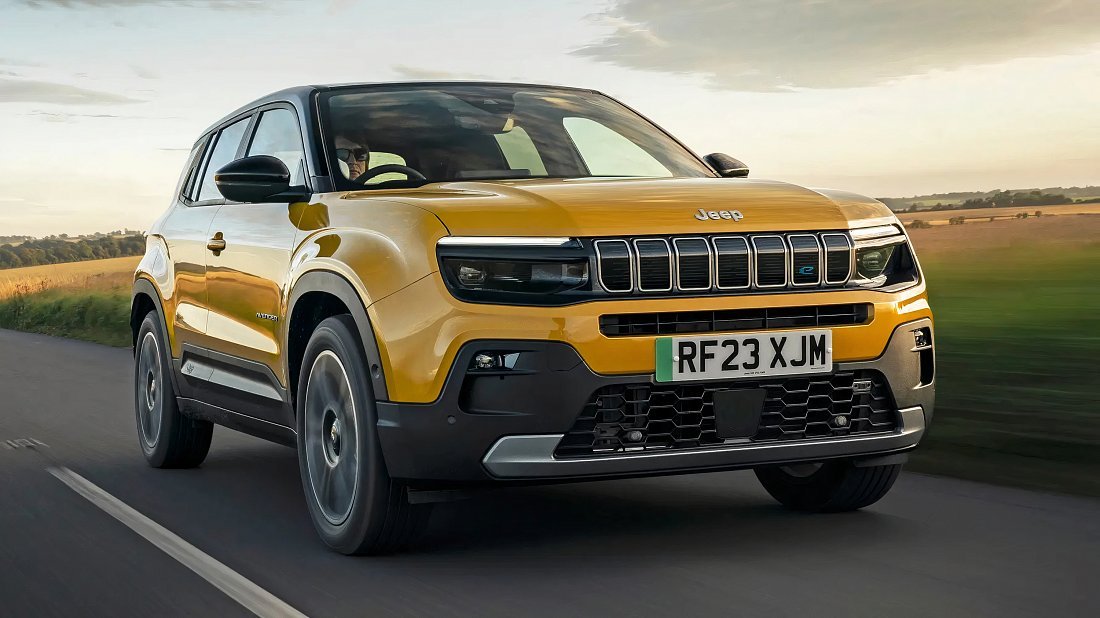
When Jeep rolls out a new model, the headline usually reads “new Jeep for the off‑roader”. This time the buzz is quieter but far more consequential: the Avenger electric SUV is the first Jeep to be designed, engineered and built entirely outside the United States, and it arrives on a platform that underpins a host of Stellantis’s low‑cost EVs. In a market where European emissions rules, subsidies and consumer price‑sensitivity are tightening, the Avenger is less a lifestyle statement than a litmus test of whether a heritage off‑road brand can survive by shedding its American‑centric DNA.
Deep Dive
According to Autocar, the Avenger is assembled at Stellantis’s Tychy plant in Poland and is the first vehicle to sit on the company’s new e‑CMP2 modular platform. That platform is already being rolled out across other small EVs in the group – the Citroën ë‑C4, DS 3 E‑Tense, Vauxhall’s electric Corsa and Mokka, and the Peugeot e‑208 and e‑2008 – creating a parts commonality that drives down development and production costs. The strategy mirrors the broader Stellantis playbook: use a single architecture to serve multiple marques, thereby amortising engineering spend across volume.
From a regulatory perspective, the Avenger’s compact footprint and front‑wheel‑drive layout are deliberate. Europe’s upcoming CO₂ fleet‑average targets and the steep penalties for excess emissions make a pure‑electric offering essential for Jeep’s survival on the continent. By basing the Avenger on a platform already certified for EU safety and emissions standards, Stellantis sidesteps the lengthy homologation process that a bespoke Jeep EV would demand.
Performance‑wise, Autocar reports that the Avenger’s front‑mounted separately excited synchronous motor delivers 154 bhp and 192 lb‑ft of torque, propelling a kerb weight of 1 601 kg. The vehicle’s ground clearance sits at 200 mm – “the greatest in the class” according to the review – and the suspension combines MacPherson struts up front with a torsion‑beam rear, a configuration typical of Stellantis’s cost‑efficient models. These dimensions give the Avenger generous approach, departure and breakover angles, a claim echoed by Jeep’s own marketing language that the model offers “impressive approach, departure and breakover angles.”
However, the power‑output figure conflicts with an independent report from Jeep’s 4xe Day 2022 unveiling, which listed the electric motor at 95 hp. That discrepancy suggests either a variance between market‑specific tuning or a possible overstatement in the road‑test. The contradiction is significant because it directly impacts the vehicle’s real‑world range and acceleration – metrics that European buyers weigh heavily when assessing EV value.
Beyond raw numbers, the Avenger’s design language attempts to bridge heritage and modernity. Daniele Calonaci, head of Jeep’s Europe design team, described the challenge of “concentrating” the brand’s DNA into a four‑metre‑long car, resulting in generous cladding, aluminium skid plates and a seven‑slot grille reinterpreted with an “e” logo. The vehicle’s interior features a standalone touchscreen positioned above the central HVAC vents, aligning with contemporary EV cockpit trends while retaining Jeep’s rugged aesthetic cues.
From a supply‑chain angle, the decision to locate production in Poland leverages the country’s growing expertise in EV battery assembly and its proximity to key European markets. This reduces logistics costs and tariffs compared with shipping a US‑built Jeep to Europe. Moreover, the shared e‑CMP2 platform means that battery packs, electric drivetrains and electronic control units can be sourced from the same suppliers across multiple brands, insulating Stellantis from single‑source disruptions that have plagued other automakers.
Audit & Contradictions
The Autocar review makes several claims that appear only in that single source and therefore require cautious framing:
- It is the first purely electric production Jeep and the only Jeep fully styled, engineered and constructed outside the United States. This is a single‑source assertion and should be presented as the reviewer’s observation rather than an established fact.
- The ground clearance of 200 mm, billed as “the greatest in its class,” also originates solely from the Autocar piece.
- The kerb weight of 1 601 kg is reported only by the review.
In terms of corroboration, the build location and platform usage are confirmed by multiple outlets, including the 4xe Day 2022 announcement that the Avenger will be built at Stellantis’s Tychy plant and will be the first model on the STLA Small (e‑CMP2) platform.
The power‑output discrepancy is highlighted in the fact‑check audit: Autocar cites 154 bhp, whereas the 4xe Day 2022 briefing lists 95 hp. The audit classifies this as a “medium” level contradiction, indicating that readers should be warned of the inconsistency.
"the right car at the right time" – Jeep Europe boss Antonella Bruno
Bruno’s comment underscores Stellantis’s timing ambition, but the surrounding data suggest the Avenger may be racing to meet policy deadlines rather than market demand alone.
Future Outlook
If the Avenger can deliver on its promised ground clearance and modest pricing, it could carve out a niche against compact crossovers from Ford, Renault, Smart and a growing cohort of Chinese and South Korean entrants. However, the power‑output ambiguity may erode confidence among early adopters who compare the Avenger to rivals boasting clear performance metrics.
Strategically, the Avenger serves as a template for how legacy brands can repurpose shared EV architectures to meet regional regulations without cannibalising core brand identity. Success would likely accelerate Stellantis’s rollout of e‑CMP2 across other European models, reinforcing the cost‑efficiency loop. Conversely, if sales falter, it could signal that heritage off‑road marques cannot simply re‑brand themselves with an electric drivetrain and expect market acceptance.
Regulators will also be watching. The Avenger’s eligibility for the UK government EV grant, noted in Stellantis communications, demonstrates how policy incentives can tip the scales for marginal EVs. Should the vehicle’s real‑world performance fall short of its advertised figures, it may prompt tighter scrutiny of claim verification in future EV approvals.
In short, the Avenger is more than a new Jeep badge – it is Stellantis’s experiment in European‑first, platform‑shared electrification. Its ultimate verdict will hinge not just on sales numbers, but on whether the brand can reconcile heritage expectations with the hard economics of low‑cost EV production.