Lead Hook
While the auto industry races toward electrification, a tiny Piedmont‑based firm is unveiling a car that looks straight out of the 1960s. Automobili Mignatta’s preview of the Rina Coupe – a naturally aspirated 5.0‑liter V8 delivering roughly 493 horsepower behind a six‑speed manual – is more than a nostalgic stunt. It pits a handcrafted, high‑rev engine against tightening European emissions standards, soaring development costs and a market that increasingly rewards hybrid or fully electric powertrains. The question isn’t just whether the coupe will turn heads at Goodwood; it’s whether a low‑volume, NA‑V8 manual can survive in a regulatory climate that is rapidly leaving such machines behind.
Deep Dive
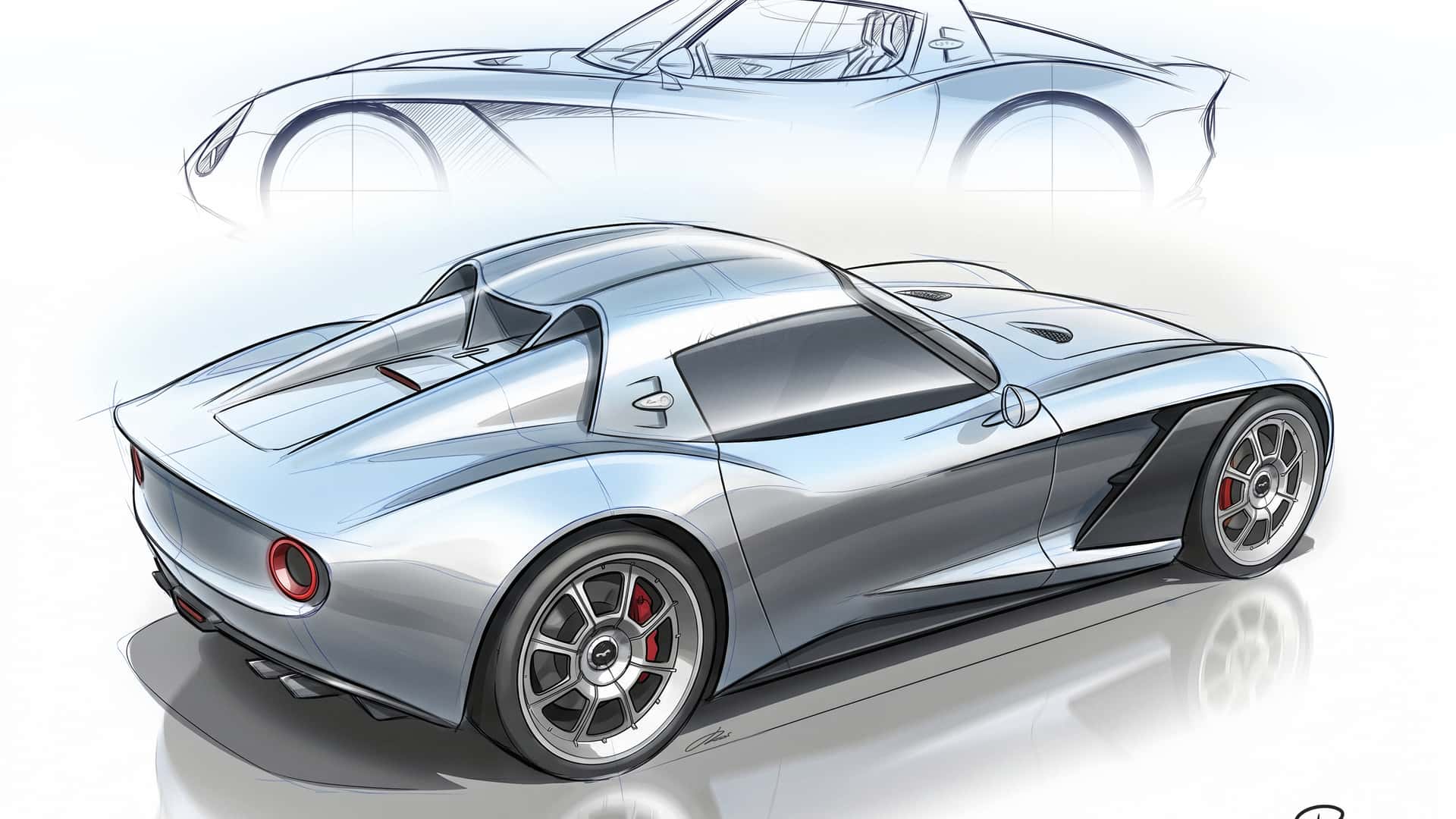
According to Motor1, the Rina Coupe’s design borrows heavily from 1960s Italian grand tourers. Sketches reveal a “double‑bubble” roof and a Kamm‑style rear end capped with twin round taillights, a visual language that reinterprets classic sports‑car silhouettes for a modern audience. Under the sleek carbon‑fiber monocoque sits a naturally aspirated 5.0‑liter V8 that the company claims produces around 493 hp. Power is routed through a six‑speed manual transaxle, a choice that prioritises an analog driving experience over the automated shift‑by‑wire systems now common in performance cars.
The Rina Barchetta, already part of the brand’s lineup, receives a special livery inspired by the Piedmontese “battilastra” tradition of artisanal coachbuilding. The updated Barchetta also introduces forged‑carbon details, a new wheel design and interior upgrades such as a redesigned shifter gate and machined‑from‑solid components. Technical parts on display at Goodwood included a carbon‑fiber driveshaft, a weight‑saving solution that improves dynamic response.
From an engineering standpoint, the decision to stick with a naturally aspirated V8 is bold. High‑revving NA engines require precise machining, high‑strength materials and a supply chain that can source forged pistons, titanium valves and bespoke exhaust systems. In a market where many manufacturers are consolidating engine programmes to amortise costs across hybrid and electric platforms, a bespoke V8 threatens to be a capital‑intensive gamble. Moreover, the European Union’s upcoming CO₂ fleet‑average targets – set to tighten progressively through 2030 – could make homologating a 5.0‑liter V8 for road use increasingly costly. While the company has not disclosed production volumes, the hand‑built nature of its cars suggests a limited run, which may help it avoid fleet‑average calculations but does not exempt individual models from type‑approval emissions testing.
Regulatory pressure is already reshaping the supercar segment. Lamborghini’s recent Huracán STJ, highlighted in a separate news piece, is the brand’s final naturally aspirated V10 before the company pivots to hybridisation. The article notes that “the pure era of natural aspiration is at its end with the future Italian supercars using hybrid technology.” Automobili Mignatta’s move therefore runs counter to the broader industry trend, positioning the Rina Coupe as a niche product for purists who value a manual gearbox and the acoustic thrill of a high‑rev V8.
A naturally aspirated V8 engine paired with a real manual transmission is what Italian sports cars should be, and we are happy Automobili Mignatta is still keeping that tradition alive.
— Motor1’s editorial take
Beyond the romanticism, the Rina Coupe faces practical hurdles. Emissions testing for a NA V8 typically yields higher CO₂ figures than a comparable turbocharged or hybrid unit. To meet EU limits, the car would likely need to be classified as a “low‑volume” vehicle, a designation that grants certain regulatory flexibilities but also limits market access to specific EU member states. Additionally, the supply chain for high‑performance V8 components is shrinking as major engine manufacturers shift focus to electrified powertrains, potentially driving up costs for small firms that must source parts in low volumes.
Audit & Contradictions
The Motor1 article is the sole source for every concrete detail about the Rina Coupe. Fact‑check data confirms that claims such as the model’s name, its 5.0‑liter NA V8 output of ~493 hp, the six‑speed manual transaxle, the 2027 launch target and the Barchetta’s artisanal livery all appear only in this single outlet. No independent corroboration from other publications was identified. The audit therefore flags all five key points as single‑source and recommends hedging language when reporting them. No contradictions were found, and the fact‑check summary rates the contradiction level as “Low.”
Future Outlook
If Automobili Mignatta proceeds with the Rine Coupe as announced, the car will likely occupy a very narrow slice of the market: affluent enthusiasts who prize mechanical purity over environmental performance. Competitors such as Lamborghini are already committing to hybridisation, while other boutique manufacturers are exploring limited‑run electric hypercars. The Rina Coupe’s success may hinge on regulatory carve‑outs for low‑volume models and the brand’s ability to command premium prices that offset the high per‑unit engineering costs.
Should the EU tighten emissions testing for low‑volume vehicles, Automobili Mignatta could be forced to introduce hybrid assistance or carbon‑offset schemes to remain road‑legal, potentially diluting the very analog experience it seeks to preserve. Conversely, a strong demand from collectors could encourage other niche firms to revisit NA V8 platforms, creating a micro‑segment that coexists with the broader electrified push.
In any case, the Rina Coupe serves as a litmus test for how far the supercar world can stretch the definition of “future‑ready” while still clinging to its heritage. Its fate will reveal whether there remains a viable commercial path for handcrafted, naturally aspirated V8s in a continent that is rapidly legislating them out of existence.