Lead Hook
Ford has announced that the inaugural model built on its newly‑minted “Universal Electric Vehicle” platform will be a mid‑size electric pickup truck. While the name remains under wraps, a trademark hint points to the historic “Ranchero.” Beyond the headline, the company is leaning on European plug‑in hybrid (PHEV) emissions and fuel‑use data to sell the case that a fully electric pickup can cut operating costs and improve health outcomes for commercial users in the United States.
Deep Dive
According to CleanTechnica, Ford’s “Universal Electric Vehicle” platform represents a “soup‑to‑nuts makeover” of its manufacturing systems, implying a complete retooling of assembly lines, supply chains, and component sourcing. The platform is positioned to host a mid‑size electric pickup, the first vehicle to emerge from this effort.
Historical context adds a layer of intrigue. The nonprofit MotorCities National Heritage Area notes that the original Ranchero, introduced in 1957, was “designed as a coupe utility the Ranchero was the first of its kind that integrated the cab and cargo bed into the body.” That lineage is being resurrected as a possible badge for the new EV, a notion corroborated by reporting from The Autopian and CarBuzz, which both referenced the trademark filing and the “Ranchero” hint.
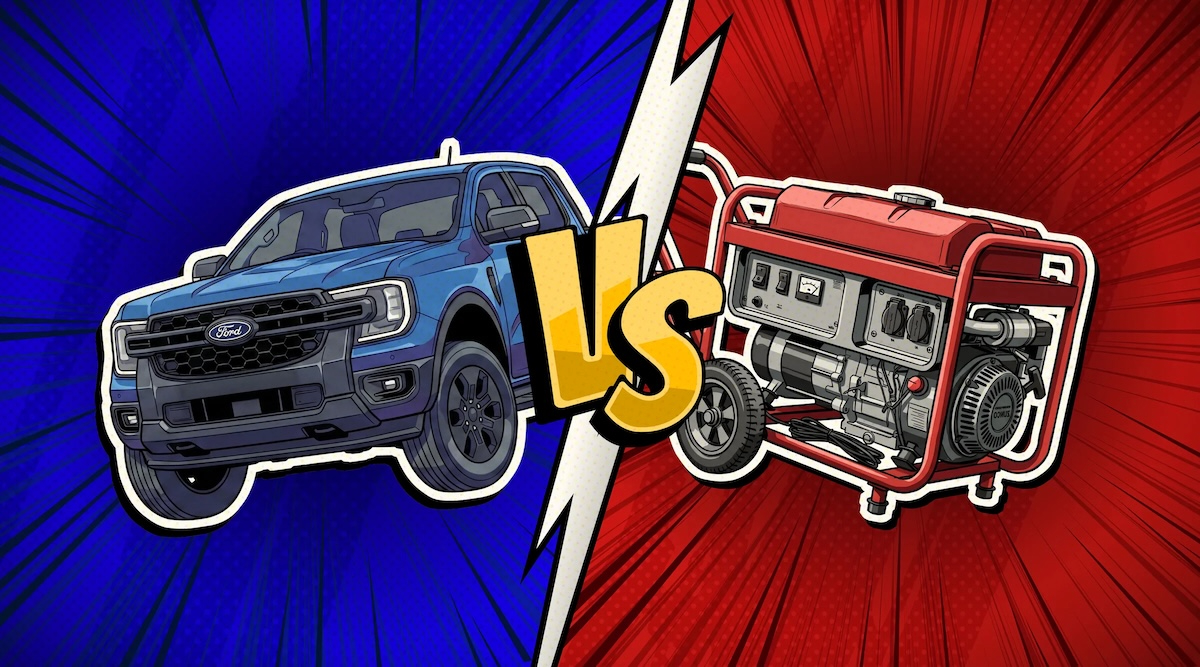
While the U.S. rollout remains unnamed, Ford is already promoting the Ranger plug‑in hybrid that sells in Europe. The company’s own European‑focused “Ford From The Road” media window featured a detailed comparison between a conventional 4‑kilowatt generator and the Ranger PHEV equipped with Pro Power Onboard. The article’s author, Kyle Shearer, highlighted that “electrification is a space‑saver that eliminates the need to haul a gas‑fueled generator around, along with extra fuel.”
Ford made it clear that ‘ the Ranger PHEV ‘is only available for select global markets outside of North America, where we are seeing stronger demand for this powertrain,’
This quote, also from the CleanTechnica story, underscores why the hybrid is not being offered in the U.S.: Ford says the domestic lineup already provides “electrified alternatives.” The implication is that the forthcoming all‑electric pickup will fill the gap that the Ranger PHEV leaves in the American market.
Emission testing in Europe, as reported by the same source, revealed stark differences. A 4 kW gasoline generator emitted 15 times more nitrogen oxides (NOx) than the Ranger PHEV’s Pro Power Onboard in low‑power mode, and up to 9,000 times more at high power. Carbon monoxide (CO) and hydrocarbons followed a similar pattern, with the generator producing up to 1,200 times more CO and more than 110 times more hydrocarbons at high power. When the Ranger’s engine reached operating temperature, its anti‑emissions systems reduced NOx to zero.
Fuel efficiency also tipped in favor of the hybrid. Shearer noted that once the Ranger’s engine is warmed, Pro Power Onboard “uses half as much fuel as the generator — and once the engine only switches on to maintain the battery level, your fuel cost becomes just one‑third that of the generator.” This data is being used by Ford to argue that a fully electric pickup, which would eliminate the need for any internal‑combustion generator, could deliver even greater cost savings for businesses that rely on mobile power.
From a regulatory standpoint, the European emissions standards that drive these tests are far stricter than those applied to non‑road generators. By showcasing the health and environmental benefits of the PHEV system, Ford is pre‑emptively building a narrative that a U.S. electric pickup would not only meet upcoming EPA rules but also address corporate “duty of care” concerns for fleet operators.
Audit & Contradictions
The announcement leaves several questions unanswered. First, the trademark filing for “Ranchero” is cited only in the CleanTechnica piece; no other outlet has independently verified the filing, so the claim remains single‑source and must be treated as Ford’s own indication.
Second, the details about the Ranger PHEV’s market limitation to “select global markets outside of North America” and the statement that it “aren’t coming to America” are also drawn solely from the primary article. While the quote is verbatim, its verification rests on Ford’s own communication.
Third, the specific emissions ratios (15×, 9,000×) and fuel‑use comparisons are presented without external corroboration. The fact‑check audit flags these as single‑source claims, meaning they should be reported as Ford’s internal test results rather than independent data.
The fact‑check summary notes a “Low” contradiction level, and indeed no contradictory statements were identified across the secondary outlets. The core claim that a mid‑size electric pickup will debut on the Universal EV platform, and the possible “Ranchero” name, are corroborated by The Autopian, CarBuzz, and other reports.
Future Outlook
If Ford follows through, the new electric pickup could reshape the commercial‑vehicle segment in the United States. Competitors such as Rivian, Tesla, and emerging Chinese manufacturers have already positioned their electric trucks as cost‑effective alternatives to diesel. Ford’s emphasis on reduced fuel consumption and lower emissions could force fleet managers to reconsider legacy diesel options, especially as corporate sustainability targets tighten.
Regulators may also take note. The European emissions data presented by Ford highlights the potential for stricter EPA standards on auxiliary power units (APUs) and non‑road engines. Should the U.S. adopt similar limits, an all‑electric pickup that eliminates the need for a separate generator could gain a regulatory advantage.
From a supply‑chain perspective, the “soup‑to‑nuts” overhaul of the Universal EV platform suggests massive investment in battery assembly, electric drivetrains, and software integration. If Ford can achieve economies of scale, the price point of the upcoming pickup could undercut rivals, echoing the “$30,000” price speculation seen in other coverage.
Ultimately, the naming decision—whether the vehicle will wear the historic Ranchero badge or adopt a fresh moniker—may become a secondary story to the broader strategic shift: a fully electric pickup positioned as a healthier, cheaper, and regulatory‑ready workhorse for America’s largest vehicle class.