Lead Hook
South Africa’s power sector is entering a phase of rapid liberalisation, with new wholesale markets and a surge of distributed solar reshaping how energy is bought, sold, and managed. In that shifting landscape, a home‑grown intelligence platform called Florion has emerged, promising to give mining companies—some of the country’s biggest energy consumers—a single, real‑time view of every contract, price signal, and regulatory risk. If the platform lives up to its claims, it could change the economics of mining operations, influence ESG reporting, and set a precedent for integrated energy management across the continent.
Deep Dive
Florion was co‑founded by Robert Futter, who brings “more than 20 years of advisory experience in energy, infrastructure, and project finance” to the venture (CleanTechnica). The founders argue that South Africa’s energy market is being reshaped by three forces: technology interventions such as solar and battery storage, market reform and liberalisation, and increasingly complex contracting structures. Together, these trends create a new category of commercial risk, where “relatively small forecasting errors, contract underperformance, or network disruptions can have significant financial consequences and, in some cases, translate into tens of millions of rand in avoidable cost leakage” (CleanTechnica).
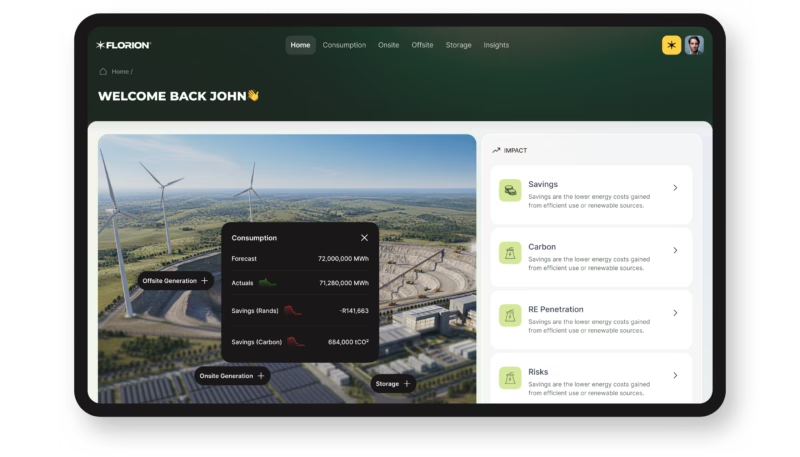
According to the company, there are currently no South African solutions that provide a “single view” across the myriad of energy sources, offtake contracts, pricing structures, regulations, and market risks that modern businesses must juggle. Florion’s platform is designed to fill that gap by aggregating data from the grid, on‑site solar, wheeled energy (such as diesel generators), and traded power, then layering intelligence on top of it. The platform claims to deliver visibility into energy cost forecasting, contract performance, renewable penetration, carbon‑tax exposure, and ESG‑related reporting (CleanTechnica).
“While traditional energy management systems focus on specific operational functions, Florion takes a broader view of the energy environment. By bringing together and orchestrating data and intelligence from across the energy value chain, we help businesses make more informed, forward‑looking decisions, reduce risk, and unlock opportunities for greater competitiveness and growth.”
Futter notes that the ongoing liberalisation of South Africa’s electricity market—including the introduction of the SA Wholesale Electricity Market—will make a unified view even more critical (CleanTechnica). The wholesale market is expected to increase price volatility and open the door for more private generators, which could amplify both upside opportunities and downside exposures for large energy users.
In the mining sector, where electricity can account for a substantial share of operating costs, the stakes are high. Florion says it has already secured a “large mining and beneficiation client operating in one of the country’s most energy‑intensive sectors” (CleanTechnica). While the identity of the client is undisclosed, the claim suggests that the platform is being tested in an environment where even a few percent improvement in energy efficiency can translate into multi‑million‑rand savings.
Another layer of complexity comes from the accelerating adoption of battery electric vehicles (BEVs) and plug‑in hybrid vehicles (PHEVs) in South Africa. Florion asserts that this trend creates “another layer of energy optimisation” that its system will need to accommodate (CleanTechnica). As fleets shift from diesel to electric, businesses will have to manage charging schedules, grid impact, and vehicle‑to‑grid interactions—all data points that could be integrated into Florion’s intelligence layer.
Beyond the mining focus, the platform could be relevant to any high‑consumption industry—steel, chemicals, or large commercial estates—especially as South African households and businesses have “rushed to install gigawatts of solar panels over the last couple of years” (CleanTechnica). The proliferation of distributed generation means that traditional, centrally‑focused energy‑management tools are increasingly mismatched with the reality of a hybrid grid.
Audit & Contradictions
The core fact that Florion has launched and is co‑founded by Robert Futter is corroborated by an independent report from Africa Sustainability Matters, which also highlighted the company’s entry into the market. All other assertions—such as the secured mining client, the breadth of the platform’s data integration, the specific impact of market liberalisation, and the anticipated role of electric‑vehicle optimisation—appear only in the CleanTechnica article. According to the fact‑check audit, these are “single‑source claims” and should be treated as the company’s statements rather than independently verified facts.
The audit notes a “Low” level of contradiction, meaning no direct conflicts were found between sources, but it underscores that many of the platform’s promised capabilities remain unverified beyond the company’s own description. Readers should therefore view the platform’s potential benefits as aspirational until third‑party case studies or regulator‑mandated performance data become available.
Future Outlook
If Florion’s technology delivers on its promise of a unified energy‑intelligence layer, it could pressure existing energy‑management vendors—both local and international—to broaden their scope beyond narrow operational dashboards. Competitors may need to incorporate contract‑level analytics, carbon‑tax modeling, and EV‑charging optimisation to stay relevant.
Regulators, too, may find a single‑view platform useful for monitoring market behaviour in a newly liberalised wholesale environment. Transparent, real‑time data could aid the energy authority in detecting price manipulation, ensuring compliance with carbon‑tax rules, and assessing the impact of distributed solar on grid stability.
For investors, the emergence of a domestically built solution signals that South Africa’s energy‑risk market is maturing enough to support specialized software ventures. Should the mining client publicly report cost savings or ESG improvements, it could trigger broader adoption across the continent’s resource‑rich economies, where similar risk profiles exist.
In the meantime, the true test will be whether Florion can translate its ambitious data‑orchestration vision into actionable insights that survive the volatility of South Africa’s evolving power market. Until independent performance data emerge, the platform remains a promising—but as yet unproven—tool in the country’s energy‑risk toolkit.