Lead Hook
When a YouTuber rigged a $9,500 aftermarket system to a Ford F‑150 Lightning and claimed a modest 34‑mile boost, the headline grabbed attention. What matters far more than the mileage gain is what the experiment exposes: a costly, technically complex shortcut that sidesteps OEM safety controls and highlights the economic impracticality of ad‑hoc range extenders in a market moving toward integrated, regulated solutions.
Deep Dive
According to InsideEVs, the project – dubbed EverDrive – adds an auxiliary J1772 charging port to the Lightning’s high‑voltage architecture. The modification required drilling a hole in the bed liner, routing cables beneath the chassis, and splicing into the vehicle’s onboard charger through a series of relays controlled by a microcontroller manufactured by PEAK. The controller allegedly sends custom‑programmed CAN messages that convince the truck’s battery management system it is receiving a legitimate charge while the vehicle is in motion.
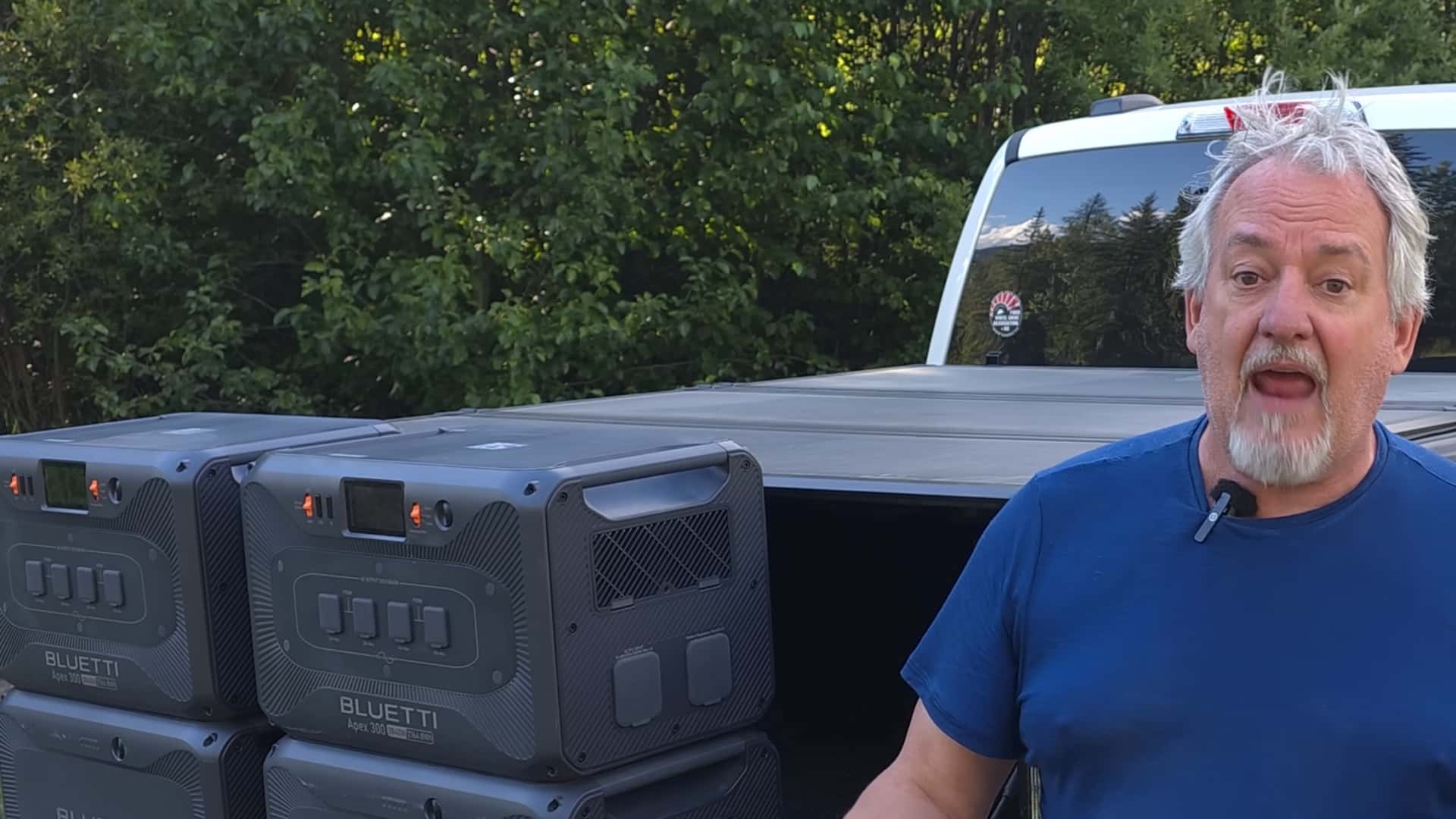
The power source for the test was a bank of Bluetti portable battery packs totalling 16 kWh. InsideEVs notes that while Bluetti lists the packs at roughly $7,500 on its U.S. site, Lindley paid about $5,300 (or $7,499 CAD) for the units. The EverDrive prototype itself is not yet commercially available; a Facebook post from the developers suggests a target price of $2,000 upon release. Combined, the hardware cost approaches $9,500 for an extra 15.8 kWh of usable energy.
In practice, the setup did not perform as cleanly as the engineering description implies. During the road test the battery bank became imbalanced, leaving about 8 % of its stored energy inaccessible to the vehicle. After accounting for this loss, Lindley estimated the system delivered roughly 34 miles of additional range on his trip. For context, InsideEVs compares this to the cancelled Tesla Cybertruck range‑extender, which was projected to cost $16,000 for about 47 kWh of capacity.
From a capital‑efficiency standpoint, the DIY solution translates to roughly $0.60 per added mile of range, far higher than the cost of a conventional home charger or a modest battery upgrade from the manufacturer. Moreover, the engineering approach raises safety questions. By inserting custom relays and a microcontroller into the high‑voltage system, the installer bypasses the vehicle’s built‑in safeguards that monitor current, temperature, and state‑of‑charge. The InsideEVs article does not detail any third‑party certification or compliance testing, leaving the risk profile undefined.
Regulatory oversight compounds the concern. In the United States, aftermarket modifications to a vehicle’s high‑voltage architecture can trigger liability under federal safety standards and may void warranty coverage. There is no indication that the EverDrive prototype has been reviewed by the National Highway Traffic Safety Administration (NHTSA) or any equivalent body. The lack of independent verification, as highlighted by the fact‑check audit, suggests the project resides in a gray zone where enthusiasts experiment faster than regulators can respond.
Audit & Contradictions
The core claims of the story – the existence of the EverDrive prototype, the use of 16 kWh of Bluetti packs, the $9,500 total cost, the 34‑mile range gain, and the 8 % energy loss due to imbalance – are all reported solely by InsideEVs. No secondary outlet corroborates these specifics, and the fact‑check audit confirms that each is a single‑source claim. The audit also notes a low contradiction level, meaning no conflicting reports have emerged, but the lack of independent verification remains a critical gap.
Because the information is single‑source, readers should treat the performance figures as provisional. The article does not disclose any formal testing methodology, nor does it reference third‑party validation of the microcontroller’s CAN‑message manipulation or the safety of the relay network. These omissions are typical of DIY projects that prioritize rapid iteration over rigorous certification.
Future Outlook
If aftermarket range extenders like EverDrive gain traction, manufacturers may feel pressure to address a nascent market for modular, user‑installable battery packs. Some OEMs have already hinted at “portable‑energy” accessories, but they typically integrate with the vehicle’s existing battery management system to preserve safety and warranty integrity. The economic reality demonstrated by the Lightning test – high cost per mile of added range – suggests that a mass‑market solution would need to achieve economies of scale or offer a clear regulatory pathway.
Regulators could respond by issuing guidance on high‑voltage aftermarket modifications, similar to existing standards for aftermarket lighting or performance parts. Clear standards would help ensure that any DIY or third‑party system meets crash‑worthiness, electromagnetic compatibility, and thermal management requirements. Until such frameworks emerge, projects like EverDrive will likely remain niche experiments for enthusiasts willing to accept the financial and liability risks.
From a supply‑chain perspective, the reliance on consumer‑grade portable power stations highlights the growing convergence between the residential energy storage market and automotive applications. As manufacturers of these stations increase capacity and lower prices, the cost barrier may shrink, but the engineering challenge of safely integrating them with a vehicle’s high‑voltage system will persist.
In the near term, the most practical route for drivers seeking additional range remains OEM‑approved solutions: larger onboard battery packs, official auxiliary chargers, or the expansion of fast‑charging networks. The EverDrive experiment, while inventive, underscores that without industry‑wide standards and cost‑effective integration, DIY range‑extending remains a costly curiosity rather than a scalable answer to range anxiety.