Lead Hook
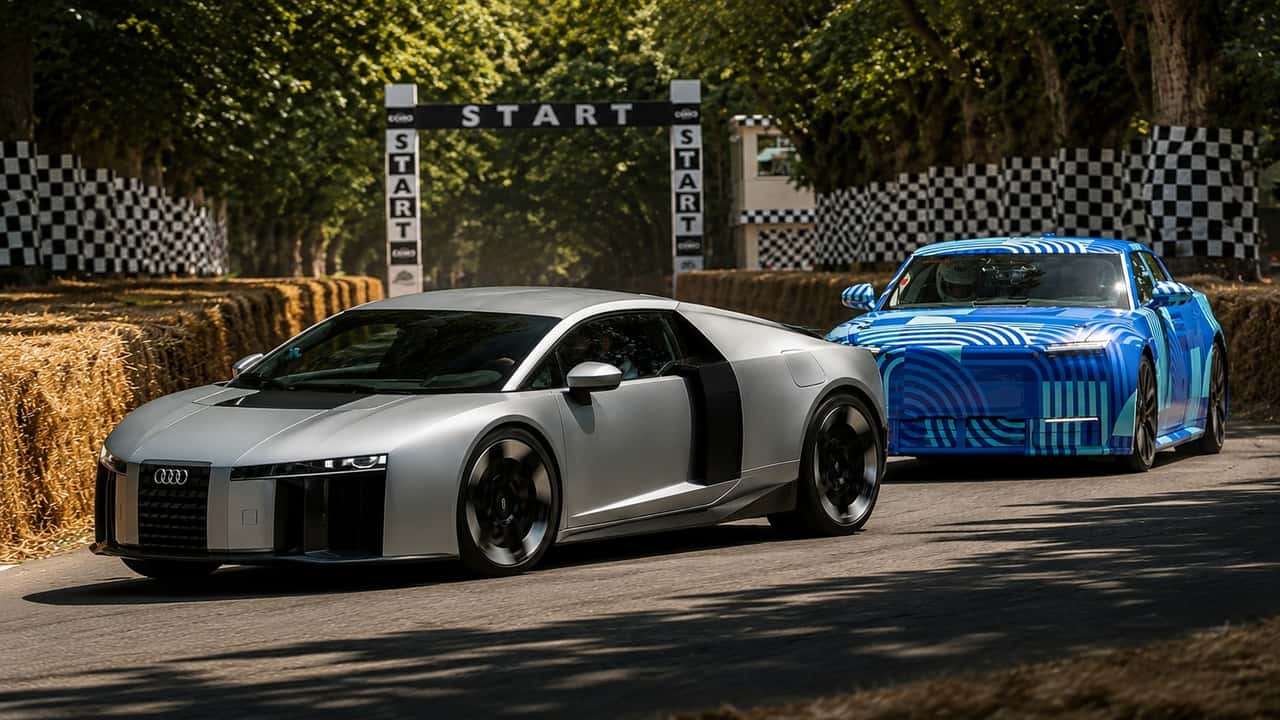
When two of the most storied marques in automotive history unveiled their next‑generation electric flagships at the 2026 Goodwood Festival of Speed, the reaction was not applause but a torrent of scorn on Instagram. The fallout matters far beyond aesthetics: in an era where manufacturers lean on viral social‑media moments to fuel pre‑order pipelines and justify multi‑hundred‑million‑dollar R&D spends, a design that is collectively derided can jeopardise brand equity, investor confidence, and ultimately the financial viability of a launch.
Deep Dive
According to Motor1, the Audi Nuvolari and a still‑camouflaged Jaguar Type 01 tackled Goodwood’s iconic hill‑climb on the same day. The appearance of both cars at the event was also reported by Road & Track, Goodwood’s own coverage, and AutoSpies, confirming the fact that the two models were physically present on the hill in 2026.
Both manufacturers are positioning the cars as 2027 launches. Motor1 notes that Audi plans a limited production run of just 499 Nuvolaris, while Jaguar will keep the Type 01 under camouflage until an October unveiling in New York. The Goodwood Festival of Speed’s official Instagram account posted back‑to‑back videos of the two prototypes climbing the hill, a deliberate marketing move intended to generate buzz among enthusiasts and the broader public.
What followed was an avalanche of negative commentary. The Motor1 article curates a selection of Instagram remarks aimed squarely at the Nuvolari’s silhouette:
Looks like a fast shopping cart.
Other commenters described the design as a massive, heavy cardboard box and likened it to a hybrid of a Cybertruck and an Audi R8. The Jaguar Type 01 received similarly harsh reactions, with users calling it a monstrosity and comparing it to a cheap Rolls‑Royce that handles like a canal barge.
Motor1 frames these reactions as “overwhelmingly negative,” but also acknowledges that Instagram commenters represent only a slice of the online community. Nonetheless, the intensity of the backlash signals a potential misalignment between the design language that Audi claims is “entirely new” for its production cars and the visual expectations of the brand’s traditional fan base.
From a business perspective, the stakes are high. Audi’s Nuvolari is described as the first production model to debut a fresh design language that will cascade into future electrified offerings, including a Concept C sports car slated for 2027 and an A4 E‑Tron a year later. Jaguar, meanwhile, is positioning the Type 01 as a reset for its move into the electric ultra‑luxury segment. Both strategies hinge on the premise that a striking, forward‑looking design will attract affluent early adopters and secure pre‑orders that fund low‑volume production runs.
When the visual language is polarising, the risk is that pre‑order numbers could fall short of forecasts, leaving manufacturers with excess inventory and sunk‑costs in tooling. Moreover, a negative social‑media narrative can reverberate through earnings calls and analyst briefings, pressuring investors who are already wary of the capital intensity of low‑volume EV programs. In this environment, a single design misstep can become a headline‑making liability that forces a brand to re‑evaluate its launch timeline or invest additional marketing spend to reshape perception.
Audit & Contradictions
The core fact that the Audi Nuvolari and Jaguar Type 01 were shown on the Goodwood hill‑climb in 2026 is corroborated by multiple outlets. All other details in the Motor1 story are single‑source claims and therefore require hedging:
- Production limits and 2027 arrival dates for both models are reported only by Motor1.
- The claim that the Goodwood Instagram account posted the back‑to‑back videos is also solely from Motor1.
- Jaguar’s October camouflage‑removal event in New York is mentioned only in the Motor1 piece.
- The assessment that internet reaction has been “overwhelmingly negative” rests on the curated Instagram comments presented by Motor1, without independent verification.
- Audi’s assertion of a brand‑new design language and the outlined future model cadence (Concept C in 2027, A4 E‑Tron a year later) appear solely in the Motor1 article.
- Jaguar’s positioning of the Type 01 as a reset into the electric ultra‑luxury segment is likewise a single‑source claim.
Fact‑check data rates the overall contradiction level as low, indicating no direct conflicts between sources, but the reliance on a single outlet for most narrative points underscores the need for cautious interpretation.
Future Outlook
If the negative sentiment persists, competitors may seize the opportunity to highlight the aesthetic and experiential strengths of their own upcoming EVs, reinforcing the importance of design validation through broader consumer research before high‑profile reveals. Regulators are unlikely to intervene in styling disputes, but capital markets will watch closely; a muted pre‑order response could affect quarterly earnings guidance and influence the allocation of R&D budgets across the industry.
Both Audi and Jaguar have the option to recalibrate their communication strategies. Audi could lean on the novelty of its new design language, emphasizing performance metrics and technology over looks, while Jaguar might accelerate the October unveiling to control the narrative before the design is further dissected online. In either case, the Goodwood episode illustrates how the democratization of opinion via social platforms introduces a new variable into the calculus of EV flagship launches—one that can amplify both hype and criticism with equal speed.