Lead Hook
Australia’s car market is moving at breakneck speed: in June 2026, plug‑in vehicles accounted for 36% of the 140,058 light‑vehicle registrations, with more than 32,570 battery‑electric cars (BEVs) and 17,000 plug‑in hybrids (PHEVs) sold in a single month (CleanTechnica). The headline‑grabbing numbers suggest a consumer‑driven revolution, but the data also expose a deeper reliance on Chinese manufacturers and engineering compromises that could shape Australia’s energy, industrial and geopolitical landscape for years to come.
Deep Dive
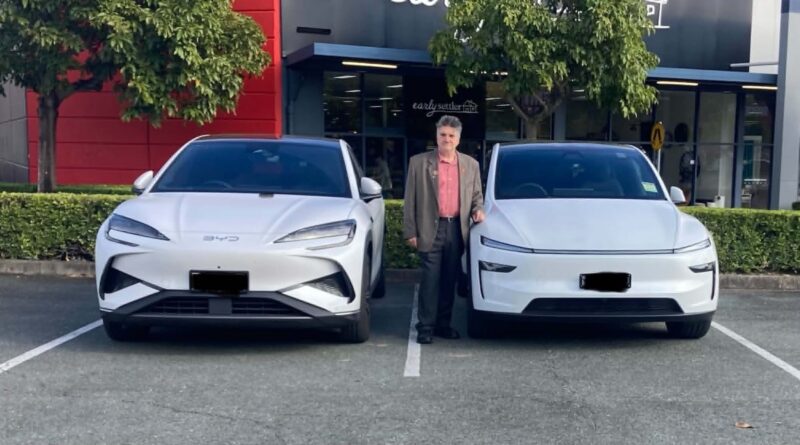
While the surge in electric‑vehicle (EV) sales is undeniable, the composition of that surge tells a story of supply‑chain concentration. BYD, a Chinese automaker, is now the second‑largest brand in Australia, trailing only Toyota (CleanTechnica). BYD’s dominance spreads across both BEVs and PHEVs: the BYD Shark 6 sold roughly 3,398 units, double May’s figure, and the BYD Sealion 6 and Sealion 8 moved 2,218 and 1,961 units respectively (CleanTechnica). This concentration raises questions about the resilience of Australia’s emerging EV ecosystem.
From a technical standpoint, the market’s most popular models reveal where engineering trade‑offs are being made. The Tesla Model Y topped all powertrains with 8,702 units sold in June (CleanTechnica), but the next‑most‑sold vehicle, the Ford Ranger ute, is a conventional internal‑combustion model (5,999 units). The arrival of the Toyota BEV Hilux, a battery‑electric ute, illustrates the challenge of electrifying heavy‑duty workhorses. Toyota’s own data note a high price, modest specifications and a 300‑km electric range—yet more than 300 orders have already been placed, largely from fleet and mining customers (CleanTechnica). The limited range underscores the engineering bottleneck of fitting sufficient battery capacity into a vehicle that must also meet payload and durability expectations.
Infrastructure is keeping pace, at least on paper. Expanding charger networks, rooftop solar, and home batteries are enablers of the shift. However, the surge in high‑capacity PHEVs like the BYD Shark 6 suggests many consumers are hedging against the current charging gap. The Shark 6’s 3,398 units sold in June make it the third‑best‑selling ute and the sixth‑most‑popular vehicle overall (CleanTechnica), indicating that a hybrid approach remains attractive while the charging ecosystem matures.
Geopolitics cannot be ignored. The rapid adoption of Chinese‑made EVs coincides with a period of heightened global uncertainty – “conflict in the Middle East and volatility in petrol prices,” as noted by industry lobbyist Tony Weber – which is prompting Australian buyers to seek fuel‑price insulation (CleanTechnica). While short‑term price dynamics drive demand, the longer‑term strategic dependence on Chinese supply chains for batteries, powertrains, and vehicle platforms could leave Australia vulnerable to trade disputes, export controls, or shifts in Chinese policy.
"The Australian automotive market has shifted on its axis during the first months of 2026. This year is likely to represent a significant turning point for the Australian automotive industry,"
Weber’s comment captures the optimism, but the underlying data suggest that the “paradigm shift” may be more structural than purely consumer‑driven. The shift is anchored in policy (fuel‑price volatility), infrastructure (charging rollout), and, crucially, the supply‑chain architecture that now leans heavily on Chinese manufacturers.
Audit & Contradictions
The June update provides a wealth of granular sales figures, yet every quantitative claim originates from a single source – CleanTechnica – and has not been corroborated by the secondary outlets listed in the fact‑check audit. Consequently, each figure must be presented as a single‑source claim, e.g., “According to CleanTechnica, …”. No contradictions were identified across the available sources, so the overall contradiction level is low.
Key single‑source claims include:
- Plug‑in vehicle sales doubled year‑on‑year, reaching 36% of June’s 140,058 light‑vehicle market (32,570 BEVs, 17,000 PHEVs).
- BYD’s position as the second‑largest brand behind Toyota.
- Model‑by‑model sales numbers for the Tesla Model Y, Ford Ranger, Toyota Hilux, BYD Sealion 7, Toyota RAV4, and BYD Shark 6.
- Top‑ten all‑electric lineup figures, including Tesla Model 3 (598 units) and Kia EV5 (572 units).
- Over 300 orders for the Toyota BEV Hilux, primarily from fleet and mining customers.
Because these numbers are not cross‑verified, readers should treat them as indicative rather than definitive. The lack of independent confirmation also highlights a broader transparency gap in Australian EV market reporting.
Future Outlook
If the current trajectory continues, the next 12‑month period could see plug‑in vehicles surpass the 50% market‑share threshold, fundamentally reshaping Australia’s fuel‑demand profile. However, several variables will influence how smoothly that transition unfolds:
- Supply‑chain diversification: Policymakers may feel pressure to incentivise local battery manufacturing or diversify imports to mitigate geopolitical risk. A failure to do so could lock the market into Chinese‑centric supply lines.
- Charging infrastructure rollout: The success of high‑capacity PHEVs suggests that the charging network is still catching up. Accelerated public‑fast‑charging deployment, especially in regional and mining hubs, will be critical for broader BEV adoption, particularly for heavy‑duty vehicles like the BEV Hilux.
- Regulatory incentives: Continued volatility in global oil prices could sustain consumer interest, but long‑term adoption will likely hinge on consistent federal incentives, emissions standards, and possibly a zero‑emission vehicle mandate.
- Competitive response: Japanese manufacturers, noted as “a day late and a dollar too many,” may need to accelerate localised EV development to reclaim market share from Chinese rivals. Their upcoming models (e.g., Toyota RAV4 PHEV, Mazda 6e, Suzuki eVitara) will be closely watched.
- Engineering evolution: The modest 300‑km range of the BEV Hilux highlights a current limitation. Advances in battery energy density or modular battery packs could make electric utes more viable for remote, high‑load applications.
In sum, the June sales surge is a clear signal that Australian consumers are embracing electrification, but the underlying supply‑chain concentration and infrastructure gaps could shape the durability of this “paradigm shift.” Stakeholders—from regulators to manufacturers—must address these hidden constraints if the market is to transition from a fleeting spike to a sustainable, resilient electric future.