Lead Hook
When a radiologist drove a Tesla Model Y off a 250‑foot cliff in early 2023, the headlines focused on the dramatic crash and the vehicle’s safety systems. Less visible, but equally consequential, was the legal outcome: a California judge dismissed three attempted‑murder charges after the doctor completed a mental‑health diversion program. The case spotlights how the state’s diversion statutes can override conventional criminal accountability, even in incidents involving high‑profile technology.
Deep Dive
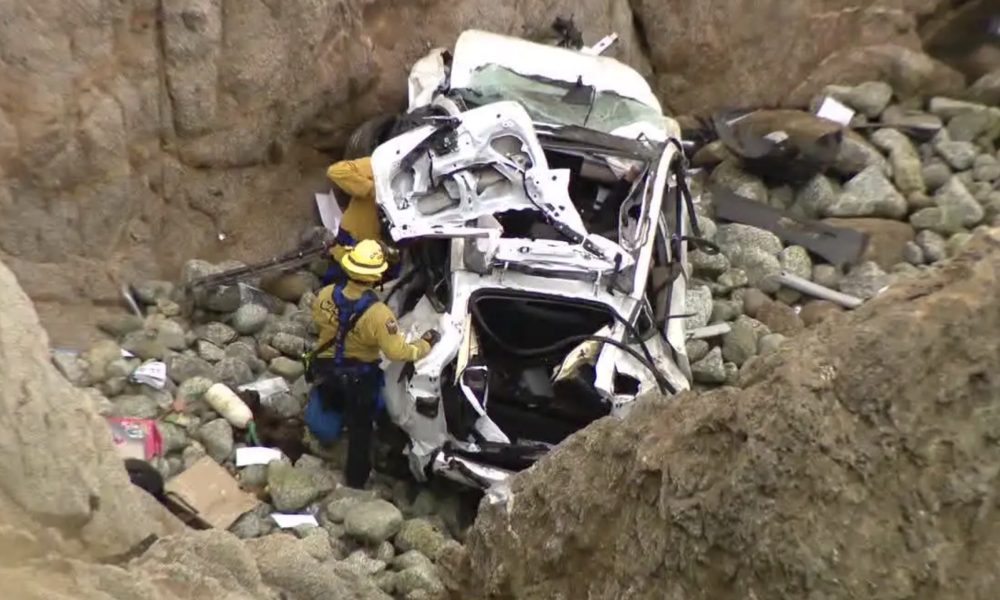
According to Teslarati, Dr. Dharmesh Patel, a radiologist, steered his Tesla Model Y off Devil’s Slide in January 2023, injuring his wife and two children, then aged seven and four. He was subsequently charged with three counts of attempted murder. The crash, which left the vehicle “totalled,” was framed by the outlet as a testament to Tesla’s engineering, saying it saved “four lives” and calling the outcome “an absolute miracle.”
Multiple independent outlets—including ABC7 Bay Area, ABC7 Los Angeles, People.com, and Radiology Business—corroborated the core facts: the location of the crash, the injuries to the family, the attempted‑murder charges, and the eventual dismissal after Patel entered a mental‑health diversion program. None of these sources repeated the “miracle” language or the claim that the doctor surrendered his California medical license in December; those details appear only in the Teslarati piece.
The legal mechanism at the center of the dismissal is California’s Mental Health Diversion Court. Under this framework, certain non‑violent offenses can be diverted away from prison if the defendant completes a prescribed treatment plan. San Mateo County District Attorney Steve Wagstaffe explained that the judge was “
required by law” to dismiss the charges provided Patel complied with the program. He added, “If the person who’s given mental health diversion follows the treatment plan, there’s nothing that can be done, and at the end of the two years he gets it wiped out of his record.” This language, also quoted verbatim in the primary article, underscores the statutory mandate that overrides prosecutorial discretion in qualifying cases.
Critics argue that the diversion system, while intended for genuine mental‑health crises, can be leveraged by individuals with resources to secure favorable outcomes. Patel’s case involved a high‑profile vehicle and extensive media coverage, raising questions about equity in the application of diversion statutes. Legal scholars note that California’s law excludes certain violent offenses, but the statute’s language leaves room for interpretation, especially when a defendant’s actions are framed as an “attempted” rather than completed homicide.
From a regulatory perspective, the incident also feeds into broader debates about Tesla’s safety claims. While the crash resulted in no fatalities, the vehicle’s structural integrity and active safety features were highlighted by Teslarati as evidence of engineering excellence. However, without independent verification of the vehicle’s performance post‑crash, the narrative remains a single‑source claim. The lack of corroboration from crash investigators or safety regulators means the “miracle” framing cannot be independently validated.
Financially, the case has minimal direct impact on Tesla’s balance sheet, but reputationally it adds another data point to the company’s ongoing public relations challenges. Tesla routinely emphasizes its safety record, and high‑visibility incidents—whether they involve Autopilot disengagements or dramatic crashes—are quickly incorporated into its messaging. The Patel case illustrates how external narratives can be co‑opted to reinforce brand perception, even when the underlying legal outcome is unrelated to vehicle performance.
Audit & Contradictions
The primary Teslarati article presents several assertions that lack external verification. The claim that the Tesla was “totalled” yet saved four lives is not corroborated by any of the independent outlets, which only confirmed the crash and injuries. Likewise, the description of the incident as “an absolute miracle” and the statement that Patel surrendered his medical license in December appear solely in the Teslarati piece. These single‑source claims should be treated with caution.
The fact‑check audit notes a “Low” contradiction level, meaning no direct conflicts were identified between sources; the core legal facts align across all reports. Nonetheless, the narrative framing around Tesla’s engineering remains unverified outside the primary outlet.
Future Outlook
Patel’s dismissal may set a precedent for how California’s mental‑health diversion statutes are applied to cases involving severe reckless driving. Prosecutors in other jurisdictions could look to this outcome when deciding whether to pursue charges against drivers whose actions result in serious injury but who also present documented mental‑health concerns.
For Tesla, the episode underscores the importance of transparent crash investigations. As the company continues to expand its autonomous features, regulators and consumer advocates will likely demand more rigorous, third‑party analysis of crash data. Failure to provide independent validation could erode the credibility of safety claims that currently rely on anecdotal or single‑source narratives.
Finally, the case may influence public perception of the balance between mental‑health treatment and accountability. While diversion programs can be lifesaving for individuals with genuine psychiatric disorders, high‑profile applications risk public backlash if perceived as lenient toward dangerous conduct. Lawmakers may revisit the statutory language to tighten eligibility criteria, especially for offenses involving potential loss of life.