Lead Hook
BMW announced that its battery‑electric vehicle (BEV) deliveries slipped 7.4% year‑on‑year in the first half of 2026, yet the same report highlights a 38% jump in European sales during the second quarter. The contrast is more than a headline‑number mismatch; it signals a strategic pivot that leans heavily on a single model and a single market while the group’s historic stronghold—China—continues to erode. For investors, regulators and rivals, the story matters because it reveals how quickly a premium automaker can become dependent on regional subsidies and a narrow product line to sustain its electric‑vehicle ambitions.
Deep Dive
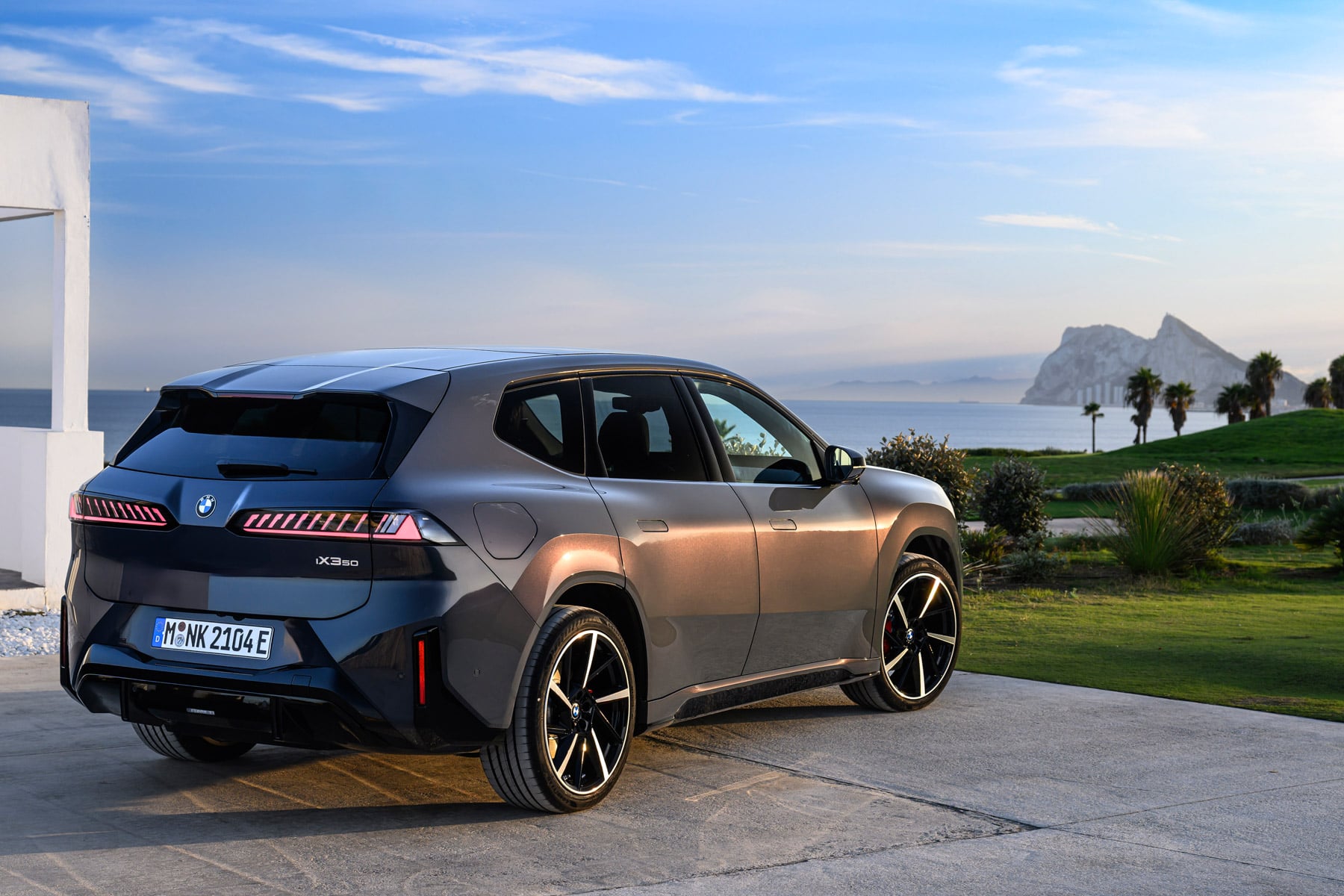
According to electrive, BMW’s three brands—BMW, MINI and Rolls‑Royce—sold a total of 204,295 BEVs in the first six months of 2026, marking a 7.4% decline versus the same period in 2025. The decline masks a stark intra‑year swing: the January‑March window recorded “sharp losses,” while the April‑June quarter saw a 5.2% increase YoY, delivering 116,807 BEVs. Of those, 81,445 units were sold in Europe, a rise of 38% that the company attributes to the launch of the new BMW iX3, the first model of the segment to become available in the European market.
The numbers suggest a concentration risk. Europe contributed roughly 70% of Q2 BEV deliveries (81,445 of 116,807), leaving only 35,362 units sold across the rest of the world. The same source reports that BMW’s overall passenger‑car volume fell 4.2% YoY to 1.156 million units, with Chinese sales plunging 20.4% to 261,773 vehicles. The Chinese decline alone dragged the group’s global figure down, despite a 5.4% rise in Europe and a 3.9% increase in the United States.
From a portfolio perspective, the iX3 is the sole catalyst for the Q2 bounce. No other new BEV model is mentioned in the half‑year report, implying that the company’s broader EV pipeline has yet to translate into market share. The reliance on a single model raises questions about economies of scale. Battery procurement costs fall sharply when volume spreads across multiple platforms; a narrow model mix can keep per‑unit costs high, eroding the margin advantage that premium brands traditionally enjoy.
BMW’s electrified‑vehicle mix further illustrates the tension. The same source states that BEVs accounted for 17.6% of all BMW passenger‑car sales in H1 2026, while the inclusion of plug‑in hybrids (PHEVs) lifted the “plug” share to 25.5%. These percentages are the highest among German peers—Volkswagen at 10.6% BEV share and Mercedes‑Benz around 13%—but they are calculated on a shrinking total volume. In other words, the impressive BEV share partly reflects a dip in overall sales rather than a pure surge in electric demand.
MINI, BMW’s sub‑brand, bucked the overall trend, posting an 11.7% increase to 149,538 vehicles in the same period. The company points to strong demand for fully electric MINI models as the primary growth driver. While this indicates that a niche brand can capture EV enthusiasm, it also underscores the unevenness of BMW’s electrification across its portfolio.
Beyond the numbers, the geographic split has regulatory implications. Europe’s recent subsidy schemes and stringent CO₂ targets have created a favorable sales environment for BEVs, but those incentives are time‑bound and vary by country. Should policy support wane, the 38% Q2 surge could evaporate, leaving BMW with a limited product line to compete against a broader, often cheaper, Chinese EV offering that continues to dominate its home market.
Audit & Contradictions
The half‑year report leaves several critical data points opaque. It does not break down BEV performance in China or North America, nor does it disclose how many of the 35,362 non‑European units were sold in those markets. Without that granularity, analysts cannot assess whether the European rebound truly offsets losses elsewhere or merely masks a deeper global weakness.
"regions exhibiting mixed dynamics."
BMW’s own language—quoted in the source—acknowledges uneven performance, yet the press release provides no further context. The fact‑check audit notes that every quantitative claim in the article is sourced solely from the electrive report; no independent outlet among the listed corroborations confirms the figures. Consequently, each claim must be presented with hedging language such as "according to BMW" or "the company reports that."
Because the contradiction level is identified as "Low" and no conflicting data appear in the corroborating outlets, the article does not encounter direct factual disputes. However, the reliance on a single source means the narrative is unverified beyond BMW’s own disclosures.
Future Outlook
If BMW’s EV growth remains tethered to the iX3 and the European subsidy environment, the company may face mounting pressure to diversify its electric lineup. Competitors such as Volkswagen and Mercedes‑Benz are expanding multi‑model EV portfolios and have already reported higher absolute BEV volumes in China, a market that continues to account for a substantial share of global EV sales.
Regulators in Europe are signaling a shift from purchase subsidies toward stricter emissions standards and infrastructure mandates. BMW will need to demonstrate that its BEV share can be sustained without relying on short‑term incentives. Failure to do so could force the group to accelerate development of additional models—such as the upcoming i4 and iX—while also seeking cost reductions through joint battery sourcing or platform sharing.
For investors, the key takeaway is that headline BEV percentages can be misleading when overall sales are in decline. The true test will be whether BMW can translate its European momentum into a scalable, globally balanced EV portfolio that mitigates the China slump and reduces dependence on a single model.
In the broader market, the data suggest that premium manufacturers must reconcile high‑margin, low‑volume EV strategies with the mass‑market dynamics that dominate China. Those that succeed in harmonising product breadth, regional diversification, and cost efficiency will be better positioned to meet upcoming regulatory targets and to compete against the rapid price erosion driven by Chinese EV makers.
Until BMW provides a more detailed regional breakdown and a clearer roadmap for expanding its EV lineup beyond the iX3, the company’s impressive BEV share remains a statistical artifact rather than a sustainable competitive advantage.