Lead Hook
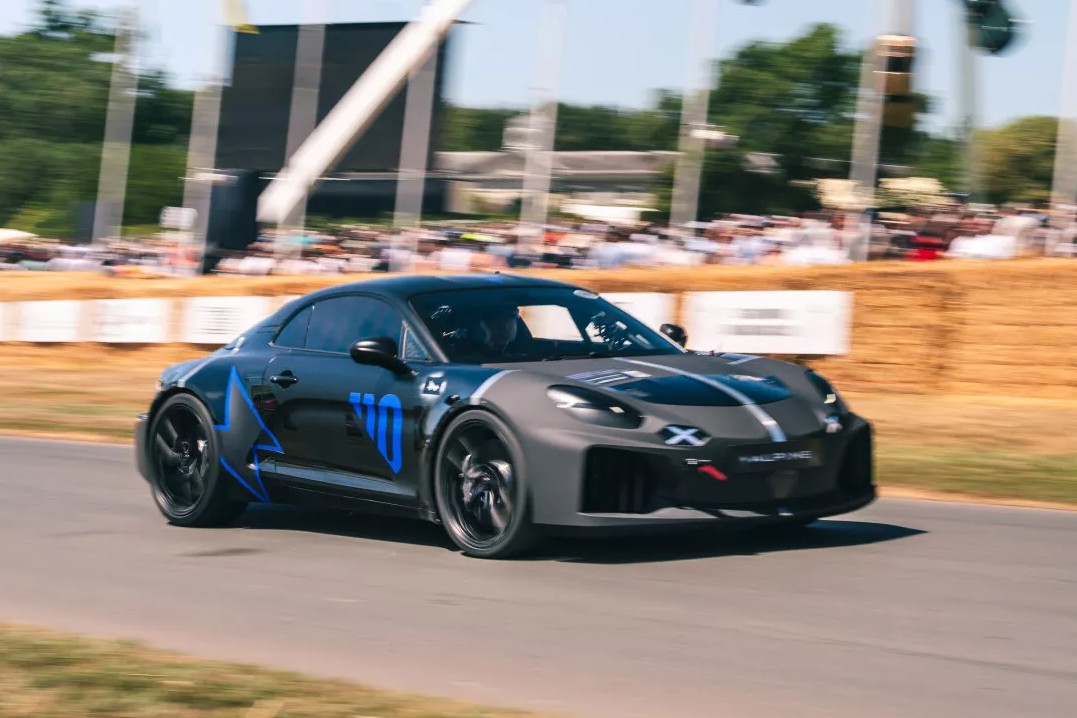
When Alpine rolled out a drivable electric A110 at the Goodwood Festival of Speed, the spectacle was more than a visual cue for the brand’s future – it was a statement about how a niche sports car maker plans to stay true to its "lightweight design, agility, and driving pleasure" ethos while navigating the costly, complex world of high‑voltage EV engineering. The prototype’s architecture, battery strategy and control systems hint at a broader industry tension: can low‑volume manufacturers preserve their performance DNA without triggering a supply‑chain bottleneck?
Deep Dive
According to electrive, the A110 Future is built on the newly minted Alpine Performance Platform (APP), an 800‑volt architecture designed specifically for electric performance models. The platform’s high voltage enables faster charging and more efficient power delivery, but it also mandates silicon‑carbide (SiC) inverters – components that are still relatively scarce and costly compared to silicon‑based alternatives.
The powertrain features a rear‑mounted dual‑motor “3‑in‑1” e‑axle, each motor paired with an SiC inverter. While the primary source claims the motors can spin up to 21,500 rpm, this detail appears only in Alpine’s own presentation and has not been confirmed by independent outlets. The dual‑motor setup, coupled with Alpine Active Torque Vectoring 2.0 and Wheel Slip Torque Control, is intended to mitigate under‑steer and deliver the instantaneous torque distribution that sports‑car drivers expect.
Perhaps the most striking engineering choice is the split‑battery configuration. Alpine says 25 % of the pack’s energy resides in a front module, with the remaining 75 % placed behind the rear axle. This distribution allows the roof line and seating position to mirror the current petrol‑powered A110, preserving its low‑profile silhouette. The battery cells are assembled using cell‑to‑pack technology and housed in high‑pressure die‑cast aluminium structures that contribute to chassis rigidity. The system operates at 800 volts, aligning with the platform’s high‑voltage strategy.
Secondary coverage from outlets such as InsideEVs and Carscoops corroborates the existence of the APP, the rear dual‑motor e‑axle and the torque‑vectoring functions, confirming that Alpine’s technical direction is consistent across several reports. However, those same sources describe a different front‑to‑rear battery weight distribution – 40 % front and 60 % rear – creating a moderate contradiction with Alpine’s 25 %/75 % split claim.
Beyond the core drivetrain, Alpine mentions a “400‑volt boost charging system,” though no further details are provided. The lack of disclosed performance figures – power output, torque, range – is also notable. Alpine has historically relied heavily on simulation to reduce physical prototyping costs, a practice that may explain the limited data released at this stage.
From a supply‑chain perspective, the combination of an 800‑volt architecture, SiC inverters and a split‑pack design poses several challenges. SiC devices require specialized manufacturing processes, and the high voltage demands stricter safety and thermal‑management standards. Splitting the pack across two axles adds complexity to battery management software and may increase the number of high‑current interconnects, each a potential failure point. For a low‑volume brand like Alpine, sourcing these components without economies of scale could inflate unit costs, potentially impacting the vehicle’s price competitiveness in the premium EV market.
Audit & Contradictions
The announcement leaves several key questions unanswered. Alpine has not disclosed any performance metrics – power, torque, 0‑60 mph times, or range – and explicitly states that “no performance data has been disclosed.” The market launch date remains unannounced, underscoring the prototype’s status as a development mule rather than a ready‑to‑sell model.
Single‑source claims that require hedging include:
- Motor speed up to 21,500 rpm – reported only by the primary source.
- Battery split of 25 % front / 75 % rear – also only in the primary source and contradicted by secondary reports that cite a 40 %/60 % split.
- Inclusion of a 400‑volt boost charging system – mentioned without functional details.
- Lack of performance figures and an undefined launch timeline – both highlighted as “no details provided.”
The contradiction over battery distribution is classified as “medium” by the fact‑check audit: while the primary source emphasizes a 25 %/75 % split, an independent outlet describes a 40 % front‑to‑rear weight balance. This discrepancy may stem from differing definitions (energy vs. mass distribution) or from evolving design decisions as Alpine progresses from simulation to physical testing.
Future Outlook
Alpine’s approach illustrates a broader industry dilemma: how to marry the heritage of lightweight sports cars with the heavy, high‑voltage demands of modern EVs. If the split‑pack concept proves viable, it could set a template for other niche manufacturers seeking to retain low‑center‑of‑gravity dynamics without sacrificing interior space or roof height.
Competitors such as Porsche and Lotus are also exploring modular EV platforms that preserve handling characteristics, suggesting a potential arms race in lightweight EV architecture. However, the reliance on SiC inverters and high‑voltage battery packs may pressure suppliers to scale production, possibly prompting consolidation among component manufacturers.
Regulators in Europe are tightening charging‑infrastructure standards and safety requirements for 800‑volt systems. Alpine’s 400‑volt boost charger, if intended to interface with existing 400‑V charging networks, could become a compliance focal point, influencing how quickly the model can be rolled out across markets.
Ultimately, Alpine’s prototype signals a strategic gamble: by pushing the limits of battery packaging and high‑voltage powertrains, the brand hopes to deliver an electric sports car that feels unmistakably Alpine. Whether the engineering risks translate into market success will depend on supplier readiness, cost management and the brand’s ability to communicate performance benefits without the traditional petrol‑engine numbers that have long defined the A110.
"lightweight design, agility, and driving pleasure"
— Alpine’s brand mantra, reiterated in the prototype unveiling, underscores why the company is willing to navigate these engineering complexities.